

having just seen the announcment about the bare-metal SDK, i gave it a try using my "hello world" of BLE -- a minimal beacon app which i actually use to benchmark BLE platforms from multiple silicon vendors....
for sure, my bare-metal program image is much smaller than zephyr -- ~42K of code versus ~180K of code.... same target HW, of course -- the nRF54L15-DK
but for some reason, measuring current consumption shows the bare-metal version somewhat behind....
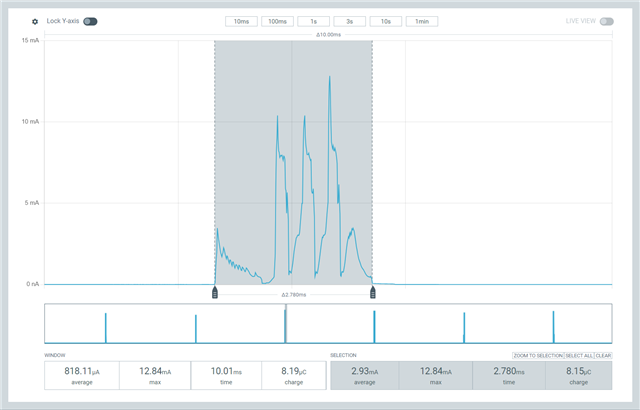
as a "baseline", here's a PPK capture of one advertising event:on my zephyr version:
and here's the same advertising event (same payload, same TX power, etc) using the bare-metal SDK:
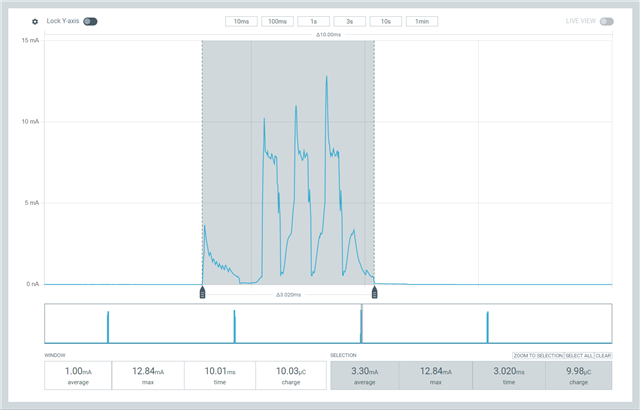
(i've also done captures with my higher-precision joulescope js220.... same differences)
the extra time (and current consumption) seems to occur during the transmission itself.... there appears to be ~100us of **additional** TX time per packet TX in the bare-metal version -- accounting for the ~300us of additional event duration....
any ideas where i might have missed something???
