application : ncs\v3.0.1\zephyr\samples\drivers\led\led_strip
Hi
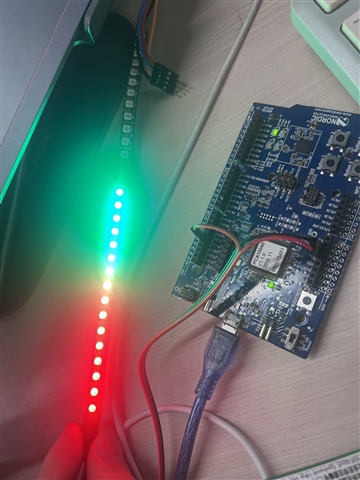
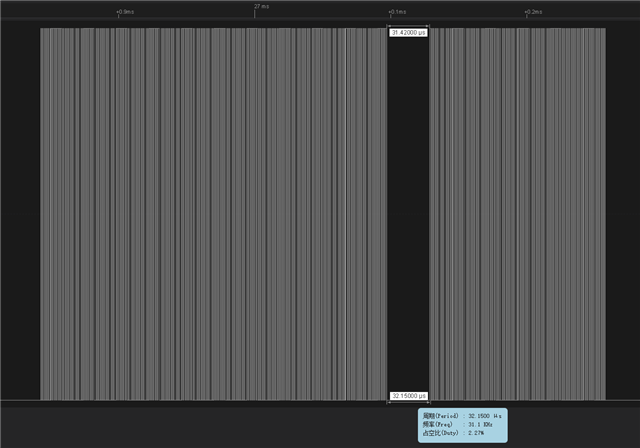
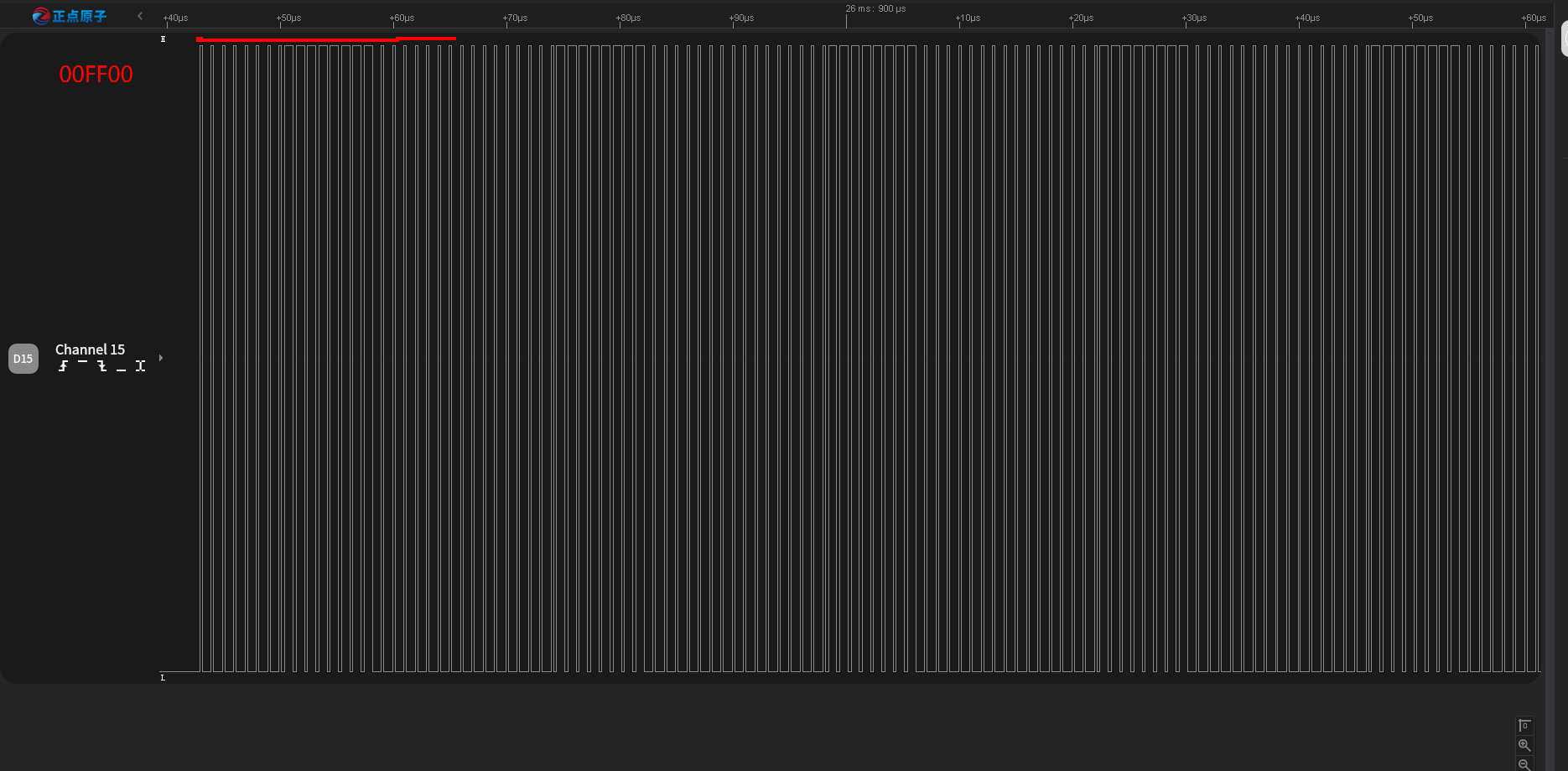
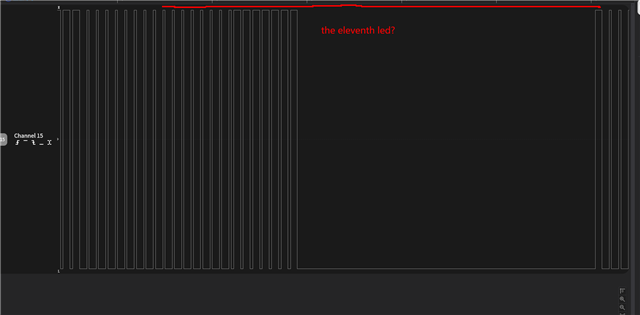
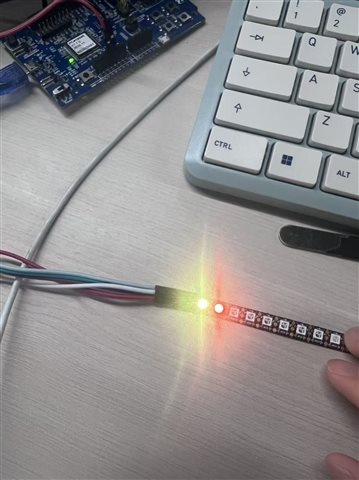
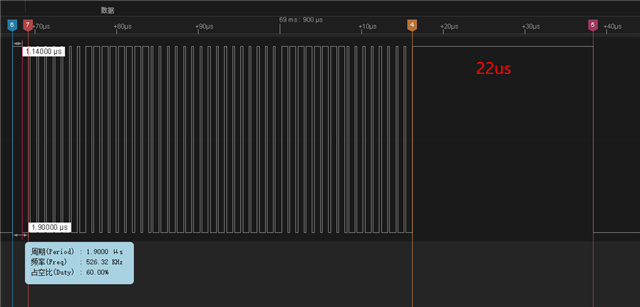
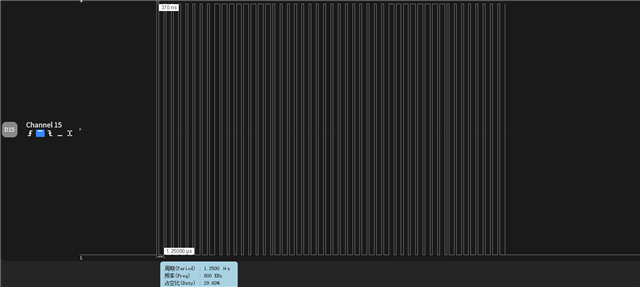
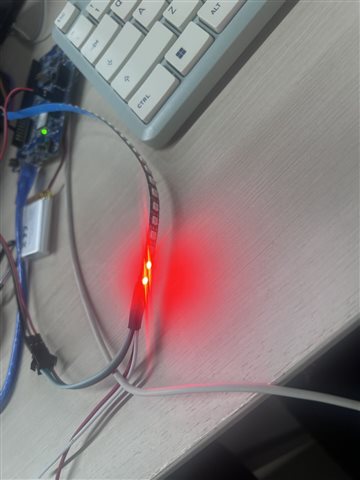
Recently, I have been working on development in NCS. I attempted to drive the WS2812B LED lights, but they failed to light up so far. I would like to ask you to check if there are any issues with the parameters and configurations. I successfully implemented the normal operation of the nrf52832 development board and the ws2812b LED driver in SDK 17.1.Therefore, I can confirm that my hardware is functioning properly.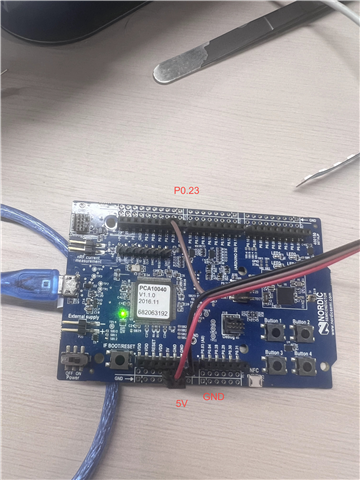
Here is the ws2812 pwm params on sdk17.1
#define WS2812_PIN  NRF_GPIO_PIN_MAP(0,23)

// In each value, the most significant bit (15)determines the polarity of the output and theothers (14-0) compose the 15-bit value
#define WS2812_T1H                  14 | 0x8000     //14ticks
#define WS2812_T0H                  6  | 0x8000     //6ticks
#define LED_MATRIX_WIDTH  14
#define LED_MATRIX_HEIGHT 1

void pwm_init(void){
    nrfx_pwm_config_t pwm_config = NRFX_PWM_DEFAULT_CONFIG;
    pwm_config.output_pins[0] = NRFX_PWM_PIN_NOT_USED;
    pwm_config.output_pins[1] = WS2812_PIN;
    pwm_config.output_pins[2] = NRFX_PWM_PIN_NOT_USED;
    pwm_config.output_pins[3] = NRFX_PWM_PIN_NOT_USED;
    pwm_config.load_mode    = NRF_PWM_LOAD_INDIVIDUAL;
    // WS2812 protocol requires a 800 kHz PWM frequency. PWM Top value = 20 and Base Clock = 16 MHz achieves this
    pwm_config.top_value    = 20;
    pwm_config.base_clock   = NRF_PWM_CLK_16MHz;
}
Here is th spi config
nrf52dk_nrf52832.overlay
#define SPI_FREQ    2400000    //2.4Mhz = 0.42us
#define ZERO_FRAME  0x04       //100  means 0.42us"1" + 0.84"0"
#define ONE_FRAME   0x06       //110  means 0.84us"1" + 0.42"0"
&arduino_spi { /* MOSI on D11 / P0.23 */
	compatible = "nordic,nrf-spim";
	led_strip: ws2812@0 {
		compatible = "worldsemi,ws2812-spi";

		/* SPI */
		reg = <0>; /* ignored, but necessary for SPI bindings */
		spi-max-frequency = <SPI_FREQ>;

		/* WS2812 */
		chain-length = <16>; /* arbitrary; change at will */
		color-mapping = <LED_COLOR_ID_GREEN
				 LED_COLOR_ID_RED
				 LED_COLOR_ID_BLUE>;
		spi-one-frame = <ONE_FRAME>;
		spi-zero-frame = <ZERO_FRAME>;
	};
};
/ {
	aliases {
		led-strip = &led_strip;
	};
};

&pinctrl {
	spi2_default: spi2_default {
		group1 {
			psels = <NRF_PSEL(SPIM_MOSI, 0, 23)>;
			};
	};

	spi2_sleep: spi2_sleep {
		group1 {
			psels = <NRF_PSEL(SPIM_MOSI, 0 ,23)>;
			low-power-enable;
		};
	};
}

prj.conf
CONFIG_LOG=y
CONFIG_LED_STRIP=y
CONFIG_LED_STRIP_LOG_LEVEL_DBG=y

# clock setting
CONFIG_CLOCK_CONTROL_NRF=y
CONFIG_CLOCK_CONTROL_NRF_K32SRC_RC=y
CONFIG_CLOCK_CONTROL_NRF_K32SRC_XTAL=n
CONFIG_CLOCK_CONTROL_NRF_K32SRC_RC_CALIBRATION=y

CONFIG_GPIO=y


main:
#define STRIP_NODE		DT_ALIAS(led_strip)

#if DT_NODE_HAS_PROP(DT_ALIAS(led_strip), chain_length)
#define STRIP_NUM_PIXELS	DT_PROP(DT_ALIAS(led_strip), chain_length)
#else
#error Unable to determine length of LED strip
#endif

#define DELAY_TIME K_MSEC(CONFIG_SAMPLE_LED_UPDATE_DELAY)

#define RGB(_r, _g, _b) { .r = (_r), .g = (_g), .b = (_b) }

static const struct led_rgb colors[] = {
	RGB(0x0f, 0x00, 0x00), /* red */
	RGB(0x00, 0x0f, 0x00), /* green */
	RGB(0x00, 0x00, 0x0f), /* blue */
};

static struct led_rgb pixels[STRIP_NUM_PIXELS];

static const struct device *const strip = DEVICE_DT_GET(STRIP_NODE);
#define LED0_NODE DT_ALIAS(led0)
static const struct gpio_dt_spec led = GPIO_DT_SPEC_GET(LED0_NODE, gpios);

int main(void)
{
	size_t color = 0;
	int rc;

	if (device_is_ready(strip)) {
		LOG_INF("Found LED strip device %s", strip->name);
	} else {
		LOG_ERR("LED strip device %s is not ready", strip->name);
		return 0;
	}

	if (!gpio_is_ready_dt(&led)) {
		return 0;
	}

	rc = gpio_pin_configure_dt(&led, GPIO_OUTPUT_ACTIVE);
	if (rc < 0) {
		return 0;
	}

	LOG_INF("Displaying pattern on strip");
	while (1) {
		for (size_t cursor = 0; cursor < ARRAY_SIZE(pixels); cursor++) {
			memset(&pixels, 0x00, sizeof(pixels));
			memcpy(&pixels[cursor], &colors[color], sizeof(struct led_rgb));

			rc = led_strip_update_rgb(strip, pixels, STRIP_NUM_PIXELS);
			if (rc) {
				LOG_ERR("couldn't update strip: %d", rc);
			}

			k_sleep(DELAY_TIME);
		}

		color = (color + 1) % ARRAY_SIZE(colors);
	}

	return 0;
}
best regard