Unexpected phase differences for IQ samples in reference period - AoA

We have a locator-beacon setup based on this https://docs.nordicsemi.com/bundle/ncs-2.9.1/page/nrf/samples/bluetooth/direction_finding_connectionless_tx/README.html running AoA mode. We are running nRF Connect SDK v 2.9.1.

We are using the antenna pattern { 0x5, 0x6, 0x4, 0x9, 0xA, 0x8, 0xD, 0xE, 0xC, 0x1, 0x2, 0x0 }

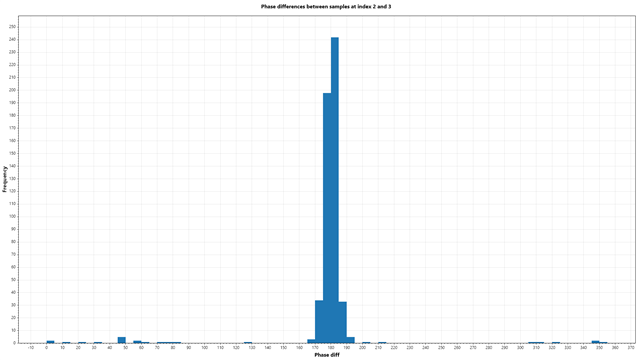
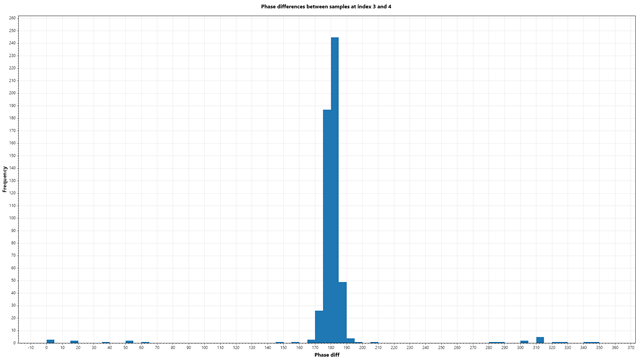
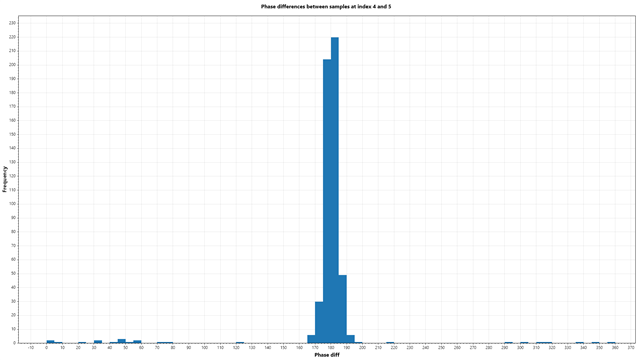
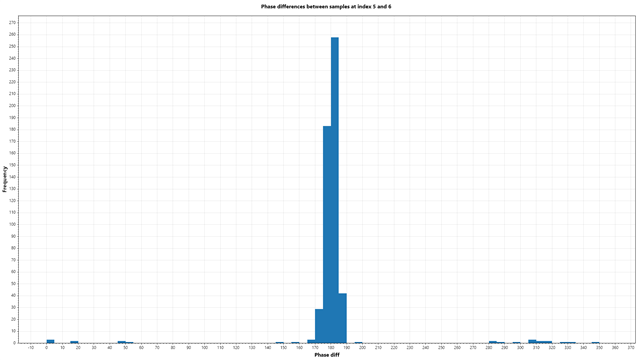
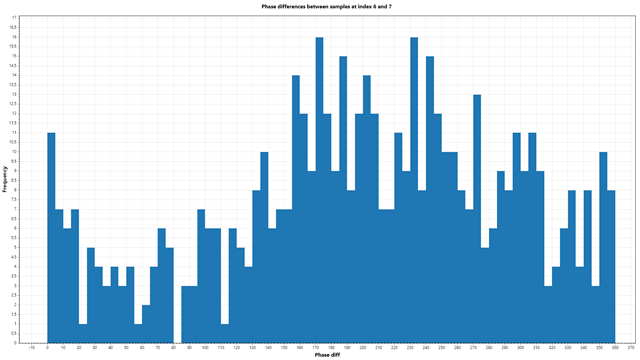
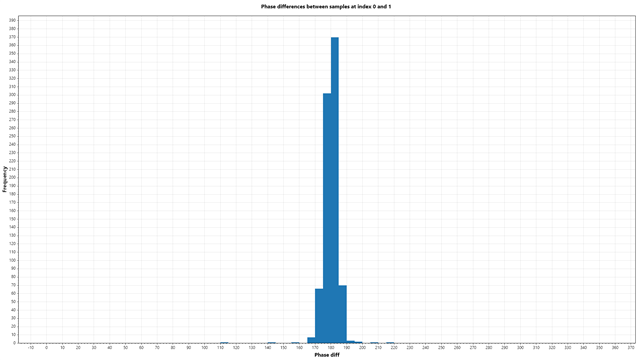
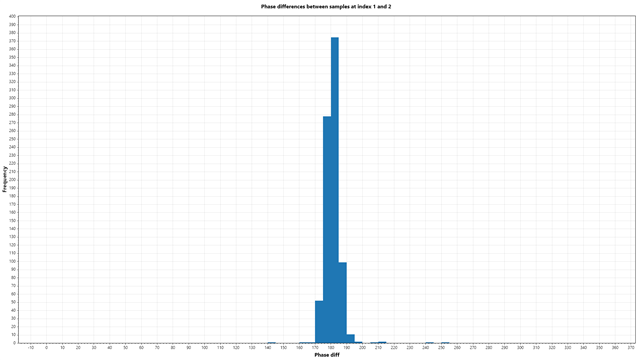
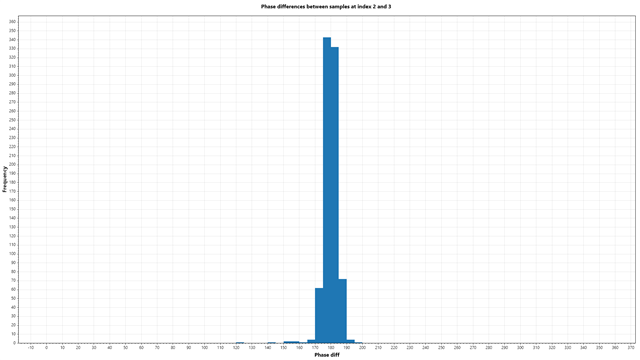
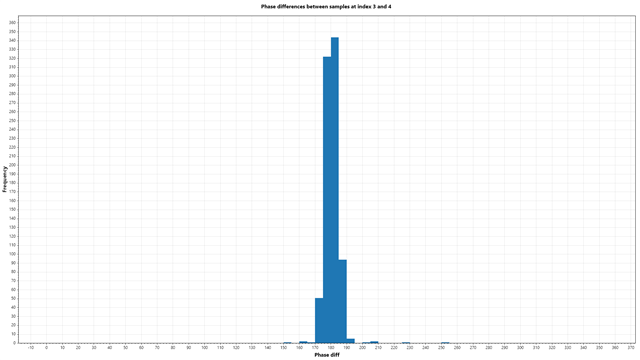
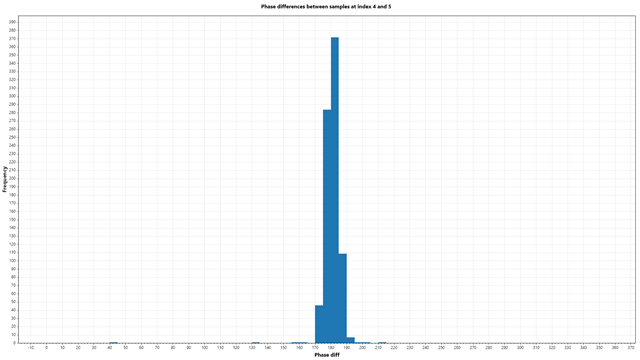
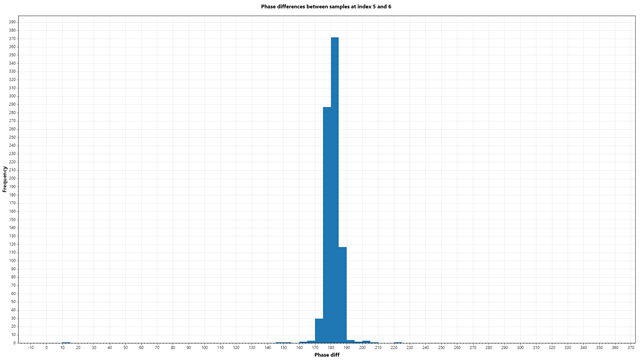
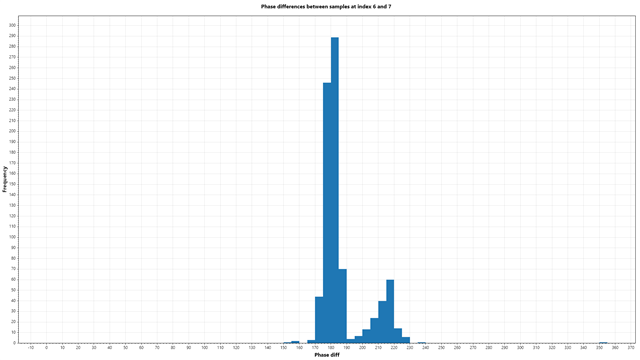
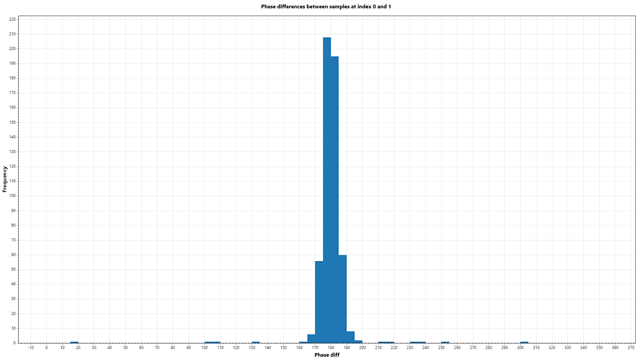
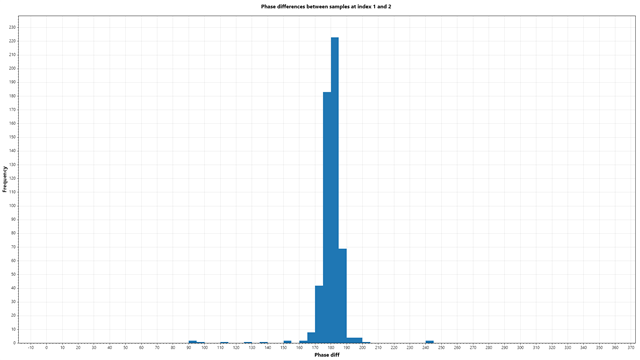
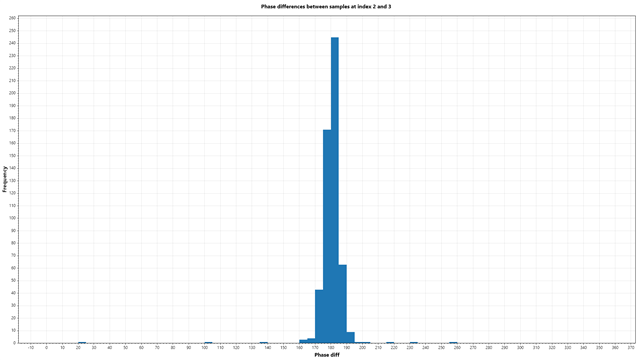
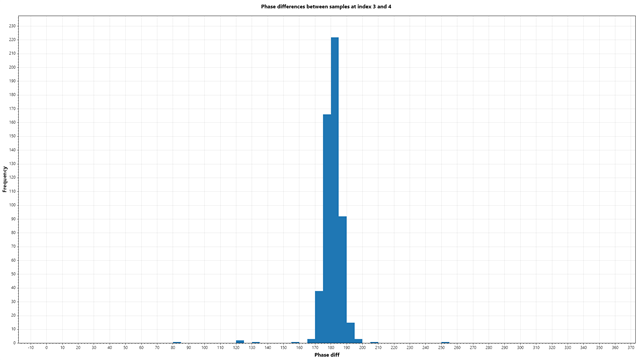
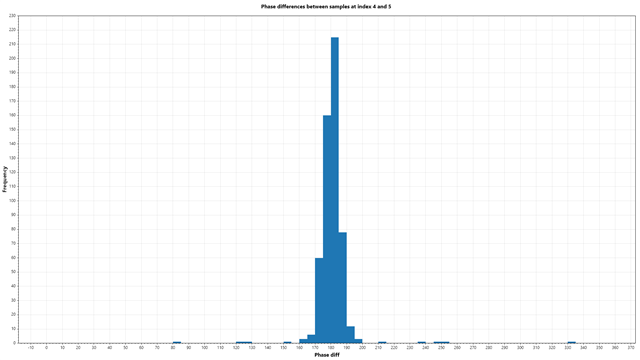
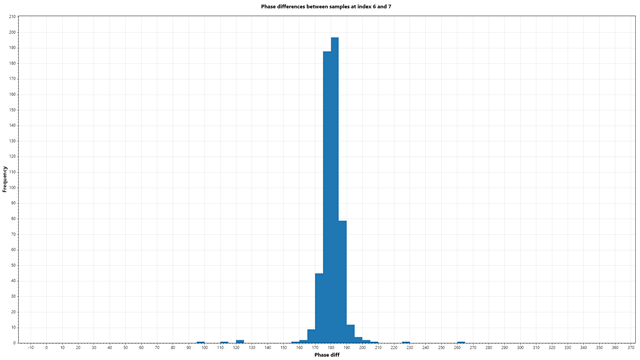
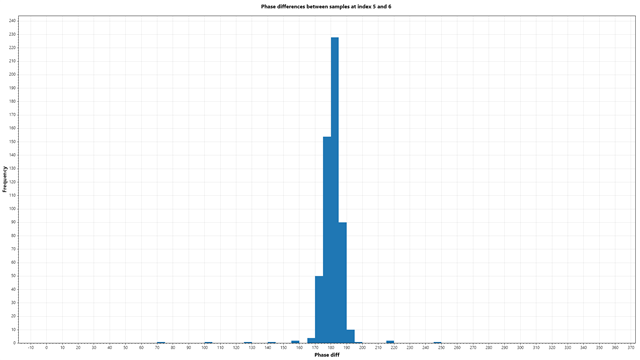
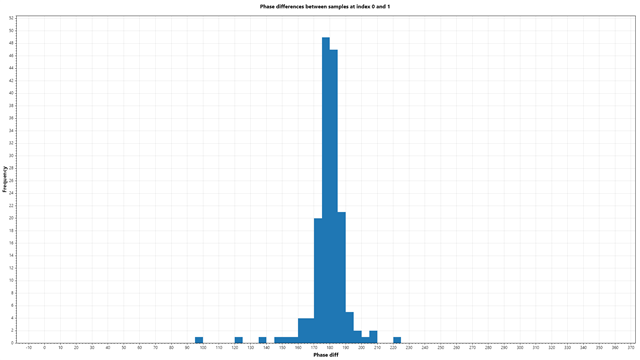
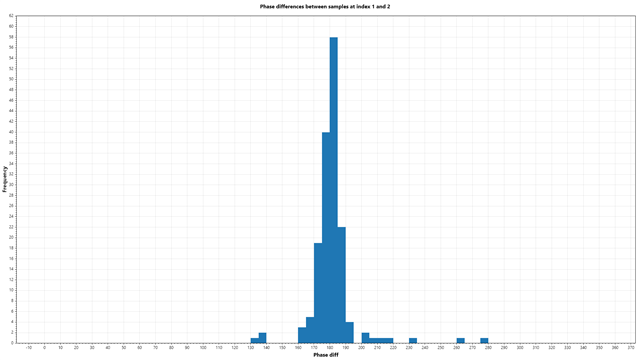
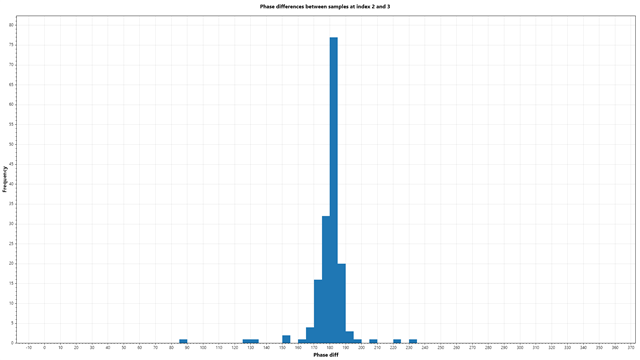
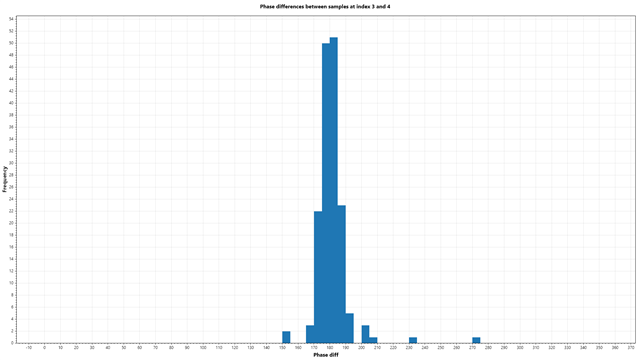
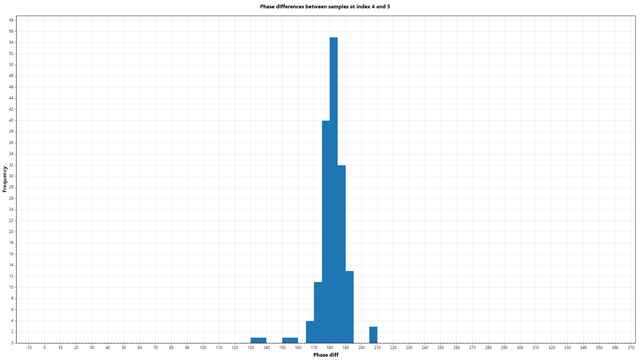
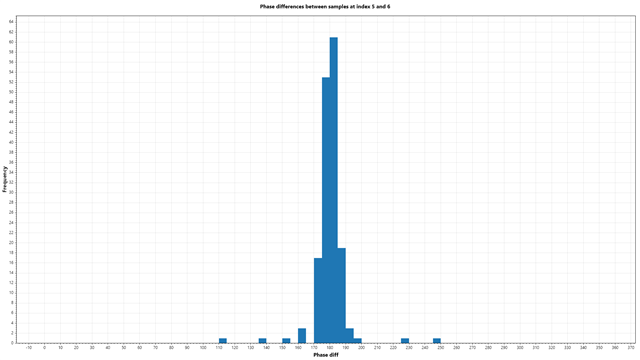
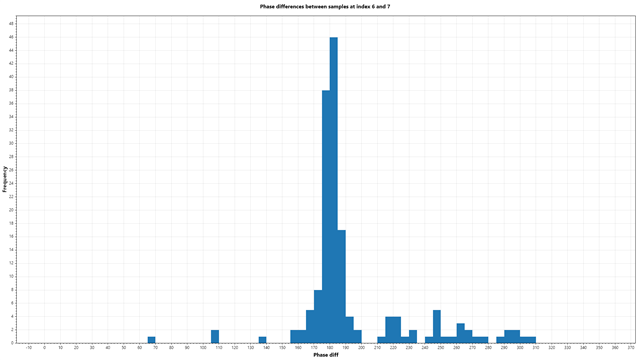
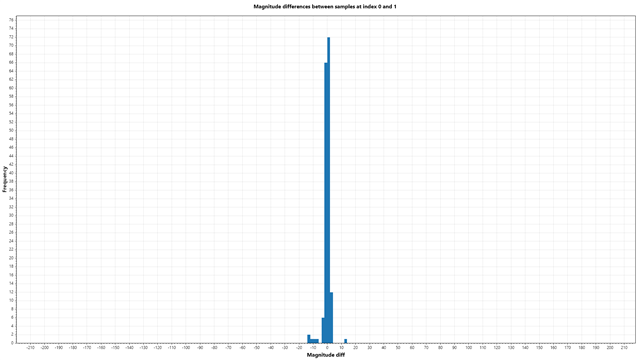
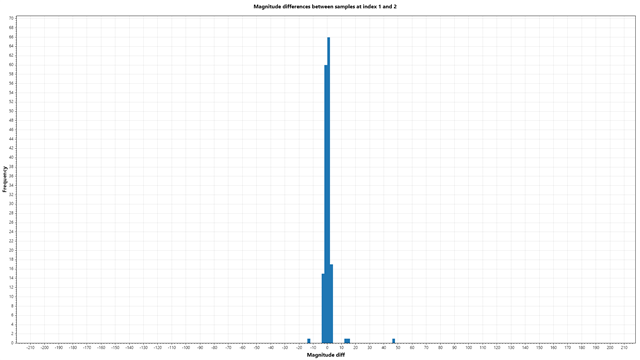
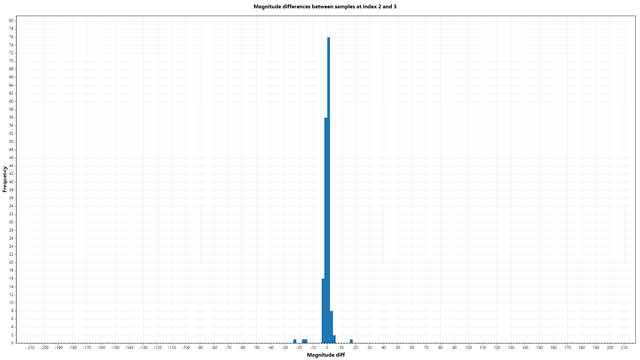
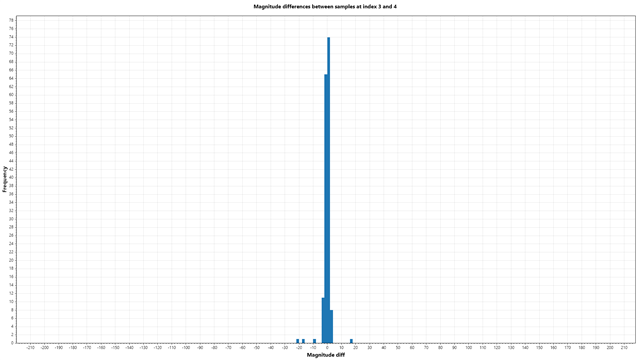
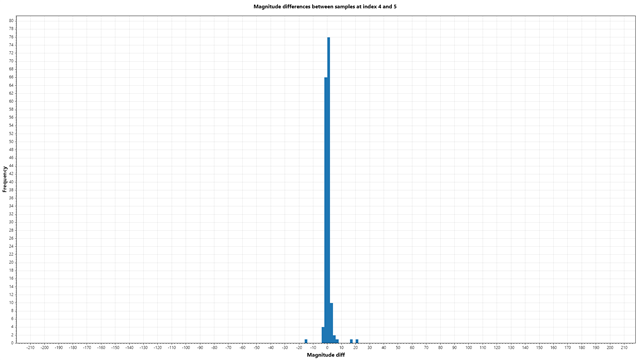
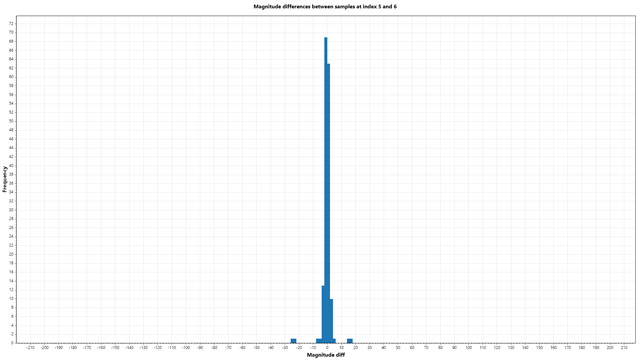
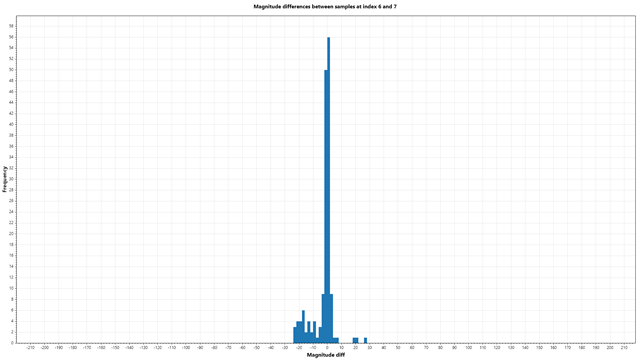
When analyzing the I/Q data from the reference period (8 samples), we expect the phase of the data to be different for each sample. However since they are being sampled from the same antenna, and the time interval is the same between all reference samples, we expect the phase to change by the same amount between each reference sample. To ensure this is working properly, we tested measuring 500 times. For each of these, we had 8 samples from the reference period. This gave us 7 "phase differences" per measurement, the phase difference between reference sample 0 and 1, between reference sample 1 and 2, all the way up to the phase difference between reference sample 6 and 7. When plotting these phase differences, we expect them all to be roughly the same. And here are the results, showing the phase differences between consecutive samples at the different indices:
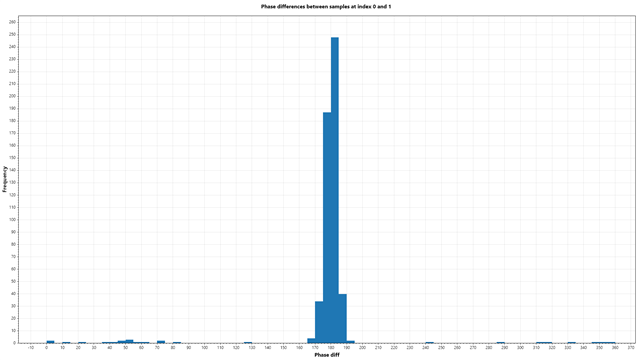
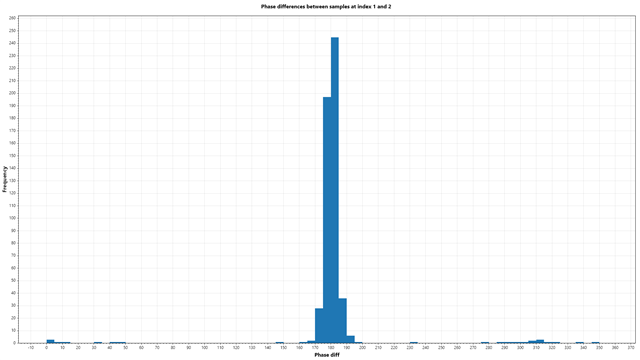
For the first 7 reference samples, the difference between consecutive samples seem to always be roughly the same. However something weird happens when we compare the phase of the 7th and 8th reference sample. It seems to be essentially random. We don't understand what is going on here. We don't think we can blame it on "noise", because why would this only affect the last reference sample? Any ideas what could be causing this, or is it expected to look like this?

Parents
  • Hi Tord,

    I agree with you that the 8th references samples should be similar, the one between the 7th and 8th being different sounds strange. You say that you are allways seeing this?

    Besides the antenna pattern, is this the unmodified sample you are running? And I assume it's the nRF52833-DK? If not, are you seeing the same on a DK? What antenna matrix are you using?

    Regards,

    Elfving

  • Hi, the original testing was done on a modified sample. We have however now done some testing using the sample code on a nRF52833-DK. We are using the nordic reference antenna matrix with 12 antennas. We still observe unusual behaviour on the 8th reference sample (though not as extreme as in the original data shown):

    The phase differences between the 7th and 8th samples have a noticable spike at around 215 degrees, while none of the others have this.

    The reference samples are measured on ANT_11 (0x2), and the first switching-sample is measured on ANT_12 (0x0). We suspect that the fact that this last reference sample is taken right before an antenna switch is somehow causing problems. We tested having the reference-antenna and the first sample-antenna both be ANT_11 (0x2), and then the problem seems to disappear:

    Our best guess to what is happening here is that either the antenna switching is sometimes happening too early, and the last reference sample is sampling from the wrong antenna or during the switching period. Or that the upcoming switching is somehow sometimes causing a timing desync, causing it to sample slightly too early/late, which shifts the measured phase.

    Do you have any ideas what could be causing this? Understanding what is happening here would probably be useful in understanding what is happening to our modified sample as well.

Reply
  • Hi, the original testing was done on a modified sample. We have however now done some testing using the sample code on a nRF52833-DK. We are using the nordic reference antenna matrix with 12 antennas. We still observe unusual behaviour on the 8th reference sample (though not as extreme as in the original data shown):

    The phase differences between the 7th and 8th samples have a noticable spike at around 215 degrees, while none of the others have this.

    The reference samples are measured on ANT_11 (0x2), and the first switching-sample is measured on ANT_12 (0x0). We suspect that the fact that this last reference sample is taken right before an antenna switch is somehow causing problems. We tested having the reference-antenna and the first sample-antenna both be ANT_11 (0x2), and then the problem seems to disappear:

    Our best guess to what is happening here is that either the antenna switching is sometimes happening too early, and the last reference sample is sampling from the wrong antenna or during the switching period. Or that the upcoming switching is somehow sometimes causing a timing desync, causing it to sample slightly too early/late, which shifts the measured phase.

    Do you have any ideas what could be causing this? Understanding what is happening here would probably be useful in understanding what is happening to our modified sample as well.

Children
Related