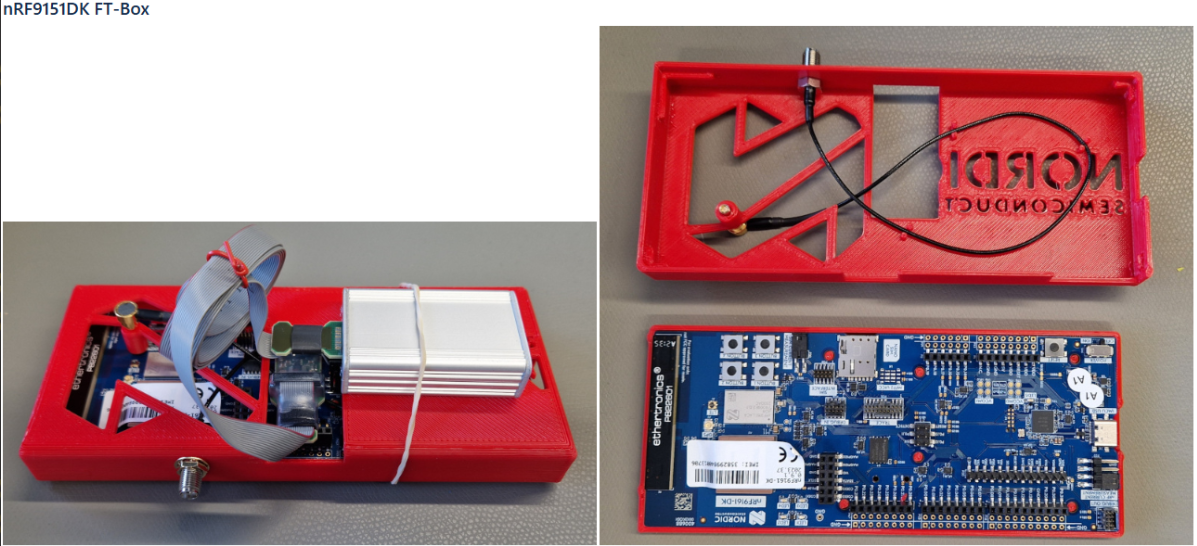
nRF9151-DK DECT NR+ external antenna

Hi,

I’m trying to explore the capabilities of DECT NR+ technology using the nRF9151-DK. Are there any recommended external antennas that I would be able to use with this kit?

Are there any other parameters apart from those listed here (DECT NR+) that needs to be complied with?

Lastly, is using the external (possibly directional) antenna even beneficial?

I will be grateful for any response.

Best regards,
Michal

Parents
  • Hi Michal, apologies for the late reply on this ticket. 

    The question was forwarded to our DECT NR+ experts but unfortunately they have been overloaded the last weeks. I just poked them for an answer and hope to have an answer by Monday. 

    Sorry for the inconvenience. 

    Kind regards,
    Øyvind

  • Hi!
    Thank you so much. I am looking forward to hearing from you soon.

  • Hello, here is the answers I got from our experts

    Are there any recommended external antennas that I would be able to use with this kit?

    At this time, we do not provide an official recommendation for external antennas for the nRF9151 DK. We have conducted Band 1 range testing with the Pulse Electronics W5095K antenna connected via a separate cable. While the W5095K offers higher RX/TX gain than the onboard antenna, the additional connectors introduce insertion loss that can reduce the net performance benefit. Various external antennas have been used in past range evaluations, but we do not have a definitive record of the specific models.

    Are there any other parameters apart from those listed here (DECT NR+) that needs to be complied with?

    Regulatory requirements vary by target market and, in some cases, by frequency band within the same region (for example, U.S. Band 9 versus Band 4). In the EU, Band 1 operation is governed by ETSI EN 301 406-2. In the United States, the nRF9151 supports Bands 9 and 4, which are regulated under different FCC rules—47 CFR Part 15 Subpart D (Band 9) and 47 CFR Part 15 Subpart C (Band 4). These regulations also specify antenna-related constraints, including limits on gain and maximum radiated power, which must be met by the final product.

    Lastly, is using the external (possibly directional) antenna even beneficial?

    In our testing, the nRF9161 DK’s integrated antenna achieved an approximate range of 500 m, while the Pulse Electronics W5095K external antenna reached about 1.3 km under similar conditions. High‑gain directional antennas, such as large Yagi designs, can extend range significantly; for example, in a Band 4 line‑of‑sight test using an internal evaluation board with a Yagi antenna, we measured up to 9.4 km. However, these antennas are not practical for all deployments due to their size, and regulatory limits on antenna gain and maximum radiated power may apply. We do not have a comprehensive, standardized comparison of internal versus external antennas across all DK configurations, but for point‑to‑point use cases, a high‑gain directional antenna can be beneficial.

    Kind regards,
    Øyvind

Reply
  • Hello, here is the answers I got from our experts

    Are there any recommended external antennas that I would be able to use with this kit?

    At this time, we do not provide an official recommendation for external antennas for the nRF9151 DK. We have conducted Band 1 range testing with the Pulse Electronics W5095K antenna connected via a separate cable. While the W5095K offers higher RX/TX gain than the onboard antenna, the additional connectors introduce insertion loss that can reduce the net performance benefit. Various external antennas have been used in past range evaluations, but we do not have a definitive record of the specific models.

    Are there any other parameters apart from those listed here (DECT NR+) that needs to be complied with?

    Regulatory requirements vary by target market and, in some cases, by frequency band within the same region (for example, U.S. Band 9 versus Band 4). In the EU, Band 1 operation is governed by ETSI EN 301 406-2. In the United States, the nRF9151 supports Bands 9 and 4, which are regulated under different FCC rules—47 CFR Part 15 Subpart D (Band 9) and 47 CFR Part 15 Subpart C (Band 4). These regulations also specify antenna-related constraints, including limits on gain and maximum radiated power, which must be met by the final product.

    Lastly, is using the external (possibly directional) antenna even beneficial?

    In our testing, the nRF9161 DK’s integrated antenna achieved an approximate range of 500 m, while the Pulse Electronics W5095K external antenna reached about 1.3 km under similar conditions. High‑gain directional antennas, such as large Yagi designs, can extend range significantly; for example, in a Band 4 line‑of‑sight test using an internal evaluation board with a Yagi antenna, we measured up to 9.4 km. However, these antennas are not practical for all deployments due to their size, and regulatory limits on antenna gain and maximum radiated power may apply. We do not have a comprehensive, standardized comparison of internal versus external antennas across all DK configurations, but for point‑to‑point use cases, a high‑gain directional antenna can be beneficial.

    Kind regards,
    Øyvind

Children
Related