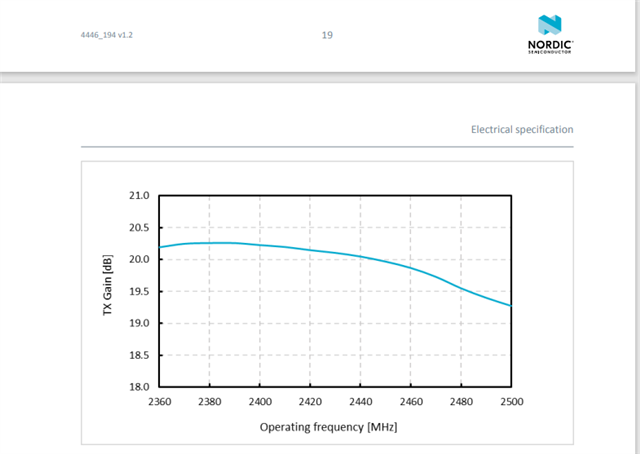
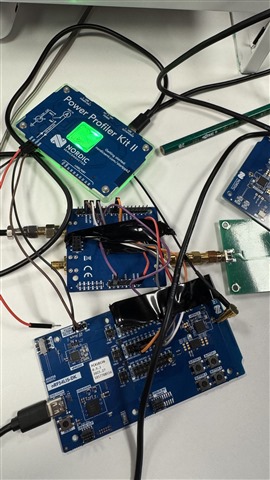
Hello, I observed that under low-throughput conditions (2 kbps), the power consumption of the nRF21540 combined with the 54L15 (at 20 dBm) is actually lower than that of using the 54L15 alone (at 8 dBm). When using the front-end module (FEM), my project configuration is
#
# Copyright (c) 2018 Nordic Semiconductor
#
# SPDX-License-Identifier: LicenseRef-Nordic-5-Clause
#

# Enable the UART driver
CONFIG_UART_ASYNC_API=y
CONFIG_NRFX_UARTE0=y
CONFIG_SERIAL=y

CONFIG_GPIO=y

# Make sure printk is printing to the UART console
CONFIG_CONSOLE=y
CONFIG_UART_CONSOLE=y

CONFIG_HEAP_MEM_POOL_SIZE=2048

CONFIG_BT=y
CONFIG_BT_PERIPHERAL=y
CONFIG_BT_DEVICE_NAME="peripheral_uart"
CONFIG_BT_MAX_CONN=1
CONFIG_BT_MAX_PAIRED=1

# Enable the NUS service
CONFIG_BT_NUS=y

# Enable bonding
CONFIG_BT_SETTINGS=y
CONFIG_FLASH=y
CONFIG_FLASH_PAGE_LAYOUT=y
CONFIG_FLASH_MAP=y

# Enable DK LED and Buttons library
CONFIG_DK_LIBRARY=y

CONFIG_SYSTEM_WORKQUEUE_STACK_SIZE=2048

# Config logger
CONFIG_LOG=y
CONFIG_USE_SEGGER_RTT=y
CONFIG_LOG_BACKEND_RTT=y
CONFIG_LOG_BACKEND_UART=y
CONFIG_LOG_PRINTK=y

CONFIG_ASSERT=y


CONFIG_BT_BUF_ACL_RX_SIZE=502
CONFIG_BT_ATT_PREPARE_COUNT=2
CONFIG_BT_ATT_TX_COUNT=10
CONFIG_BT_L2CAP_TX_MTU=498
CONFIG_BT_L2CAP_DYNAMIC_CHANNEL=y
CONFIG_BT_CONN_TX_MAX=10
CONFIG_BT_BUF_ACL_TX_COUNT=10
CONFIG_BT_BUF_ACL_TX_SIZE=502
CONFIG_BT_CTLR_DATA_LENGTH_MAX=251


#FEM EKEK
# CONFIG_MPSL_FEM=y
# CONFIG_MPSL=y
# CONFIG_MPSL_FEM_NRF21540_GPIO=y
# # CONFIG_MPSL_FEM_NRF21540_GPIO_SPI=y EK用不上
# CONFIG_BT_CTLR_TX_PWR_DYNAMIC_CONTROL=y
# CONFIG_MPSL_FEM_NRF21540_TX_GAIN_DB=20
# CONFIG_MPSL_FEM_NRF21540_RX_GAIN_DB=13
# CONFIG_BT_CTLR_TX_PWR_ANTENNA=20

# #FEM general
CONFIG_MPSL_FEM=y
CONFIG_MPSL=y
CONFIG_MPSL_FEM_NRF21540_GPIO=y
CONFIG_BT_CTLR_TX_PWR_DYNAMIC_CONTROL=y
CONFIG_MPSL_FEM_NRF21540_TX_GAIN_DB=20
CONFIG_MPSL_FEM_NRF21540_RX_GAIN_DB=13
CONFIG_MPSL_FEM_NRF21540_RUNTIME_PA_GAIN_CONTROL=y
CONFIG_BT_CTLR_TX_PWR_ANTENNA=20
CONFIG_NFCT_PINS_AS_GPIOS=y
whereas without FEM, it is
#
# Copyright (c) 2018 Nordic Semiconductor
#
# SPDX-License-Identifier: LicenseRef-Nordic-5-Clause
#

# Enable the UART driver
CONFIG_UART_ASYNC_API=y
CONFIG_NRFX_UARTE0=y
CONFIG_SERIAL=y

CONFIG_GPIO=y

# Make sure printk is printing to the UART console
CONFIG_CONSOLE=y
CONFIG_UART_CONSOLE=y

CONFIG_HEAP_MEM_POOL_SIZE=2048

CONFIG_BT=y
CONFIG_BT_PERIPHERAL=y
CONFIG_BT_DEVICE_NAME="peripheral_uart"
CONFIG_BT_MAX_CONN=1
CONFIG_BT_MAX_PAIRED=1

# Enable the NUS service
CONFIG_BT_NUS=y

# Enable bonding
CONFIG_BT_SETTINGS=y
CONFIG_FLASH=y
CONFIG_FLASH_PAGE_LAYOUT=y
CONFIG_FLASH_MAP=y

# Enable DK LED and Buttons library
CONFIG_DK_LIBRARY=y

CONFIG_SYSTEM_WORKQUEUE_STACK_SIZE=2048

# Config logger
CONFIG_LOG=y
CONFIG_USE_SEGGER_RTT=y
CONFIG_LOG_BACKEND_RTT=y
CONFIG_LOG_BACKEND_UART=y
CONFIG_LOG_PRINTK=y

CONFIG_ASSERT=y


CONFIG_BT_BUF_ACL_RX_SIZE=502
CONFIG_BT_ATT_PREPARE_COUNT=2
CONFIG_BT_ATT_TX_COUNT=10
CONFIG_BT_L2CAP_TX_MTU=498
CONFIG_BT_L2CAP_DYNAMIC_CHANNEL=y
CONFIG_BT_CONN_TX_MAX=10
CONFIG_BT_BUF_ACL_TX_COUNT=10
CONFIG_BT_BUF_ACL_TX_SIZE=502
CONFIG_BT_CTLR_DATA_LENGTH_MAX=251


#FEM EKEK
# CONFIG_MPSL_FEM=y
# CONFIG_MPSL=y
# CONFIG_MPSL_FEM_NRF21540_GPIO=y
# # CONFIG_MPSL_FEM_NRF21540_GPIO_SPI=y EK用不上
# CONFIG_BT_CTLR_TX_PWR_DYNAMIC_CONTROL=y
# CONFIG_MPSL_FEM_NRF21540_TX_GAIN_DB=20
# CONFIG_MPSL_FEM_NRF21540_RX_GAIN_DB=13
# CONFIG_BT_CTLR_TX_PWR_ANTENNA=20

# #FEM general
# CONFIG_MPSL_FEM=y
# CONFIG_MPSL=y
# CONFIG_MPSL_FEM_NRF21540_GPIO=y
# CONFIG_BT_CTLR_TX_PWR_DYNAMIC_CONTROL=y
# CONFIG_MPSL_FEM_NRF21540_TX_GAIN_DB=20
# CONFIG_MPSL_FEM_NRF21540_RX_GAIN_DB=13
# CONFIG_MPSL_FEM_NRF21540_RUNTIME_PA_GAIN_CONTROL=y
CONFIG_BT_CTLR_TX_PWR_ANTENNA=8
# CONFIG_NFCT_PINS_AS_GPIOS=y
My code is
/*
 * Copyright (c) 2018 Nordic Semiconductor ASA
 *
 * SPDX-License-Identifier: LicenseRef-Nordic-5-Clause
 */

/** @file
 *  @brief Nordic UART Bridge Service (NUS) sample
 */
#include <uart_async_adapter.h>

#include <zephyr/types.h>
#include <zephyr/kernel.h>
#include <zephyr/drivers/uart.h>
#include <zephyr/usb/usb_device.h>

#include <zephyr/device.h>
#include <zephyr/devicetree.h>
#include <soc.h>

#include <zephyr/bluetooth/bluetooth.h>
#include <zephyr/bluetooth/uuid.h>
#include <zephyr/bluetooth/gatt.h>
#include <zephyr/bluetooth/hci.h>

#include <bluetooth/services/nus.h>

#include <dk_buttons_and_leds.h>

#include <zephyr/settings/settings.h>

#include <stdio.h>
#include <string.h>

#include <zephyr/logging/log.h>

#define LOG_MODULE_NAME peripheral_uart
LOG_MODULE_REGISTER(LOG_MODULE_NAME);

#define STACKSIZE CONFIG_BT_NUS_THREAD_STACK_SIZE
#define PRIORITY 7

#define DEVICE_NAME CONFIG_BT_DEVICE_NAME
#define DEVICE_NAME_LEN	(sizeof(DEVICE_NAME) - 1)

#define RUN_STATUS_LED DK_LED1
#define RUN_LED_BLINK_INTERVAL 1000

#define CON_STATUS_LED DK_LED2

#define KEY_PASSKEY_ACCEPT DK_BTN1_MSK
#define KEY_PASSKEY_REJECT DK_BTN2_MSK

#define UART_BUF_SIZE CONFIG_BT_NUS_UART_BUFFER_SIZE
#define UART_WAIT_FOR_BUF_DELAY K_MSEC(50)
#define UART_WAIT_FOR_RX CONFIG_BT_NUS_UART_RX_WAIT_TIME

static K_SEM_DEFINE(ble_init_ok, 0, 1);

static struct bt_conn *current_conn;
static struct bt_conn *auth_conn;

static const struct device *uart = DEVICE_DT_GET(DT_CHOSEN(nordic_nus_uart));
static struct k_work_delayable uart_work;

struct uart_data_t {
	void *fifo_reserved;
	uint8_t data[UART_BUF_SIZE];
	uint16_t len;
};

static K_FIFO_DEFINE(fifo_uart_tx_data);
static K_FIFO_DEFINE(fifo_uart_rx_data);

static const struct bt_data ad[] = {
	BT_DATA_BYTES(BT_DATA_FLAGS, (BT_LE_AD_GENERAL | BT_LE_AD_NO_BREDR)),
	BT_DATA(BT_DATA_NAME_COMPLETE, DEVICE_NAME, DEVICE_NAME_LEN),
};

static const struct bt_data sd[] = {
	BT_DATA_BYTES(BT_DATA_UUID128_ALL, BT_UUID_NUS_VAL),
};

#ifdef CONFIG_UART_ASYNC_ADAPTER
UART_ASYNC_ADAPTER_INST_DEFINE(async_adapter);
#else
#define async_adapter NULL
#endif

static void uart_cb(const struct device *dev, struct uart_event *evt, void *user_data)
{
	ARG_UNUSED(dev);

	static size_t aborted_len;
	struct uart_data_t *buf;
	static uint8_t *aborted_buf;
	static bool disable_req;

	switch (evt->type) {
	case UART_TX_DONE:
		LOG_DBG("UART_TX_DONE");
		if ((evt->data.tx.len == 0) ||
		    (!evt->data.tx.buf)) {
			return;
		}

		if (aborted_buf) {
			buf = CONTAINER_OF(aborted_buf, struct uart_data_t,
					   data[0]);
			aborted_buf = NULL;
			aborted_len = 0;
		} else {
			buf = CONTAINER_OF(evt->data.tx.buf, struct uart_data_t,
					   data[0]);
		}

		k_free(buf);

		buf = k_fifo_get(&fifo_uart_tx_data, K_NO_WAIT);
		if (!buf) {
			return;
		}

		if (uart_tx(uart, buf->data, buf->len, SYS_FOREVER_MS)) {
			LOG_WRN("Failed to send data over UART");
		}

		break;

	case UART_RX_RDY:
		LOG_DBG("UART_RX_RDY");
		buf = CONTAINER_OF(evt->data.rx.buf, struct uart_data_t, data[0]);
		buf->len += evt->data.rx.len;

		if (disable_req) {
			return;
		}

		if ((evt->data.rx.buf[buf->len - 1] == '\n') ||
		    (evt->data.rx.buf[buf->len - 1] == '\r')) {
			disable_req = true;
			uart_rx_disable(uart);
		}

		break;

	case UART_RX_DISABLED:
		LOG_DBG("UART_RX_DISABLED");
		disable_req = false;

		buf = k_malloc(sizeof(*buf));
		if (buf) {
			buf->len = 0;
		} else {
			LOG_WRN("Not able to allocate UART receive buffer");
			k_work_reschedule(&uart_work, UART_WAIT_FOR_BUF_DELAY);
			return;
		}

		uart_rx_enable(uart, buf->data, sizeof(buf->data),
			       UART_WAIT_FOR_RX);

		break;

	case UART_RX_BUF_REQUEST:
		LOG_DBG("UART_RX_BUF_REQUEST");
		buf = k_malloc(sizeof(*buf));
		if (buf) {
			buf->len = 0;
			uart_rx_buf_rsp(uart, buf->data, sizeof(buf->data));
		} else {
			LOG_WRN("Not able to allocate UART receive buffer");
		}

		break;

	case UART_RX_BUF_RELEASED:
		LOG_DBG("UART_RX_BUF_RELEASED");
		buf = CONTAINER_OF(evt->data.rx_buf.buf, struct uart_data_t,
				   data[0]);

		if (buf->len > 0) {
			k_fifo_put(&fifo_uart_rx_data, buf);
		} else {
			k_free(buf);
		}

		break;

	case UART_TX_ABORTED:
		LOG_DBG("UART_TX_ABORTED");
		if (!aborted_buf) {
			aborted_buf = (uint8_t *)evt->data.tx.buf;
		}

		aborted_len += evt->data.tx.len;
		buf = CONTAINER_OF((void *)aborted_buf, struct uart_data_t,
				   data);

		uart_tx(uart, &buf->data[aborted_len],
			buf->len - aborted_len, SYS_FOREVER_MS);

		break;

	default:
		break;
	}
}

static void uart_work_handler(struct k_work *item)
{
	struct uart_data_t *buf;

	buf = k_malloc(sizeof(*buf));
	if (buf) {
		buf->len = 0;
	} else {
		LOG_WRN("Not able to allocate UART receive buffer");
		k_work_reschedule(&uart_work, UART_WAIT_FOR_BUF_DELAY);
		return;
	}

	uart_rx_enable(uart, buf->data, sizeof(buf->data), UART_WAIT_FOR_RX);
}

static bool uart_test_async_api(const struct device *dev)
{
	const struct uart_driver_api *api =
			(const struct uart_driver_api *)dev->api;

	return (api->callback_set != NULL);
}

static int uart_init(void)
{
	int err;
	int pos;
	struct uart_data_t *rx;
	struct uart_data_t *tx;

	if (!device_is_ready(uart)) {
		return -ENODEV;
	}

	if (IS_ENABLED(CONFIG_USB_DEVICE_STACK)) {
		err = usb_enable(NULL);
		if (err && (err != -EALREADY)) {
			LOG_ERR("Failed to enable USB");
			return err;
		}
	}

	rx = k_malloc(sizeof(*rx));
	if (rx) {
		rx->len = 0;
	} else {
		return -ENOMEM;
	}

	k_work_init_delayable(&uart_work, uart_work_handler);


	if (IS_ENABLED(CONFIG_UART_ASYNC_ADAPTER) && !uart_test_async_api(uart)) {
		/* Implement API adapter */
		uart_async_adapter_init(async_adapter, uart);
		uart = async_adapter;
	}

	err = uart_callback_set(uart, uart_cb, NULL);
	if (err) {
		k_free(rx);
		LOG_ERR("Cannot initialize UART callback");
		return err;
	}

	if (IS_ENABLED(CONFIG_UART_LINE_CTRL)) {
		LOG_INF("Wait for DTR");
		while (true) {
			uint32_t dtr = 0;

			uart_line_ctrl_get(uart, UART_LINE_CTRL_DTR, &dtr);
			if (dtr) {
				break;
			}
			/* Give CPU resources to low priority threads. */
			k_sleep(K_MSEC(100));
		}
		LOG_INF("DTR set");
		err = uart_line_ctrl_set(uart, UART_LINE_CTRL_DCD, 1);
		if (err) {
			LOG_WRN("Failed to set DCD, ret code %d", err);
		}
		err = uart_line_ctrl_set(uart, UART_LINE_CTRL_DSR, 1);
		if (err) {
			LOG_WRN("Failed to set DSR, ret code %d", err);
		}
	}

	tx = k_malloc(sizeof(*tx));

	if (tx) {
		pos = snprintf(tx->data, sizeof(tx->data),
			       "Starting Nordic UART service example\r\n");

		if ((pos < 0) || (pos >= sizeof(tx->data))) {
			k_free(rx);
			k_free(tx);
			LOG_ERR("snprintf returned %d", pos);
			return -ENOMEM;
		}

		tx->len = pos;
	} else {
		k_free(rx);
		return -ENOMEM;
	}

	err = uart_tx(uart, tx->data, tx->len, SYS_FOREVER_MS);
	if (err) {
		k_free(rx);
		k_free(tx);
		LOG_ERR("Cannot display welcome message (err: %d)", err);
		return err;
	}

	err = uart_rx_enable(uart, rx->data, sizeof(rx->data), UART_WAIT_FOR_RX);
	if (err) {
		LOG_ERR("Cannot enable uart reception (err: %d)", err);
		/* Free the rx buffer only because the tx buffer will be handled in the callback */
		k_free(rx);
	}

	return err;
}

static void connected(struct bt_conn *conn, uint8_t err)
{
	char addr[BT_ADDR_LE_STR_LEN];

	if (err) {
		LOG_ERR("Connection failed, err 0x%02x %s", err, bt_hci_err_to_str(err));
		return;
	}

	bt_addr_le_to_str(bt_conn_get_dst(conn), addr, sizeof(addr));
	LOG_INF("Connected %s", addr);

	current_conn = bt_conn_ref(conn);

	dk_set_led_on(CON_STATUS_LED);
}

static void disconnected(struct bt_conn *conn, uint8_t reason)
{
	char addr[BT_ADDR_LE_STR_LEN];

	bt_addr_le_to_str(bt_conn_get_dst(conn), addr, sizeof(addr));

	LOG_INF("Disconnected: %s, reason 0x%02x %s", addr, reason, bt_hci_err_to_str(reason));

	if (auth_conn) {
		bt_conn_unref(auth_conn);
		auth_conn = NULL;
	}

	if (current_conn) {
		bt_conn_unref(current_conn);
		current_conn = NULL;
		dk_set_led_off(CON_STATUS_LED);
	}
}

#ifdef CONFIG_BT_NUS_SECURITY_ENABLED
static void security_changed(struct bt_conn *conn, bt_security_t level,
			     enum bt_security_err err)
{
	char addr[BT_ADDR_LE_STR_LEN];

	bt_addr_le_to_str(bt_conn_get_dst(conn), addr, sizeof(addr));

	if (!err) {
		LOG_INF("Security changed: %s level %u", addr, level);
	} else {
		LOG_WRN("Security failed: %s level %u err %d %s", addr, level, err,
			bt_security_err_to_str(err));
	}
}
#endif

BT_CONN_CB_DEFINE(conn_callbacks) = {
	.connected    = connected,
	.disconnected = disconnected,
#ifdef CONFIG_BT_NUS_SECURITY_ENABLED
	.security_changed = security_changed,
#endif
};

#if defined(CONFIG_BT_NUS_SECURITY_ENABLED)
static void auth_passkey_display(struct bt_conn *conn, unsigned int passkey)
{
	char addr[BT_ADDR_LE_STR_LEN];

	bt_addr_le_to_str(bt_conn_get_dst(conn), addr, sizeof(addr));

	LOG_INF("Passkey for %s: %06u", addr, passkey);
}

static void auth_passkey_confirm(struct bt_conn *conn, unsigned int passkey)
{
	char addr[BT_ADDR_LE_STR_LEN];

	auth_conn = bt_conn_ref(conn);

	bt_addr_le_to_str(bt_conn_get_dst(conn), addr, sizeof(addr));

	LOG_INF("Passkey for %s: %06u", addr, passkey);

	if (IS_ENABLED(CONFIG_SOC_SERIES_NRF54HX) || IS_ENABLED(CONFIG_SOC_SERIES_NRF54LX)) {
		LOG_INF("Press Button 0 to confirm, Button 1 to reject.");
	} else {
		LOG_INF("Press Button 1 to confirm, Button 2 to reject.");
	}
}


static void auth_cancel(struct bt_conn *conn)
{
	char addr[BT_ADDR_LE_STR_LEN];

	bt_addr_le_to_str(bt_conn_get_dst(conn), addr, sizeof(addr));

	LOG_INF("Pairing cancelled: %s", addr);
}


static void pairing_complete(struct bt_conn *conn, bool bonded)
{
	char addr[BT_ADDR_LE_STR_LEN];

	bt_addr_le_to_str(bt_conn_get_dst(conn), addr, sizeof(addr));

	LOG_INF("Pairing completed: %s, bonded: %d", addr, bonded);
}


static void pairing_failed(struct bt_conn *conn, enum bt_security_err reason)
{
	char addr[BT_ADDR_LE_STR_LEN];

	bt_addr_le_to_str(bt_conn_get_dst(conn), addr, sizeof(addr));

	LOG_INF("Pairing failed conn: %s, reason %d %s", addr, reason,
		bt_security_err_to_str(reason));
}

static struct bt_conn_auth_cb conn_auth_callbacks = {
	.passkey_display = auth_passkey_display,
	.passkey_confirm = auth_passkey_confirm,
	.cancel = auth_cancel,
};

static struct bt_conn_auth_info_cb conn_auth_info_callbacks = {
	.pairing_complete = pairing_complete,
	.pairing_failed = pairing_failed
};
#else
static struct bt_conn_auth_cb conn_auth_callbacks;
static struct bt_conn_auth_info_cb conn_auth_info_callbacks;
#endif

static void bt_receive_cb(struct bt_conn *conn, const uint8_t *const data,
			  uint16_t len)
{
	int err;
	char addr[BT_ADDR_LE_STR_LEN] = {0};

	bt_addr_le_to_str(bt_conn_get_dst(conn), addr, ARRAY_SIZE(addr));

	LOG_INF("Received data from: %s", addr);

	for (uint16_t pos = 0; pos != len;) {
		struct uart_data_t *tx = k_malloc(sizeof(*tx));

		if (!tx) {
			LOG_WRN("Not able to allocate UART send data buffer");
			return;
		}

		/* Keep the last byte of TX buffer for potential LF char. */
		size_t tx_data_size = sizeof(tx->data) - 1;

		if ((len - pos) > tx_data_size) {
			tx->len = tx_data_size;
		} else {
			tx->len = (len - pos);
		}

		memcpy(tx->data, &data[pos], tx->len);

		pos += tx->len;

		/* Append the LF character when the CR character triggered
		 * transmission from the peer.
		 */
		if ((pos == len) && (data[len - 1] == '\r')) {
			tx->data[tx->len] = '\n';
			tx->len++;
		}

		err = uart_tx(uart, tx->data, tx->len, SYS_FOREVER_MS);
		if (err) {
			k_fifo_put(&fifo_uart_tx_data, tx);
		}
	}
}

static struct bt_nus_cb nus_cb = {
	.received = bt_receive_cb,
};

void error(void)
{
	dk_set_leds_state(DK_ALL_LEDS_MSK, DK_NO_LEDS_MSK);

	while (true) {
		/* Spin for ever */
		k_sleep(K_MSEC(1000));
	}
}

#ifdef CONFIG_BT_NUS_SECURITY_ENABLED
static void num_comp_reply(bool accept)
{
	if (accept) {
		bt_conn_auth_passkey_confirm(auth_conn);
		LOG_INF("Numeric Match, conn %p", (void *)auth_conn);
	} else {
		bt_conn_auth_cancel(auth_conn);
		LOG_INF("Numeric Reject, conn %p", (void *)auth_conn);
	}

	bt_conn_unref(auth_conn);
	auth_conn = NULL;
}

void button_changed(uint32_t button_state, uint32_t has_changed)
{
	uint32_t buttons = button_state & has_changed;

	if (auth_conn) {
		if (buttons & KEY_PASSKEY_ACCEPT) {
			num_comp_reply(true);
		}

		if (buttons & KEY_PASSKEY_REJECT) {
			num_comp_reply(false);
		}
	}
}
#endif /* CONFIG_BT_NUS_SECURITY_ENABLED */

static void configure_gpio(void)
{
	int err;

#ifdef CONFIG_BT_NUS_SECURITY_ENABLED
	err = dk_buttons_init(button_changed);
	if (err) {
		LOG_ERR("Cannot init buttons (err: %d)", err);
	}
#endif /* CONFIG_BT_NUS_SECURITY_ENABLED */

	err = dk_leds_init();
	if (err) {
		LOG_ERR("Cannot init LEDs (err: %d)", err);
	}
}

int main(void)
{
	int blink_status = 0;
	int err = 0;

	configure_gpio();

	err = uart_init();
	if (err) {
		error();
	}

	if (IS_ENABLED(CONFIG_BT_NUS_SECURITY_ENABLED)) {
		err = bt_conn_auth_cb_register(&conn_auth_callbacks);
		if (err) {
			printk("Failed to register authorization callbacks.\n");
			return 0;
		}

		err = bt_conn_auth_info_cb_register(&conn_auth_info_callbacks);
		if (err) {
			printk("Failed to register authorization info callbacks.\n");
			return 0;
		}
	}

	err = bt_enable(NULL);
	if (err) {
		error();
	}

	LOG_INF("Bluetooth initialized");

	k_sem_give(&ble_init_ok);

	if (IS_ENABLED(CONFIG_SETTINGS)) {
		settings_load();
	}

	err = bt_nus_init(&nus_cb);
	if (err) {
		LOG_ERR("Failed to initialize UART service (err: %d)", err);
		return 0;
	}

	err = bt_le_adv_start(BT_LE_ADV_CONN, ad, ARRAY_SIZE(ad), sd,
			      ARRAY_SIZE(sd));
	if (err) {
		LOG_ERR("Advertising failed to start (err %d)", err);
		return 0;
	}

	for (;;) {
		dk_set_led(RUN_STATUS_LED, (++blink_status) % 2);
		k_sleep(K_MSEC(RUN_LED_BLINK_INTERVAL));
	}
}

// void ble_write_thread(void)
// {
// 	/* Don't go any further until BLE is initialized */
// 	k_sem_take(&ble_init_ok, K_FOREVER);
// 	struct uart_data_t nus_data = {
// 		.len = 0,
// 	};

// 	for (;;) {
// 		/* Wait indefinitely for data to be sent over bluetooth */
// 		struct uart_data_t *buf = k_fifo_get(&fifo_uart_rx_data,
// 						     K_FOREVER);

// 		int plen = MIN(sizeof(nus_data.data) - nus_data.len, buf->len);
// 		int loc = 0;

// 		while (plen > 0) {
// 			memcpy(&nus_data.data[nus_data.len], &buf->data[loc], plen);
// 			nus_data.len += plen;
// 			loc += plen;

// 			if (nus_data.len >= sizeof(nus_data.data) ||
// 			   (nus_data.data[nus_data.len - 1] == '\n') ||
// 			   (nus_data.data[nus_data.len - 1] == '\r')) {
// 				if (bt_nus_send(NULL, nus_data.data, nus_data.len)) {
// 					LOG_WRN("Failed to send data over BLE connection");
// 				}
// 				nus_data.len = 0;
// 			}

// 			plen = MIN(sizeof(nus_data.data), buf->len - loc);
// 		}

// 		k_free(buf);
// 	}
// }

void ble_write_thread(void)
{
    /* 确保 BLE 已初始化完毕后再继续(原示例中依赖 ble_init_ok 信号量) */
    k_sem_take(&ble_init_ok, K_FOREVER);

static const char cmd_str[] = "Things base and vile, holding no quantity,  Love can transpose to form and dignity.  Love looks not with the eyes,  but with the mind. Things base and vile, holding no quantity,  Love can transpose to form and dignity. Love looks not with thezz";

/* ... */

while (1) {
    /* 如果想在日志里打印一下要发送的内容 */
    // LOG_INF("Sending: %s", cmd_str);

    /* 通过 NUS 发送字符串。注意使用 sizeof(cmd_str)-1 以排除末尾的 '\0' */
    int err = bt_nus_send(NULL, cmd_str, sizeof(cmd_str) - 1);
    if (err) {
         LOG_ERR("Failed to send data over BLE (err: %d)", err);
     }

    k_sleep(K_MSEC(666)); // 666  3
}
}


K_THREAD_DEFINE(ble_write_thread_id, STACKSIZE, ble_write_thread, NULL, NULL,
		NULL, PRIORITY, 0, 0);
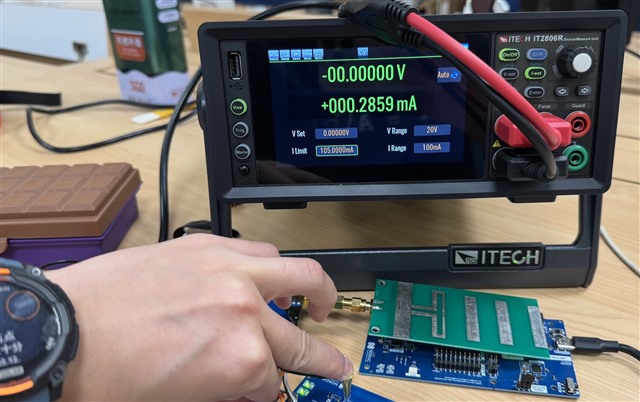
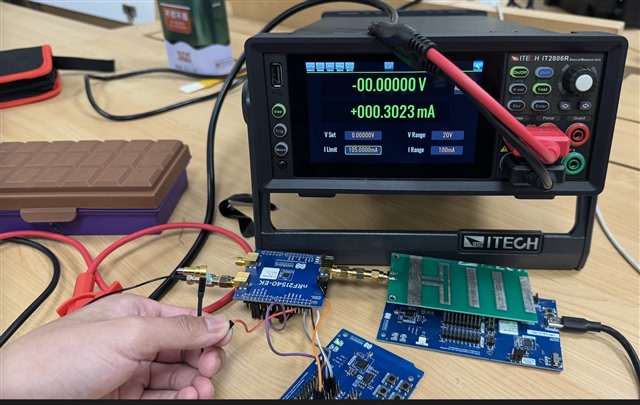
The measured current consumption with and without FEM is as follows.
Could you please let me know whether my measurements are accurate? And do you have any explanation for this observation?