Current consumption of nRF54L15DK

Hello,

I am evaluating the nRF54L15DK current consumption based on Nordic example: https://academy.nordicsemi.com/courses/nrf54l-series-express-course/lessons/lesson-5-development-choices-and-demo/topic/nrf54l-power-consumption-demo-part-1/

So I have flashed the nRF54L15DK with provided demo.hex and everything works fine. By pressing BUTTON0 I change advertisement message interval.

Since I do not have Power Profiler KIt I have soldered 10 Ohm Resistor as R24 and used it to measure supply current on oscilloscope :
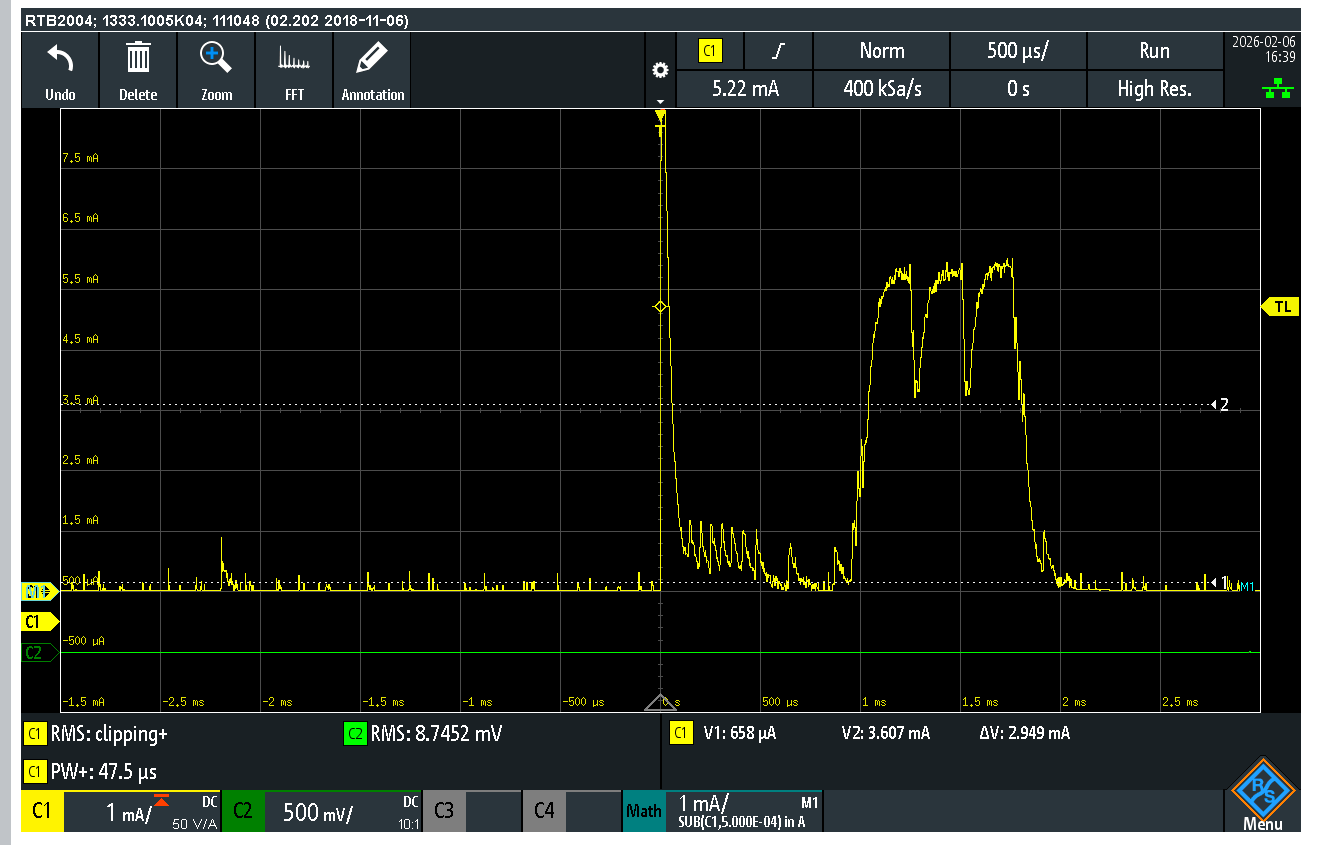
On the right one can observe three current peaks related to advertisement message, but before it is a current spike that overshoots. This spike happens before every adv msg.  The DK was powered from USB on J3 and PMIC was set to 3V as suggested.

I have repeated the same measurement also with STLINK-V3PWR (device similar to Nordics PPK). Since this device is just a power source, I have unsoldered the R24 and connect 3V from STLINK-v3PWR between pin 2 and pin 3 of P6. I have left the debugger part powered from USB over J3.

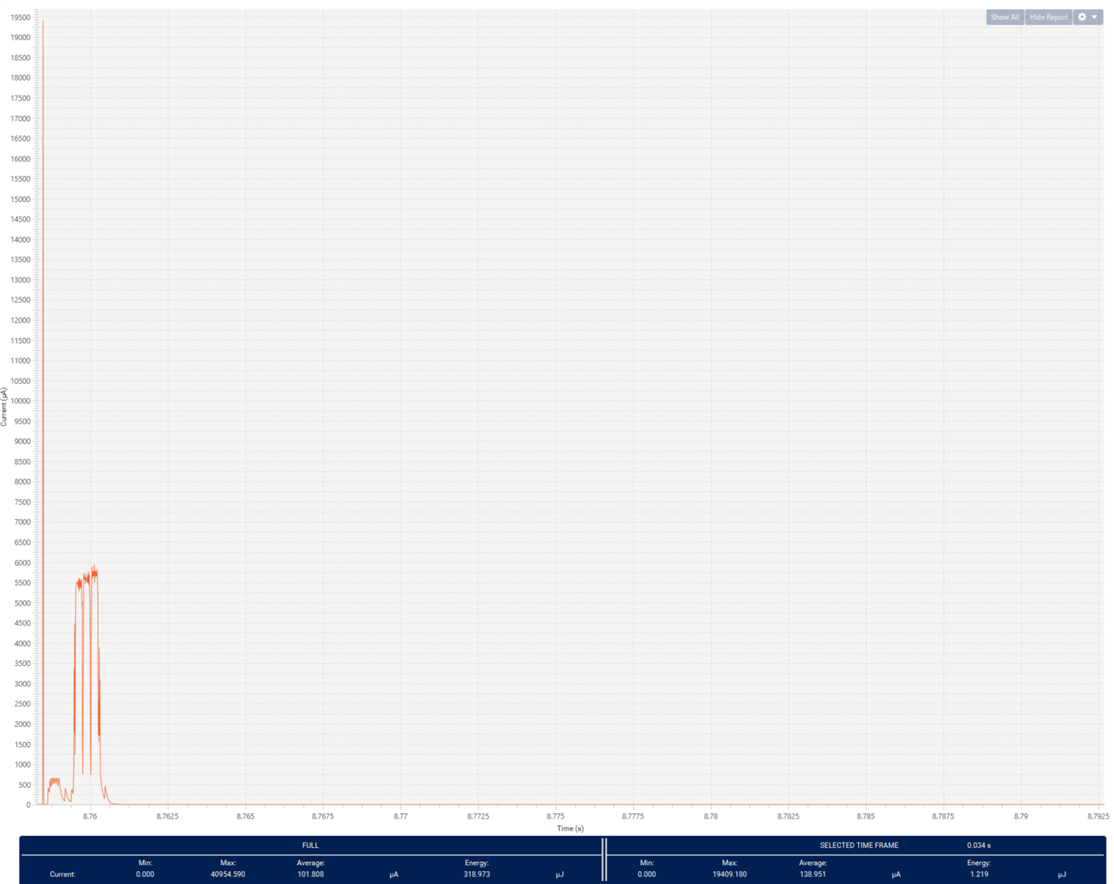
Also in this case the spikes can be observed. Since the STLINK-V3PWR has bigger dynamic range it can be seen that spikes go up to 20mA. 
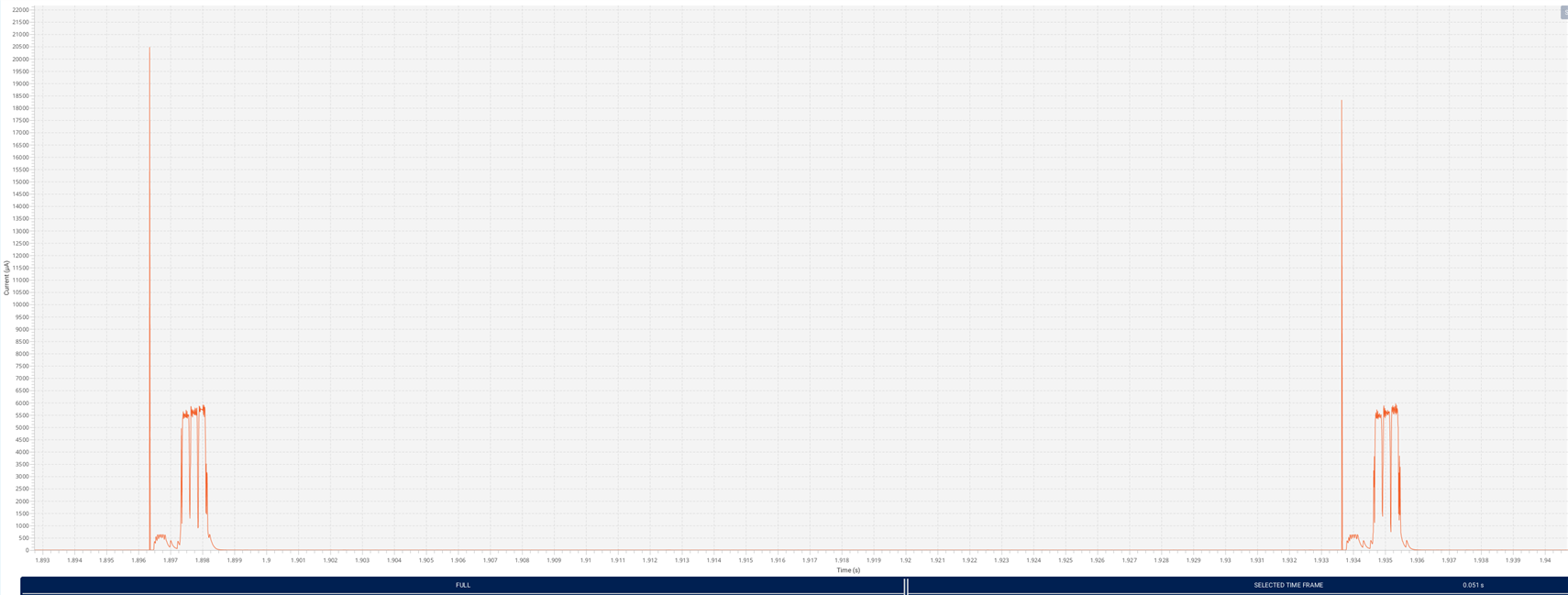
Comparing my measurements to the example I think that spike should not be there. Since I am using the example code, I guess the issue must be in the hardware.

Do I need to cut/short some extra solder bridges? How should the DK be configured - I have turned off all the features(VCMO0/1, Power2LEDs,...)

Any other ideas?

BR

Urban

  • Hello Urban,

    I don't think you need to do any hardware change. It seems expected behavior to see spike due to regulator's behavior. Have you measured the average current from the oscilloscope reading?

  • Hello Urban,

    A bit more explanation from expert in addition to my last comment.

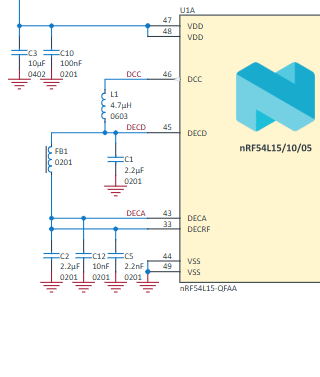
    The spike is the outcome of the inrush current to the DECD/A capacitors. When the system wakes up from idle, the internal voltage increases from 0.7V to 0.9V. This will cause an inrush current into the DECD/A capacitors. This is normal and how the regulator is designed to operate.

    It is worth mentioning that the energy used to charge the capacitors, will be regained when the output voltage of the internal regulator drops down to 0.7V in idle mode, after the active period. The max current of the spike will depend on the internal resistance of the supply, and the total decoupling on VDD. 

    Inductance between the measuring tool and the VDD input, as well as changes in output impedance of the measuring tool, due to automatic range switching, may cause the spike to overshoot and look more dramatic than it really is.


  • Hello Kazi,

    thanks for the explanation. It makes sense.

    I have doubled checked the average current. So for the 0dBm, 8Bytes and 30ms adv interval the average current is 138uA, which is a bit more than 121uA by Nordic's Online Power Profiler. I guess the reason is the peak measurement of inrush current. I will double check the peak level with oscilloscope as well, but I am waiting for lower sense resistor.  

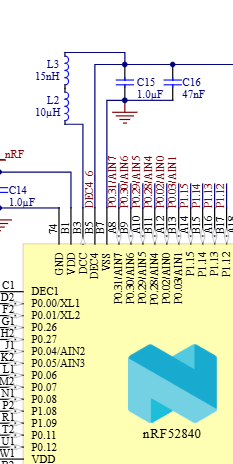
    P.S. another reason why I was surprised with inrush spike, was because on nrf52840DK I did not observe any spike. Could you comment on this?

    BR

  • Hello,

    ''I will double check the peak level with oscilloscope as well, but I am waiting for lower sense resistor.''

    Yes, that sounds like a good plan. We have an old blog (Current measurement guide: Introduction - nRF5x - Hardware design, test and measuring - Nordic DevZone) which describes about using a lower sense resistor and an oscilloscope with ≥200 kSa/s on the shunt to directly view the pulse shape and peak level.

    ''another reason why I was surprised with inrush spike, was because on nrf52840DK I did not observe any spike. Could you comment on this''

    The principal of hysteric/refreshing are similar for both nRF52840 and nRF54L15. But regulator implementation, board decoupling differs. The capacitance on the output of the internal regulator is larger on the nRF54L15 (2.2uF) than nRF52840 (1uF). This causes the inrush current to be higher in the nRF54L15. 


Related