Hi Nordic Team:
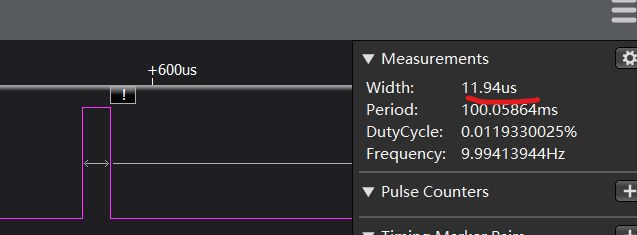
I am developing the firmware for nRF54H20 using NCS v3.2.0. I need to quickly configure 16 GPIOs as input with pull-up resistors, so I adopted the coding approach shown below. However, actual measurements show that executing KEY_IO_CFG_INPUT(); takes about 12 microseconds, whereas it took less than 1 μs on the nRF52840 previously. Is this due to the GPIO access speed limitation of nRF54H20, or is there any configuration that needs to be adjusted? Could anyone help check this issue? thanks.
#define KEY_IO_CFG_INPUT() { \
        NRF_P2->PIN_CNF[0] = (GPIO_PIN_CNF_PULL_Pullup << GPIO_PIN_CNF_PULL_Pos) | (GPIO_PIN_CNF_DIR_Input << GPIO_PIN_CNF_DIR_Pos); \
        NRF_P2->PIN_CNF[1] = (GPIO_PIN_CNF_PULL_Pullup << GPIO_PIN_CNF_PULL_Pos) | (GPIO_PIN_CNF_DIR_Input << GPIO_PIN_CNF_DIR_Pos); \
        NRF_P2->PIN_CNF[2] = (GPIO_PIN_CNF_PULL_Pullup << GPIO_PIN_CNF_PULL_Pos) | (GPIO_PIN_CNF_DIR_Input << GPIO_PIN_CNF_DIR_Pos); \
        NRF_P2->PIN_CNF[3] = (GPIO_PIN_CNF_PULL_Pullup << GPIO_PIN_CNF_PULL_Pos) | (GPIO_PIN_CNF_DIR_Input << GPIO_PIN_CNF_DIR_Pos); \
        NRF_P2->PIN_CNF[4] = (GPIO_PIN_CNF_PULL_Pullup << GPIO_PIN_CNF_PULL_Pos) | (GPIO_PIN_CNF_DIR_Input << GPIO_PIN_CNF_DIR_Pos); \
        NRF_P2->PIN_CNF[5] = (GPIO_PIN_CNF_PULL_Pullup << GPIO_PIN_CNF_PULL_Pos) | (GPIO_PIN_CNF_DIR_Input << GPIO_PIN_CNF_DIR_Pos); \
        NRF_P1->PIN_CNF[1] = (GPIO_PIN_CNF_PULL_Pullup << GPIO_PIN_CNF_PULL_Pos) | (GPIO_PIN_CNF_DIR_Input << GPIO_PIN_CNF_DIR_Pos); \
        NRF_P1->PIN_CNF[2] = (GPIO_PIN_CNF_PULL_Pullup << GPIO_PIN_CNF_PULL_Pos) | (GPIO_PIN_CNF_DIR_Input << GPIO_PIN_CNF_DIR_Pos); \
        NRF_P1->PIN_CNF[3] = (GPIO_PIN_CNF_PULL_Pullup << GPIO_PIN_CNF_PULL_Pos) | (GPIO_PIN_CNF_DIR_Input << GPIO_PIN_CNF_DIR_Pos); \
        NRF_P1->PIN_CNF[4] = (GPIO_PIN_CNF_PULL_Pullup << GPIO_PIN_CNF_PULL_Pos) | (GPIO_PIN_CNF_DIR_Input << GPIO_PIN_CNF_DIR_Pos); \
        NRF_P1->PIN_CNF[5] = (GPIO_PIN_CNF_PULL_Pullup << GPIO_PIN_CNF_PULL_Pos) | (GPIO_PIN_CNF_DIR_Input << GPIO_PIN_CNF_DIR_Pos); \
        NRF_P1->PIN_CNF[6] = (GPIO_PIN_CNF_PULL_Pullup << GPIO_PIN_CNF_PULL_Pos) | (GPIO_PIN_CNF_DIR_Input << GPIO_PIN_CNF_DIR_Pos); \
        NRF_P1->PIN_CNF[7] = (GPIO_PIN_CNF_PULL_Pullup << GPIO_PIN_CNF_PULL_Pos) | (GPIO_PIN_CNF_DIR_Input << GPIO_PIN_CNF_DIR_Pos); \
        NRF_P1->PIN_CNF[8] = (GPIO_PIN_CNF_PULL_Pullup << GPIO_PIN_CNF_PULL_Pos) | (GPIO_PIN_CNF_DIR_Input << GPIO_PIN_CNF_DIR_Pos); \
        NRF_P1->PIN_CNF[9] = (GPIO_PIN_CNF_PULL_Pullup << GPIO_PIN_CNF_PULL_Pos) | (GPIO_PIN_CNF_DIR_Input << GPIO_PIN_CNF_DIR_Pos); \
        NRF_P1->PIN_CNF[10] = (GPIO_PIN_CNF_PULL_Pullup << GPIO_PIN_CNF_PULL_Pos) | (GPIO_PIN_CNF_DIR_Input << GPIO_PIN_CNF_DIR_Pos); \
    }

// P9.0
const struct gpio_dt_spec ktsp1 = GPIO_DT_SPEC_GET(DT_ALIAS(tsp1), gpios);      //test pin, use to toggle io to measure time

int main(void)
{
    gpio_pin_configure_dt(&ktsp1, GPIO_OUTPUT_INACTIVE);

    while(1)
    {
        k_msleep(100);

        k_sched_lock();

        //NRF_P9->OUTSET = 1;
        gpio_pin_configure_dt(&ktsp1, GPIO_OUTPUT_ACTIVE);

        //for(uint32_t i = 0; i < 1000; i++)
        {
            KEY_IO_CFG_INPUT();             // it takes 12us
        }

        gpio_pin_configure_dt(&ktsp1, GPIO_OUTPUT_INACTIVE);
        //NRF_P9->OUTCLR= 1;

        k_sched_unlock();
    }
    return 0;
}