

Can I copy the ESB code from SDK v3.3.0-preview3 into SDK v2.9.0, and then get the functionality in esb_ptx_ble & esb_prx_ble?
Is there any way to achieve it quickly?
Can I copy the ESB code from SDK v3.3.0-preview3 into SDK v2.9.0, and then get the functionality in esb_ptx_ble & esb_prx_ble?
Is there any way to achieve it quickly?
Hi,
My device is battery powered and requires extremely low power consumption, so it will turn off RF. I changed the ts_dauration params. tx_rx_sequence of static void update_ts_duration_prams_for_tx (uint8_t payload_1ength), but it didn't have much effect, and the total time still hasn't changed. It seems that MPSL scheduling takes a lot of time.
static void update_ts_duration_params_for_tx(uint8_t payload_length)
{
	const uint16_t margin = 100;
	const uint16_t ramp_up =
		esb_cfg.use_fast_ramp_up ? TX_FAST_RAMP_UP_TIME_US : TX_RAMP_UP_TIME_US;

	ts_duration_params.tx_frame_duration = (ts_duration_params.frame_overhead + payload_length)
					       << ts_duration_params.bitrate_shift;
	// ts_duration_params.tx_rx_sequence = ramp_up + ts_duration_params.tx_frame_duration +
	// 				    wait_for_ack_timeout_us +
	// 				    ts_duration_params.max_frame_duration + margin;
	ts_duration_params.tx_rx_sequence = ramp_up + ts_duration_params.tx_frame_duration + margin;
}
margin;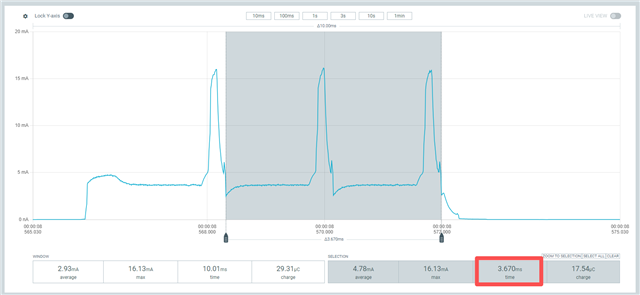
2. ts_duration_params.tx_rx_sequence = ramp_up + ts_duration_params.tx_frame_duration +
wait_for_ack_timeout_us +
ts_duration_params.max_frame_duration + margin;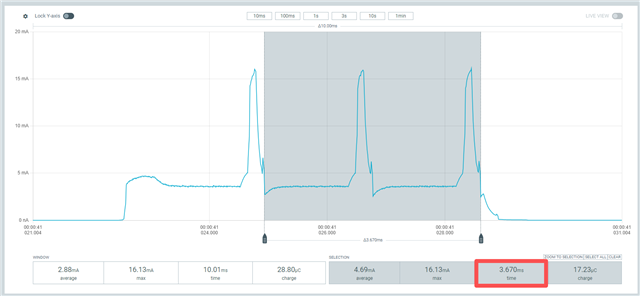
int main(void)
{
	int err;

    LOG_INF("Build date: %s, build time: %s", __DATE__, __TIME__);
	// LOG_INF("Starting Enhanced ShockBurst prx with Peripheral LBS sample");

	err = dk_leds_init();
	if (err) {
		LOG_ERR("LEDs init failed (err %d)", err);
		return 0;
	}

	// err = dk_buttons_init(button_changed);
	// if (err) {
	// 	LOG_ERR("Cannot init buttons (err: %d)", err);
	// }

	// err = bt_enable(NULL);
	// if (err) {
	// 	LOG_ERR("Bluetooth init failed (err %d)", err);
	// 	return 0;
	// }

	// LOG_INF("Bluetooth initialized");

	// err = bt_lbs_init(&lbs_callbacks);
	// if (err) {
	// 	LOG_ERR("Failed to init LBS (err:%d)", err);
	// 	return 0;
	// }

	// k_work_init(&adv_work, adv_work_handler);
	// advertising_start();

	// err = esb_initialize();
	// if (err) {
	// 	LOG_ERR("ESB initialization failed, err %d", err);
	// 	return 0;
	// }

	// LOG_INF("ESB initialized");

	// err = esb_write_payload(&tx_payload);
	// if (err) {
	// 	LOG_ERR("Write payload, err %d", err);
	// 	return 0;
	// }

	// LOG_INF("Setting up for packet reception");

	// err = esb_start_rx();
	// if (err) {
	// 	LOG_ERR("RX setup failed, err %d", err);
	// 	return 0;
	// }
#if APP_ESB_RX_MODE
    LOG_INF("Starting RX mode");
    k_work_schedule(&rx_work, K_MSEC(1000 + sys_rand32_get() % 3000));
    while (1) {
        struct esb_payload rx_payload;
        k_msgq_get(&rx_msgq, &rx_payload, K_FOREVER);
        if (rx_payload.length) {
            // Process the received payload
            static uint8_t target_buf[3] = { 0x6e, 0x26, 0xb1 };
            if (memcmp(rx_payload.data, target_buf, sizeof(target_buf))) {
                continue;
            }
            static uint32_t rx_count = 0, last_uptime = 0;
            static uint16_t last_seq_num = 0x8000, missed_count = 0, seq_count = 0;
            uint16_t new_seq_num = rx_payload.data[6] | (rx_payload.data[5] << 8);
            uint32_t uptime = k_uptime_seconds();
            rx_count++;
            if(new_seq_num  - last_seq_num > 1 && last_seq_num != 0x8000) {
                missed_count += new_seq_num - last_seq_num - 1;
                LOG_WRN("Missed %d packets, total missed %d", new_seq_num - last_seq_num - 1, missed_count);
                LOG_HEXDUMP_WRN(rx_payload.data, rx_payload.length, "New packet data");
            }
            if(new_seq_num == last_seq_num || last_seq_num == 0x8000) {
                seq_count++;
            } else {
                seq_count = 1;
            }

            LOG_INF("T:%u, RX %u, seq 0x%04x, count %u, missed %u", uptime, rx_count, new_seq_num, seq_count, missed_count);
            last_seq_num = new_seq_num;

            // static bool last_led_state = false;
            // if (uptime - last_uptime > 2) {
            //     dk_set_led(DK_LED1, last_led_state);
            //     last_led_state = !last_led_state;
            //     last_uptime = uptime;
            // }
        }
    }
#elif 1
    LOG_INF("Starting TX mode");
    k_sleep(K_MSEC(1000));
    tx_payload.noack = true;
    tx_payload.length = 8;
    uint32_t last_tx_time = k_uptime_get_32();
    int tx_count = 0;
    uint16_t seq_num = 0x8000;
    while (1) {

	    err = esb_initialize();
	    if (err) {
		    LOG_ERR("ESB initialization failed, err %d", err);
		    return 0;
	    }
        // LOG_INF("ESB initialized");

        // last_tx_time = k_uptime_get_32();
        // while (last_tx_time + 30 > k_uptime_get_32()) {

        //     if(!esb_tx_full())
        //        tx_count += !esb_write_payload(&tx_payload);
        // }

        tx_payload.length = 8;
        for (int i = 0; i < 3; i++) {
               tx_count += !esb_write_payload(&tx_payload);
        }
        while (!esb_is_idle());
        esb_disable();
        seq_num++;
        tx_payload.data[6] = seq_num & 0xFF;
        tx_payload.data[5] = (seq_num >> 8) & 0x7F;
        // LOG_INF("TX %d packets in 30ms, %d packet per ms", tx_count, tx_count / 30);
        tx_count = 0;

        k_sleep(K_MSEC(1000));
    }
#else
    while (1) {
        k_sleep(K_FOREVER);
    }
#endif
    return 0;
}
ESB_TX_3_Packets_8_bytes_tx_rx_sequence: ts_duration_params.tx_rx_sequence = ramp_up + ts_duration_params.tx_frame_duration + margin;
ESB_TX_3_Packets_8_bytes:
ts_duration_params.tx_rx_sequence = ramp_up + ts_duration_params.tx_frame_duration +
wait_for_ack_timeout_us +
ts_duration_params.max_frame_duration + margin;
ESB_TX_3_Packets_8_bytes_tx_rx_sequence.ppk2
ESB_TX_3_Packets_8_bytes.ppk2
