Measurement issues with PPK 2 on nrf52833 dk

Hi,

While testing, I ran into multiple problems when measuring the current consumption with the PPK 2 on the nRF52833 dk.

For all measurements the Blinky + Bluetooth demo program was used.

1.

When the PPK is used as a source, connected the upper pin of P22 and gnd to P21, the LEDs are dimmed.
SW9 is on VDD and the power output is set to 3.3V
If SW8 is on and SW9 is put on either LIPO or USB, the LEDs go to full brightness.
When SW8 is off, switching to LIPO or USB will cut power.
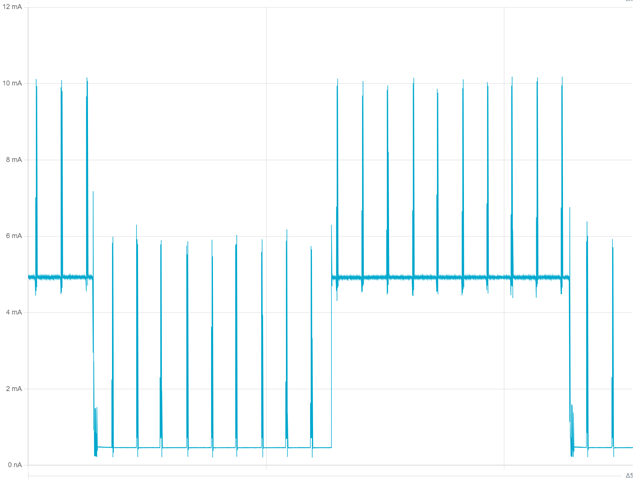
Current with dimmed LED, VDD: 3.3V, SW8 OFF, SW9 VDD
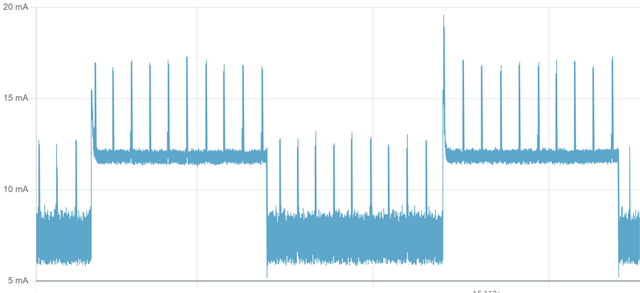
Current with full brightness LED, VDD: 3.3V, SW8 ON, SW9 LIPO
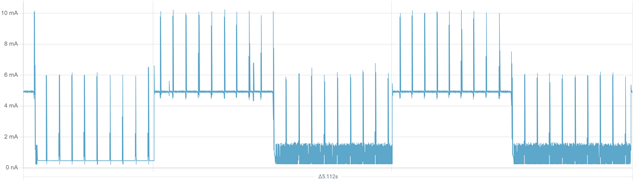
Current with SW8 from off to on, VDD 3.3V, SW9 VDD

Funnily enough, when switching SW8 to on, the measurement becomes much more noisy, since most likely other ICs are now powered.

2.

When the PPK is used as a meter, with power coming from the Debug USB (not nRF USB) the current measurement does not make sense
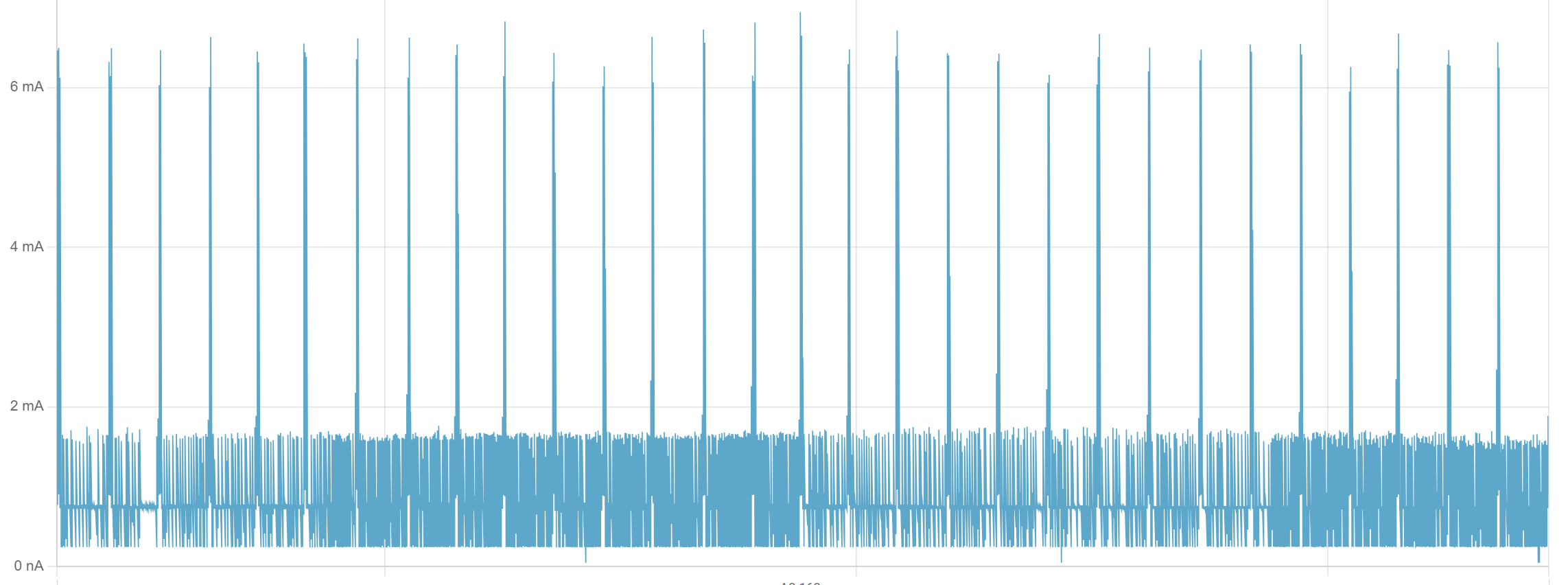
Current, LED on/off, SW8 on, SW9 VDD

The phase with less noise is when the LED is off, the phase with more noise is when the LED is on

Additionally, every LED transition (hi to lo and lo to hi) causes the LED from the debugger IC to flicker.

So now to the specific questions:
Why does the weird behavior in 1. happen?
Why does the ppk in meter mode not measure the led current BUT does suddenly have more noise when the LED is on?
The average current in the LED low state in image 1 is around 560 to 600µA but the average current in image 4 is 800µA, ... why?
Is there a chance that this behavior is due to a broken ppk oder dk (the "problems" described were there since the dk and ppk were fresh out of the box)?
Why does the debugger led flicker on transitions (any proper decoupling, which I assume is present, should mitigate that)?

Thank you for any help

  • Hello,

    After reading the description of your case, I think that the issue is not related to PPK; it's the way you are measuring. 

    The default setting of the nRF power source is VDD.  To use the li-po on SW9, you need a Li-Po battery connected to either J6 or P27. In that position, the nRF52833's high-voltage regulator is supplied directly from the Li-Po battery connector. 

    Can you send me the picture of your setup?

    Have you followed this guideline Setting up the Power Profiler Kit II while setting the DK for measuring current?

    Thanks.

    BR

    KZI

  • Hello,

    I followed the instuctions given on the website https://docs.nordicsemi.com/bundle/ug_ppk2/page/UG/ppk/setting_up.html
    a
    nd cut the solder bridge (SB40).

    To use the li-po on SW9, you need a Li-Po battery connected to either J6 or P27.

    I think you misread what I meant:
    If the ppk is the source and SW9 is set to lipo or usb, the led now draws more current / is brighter

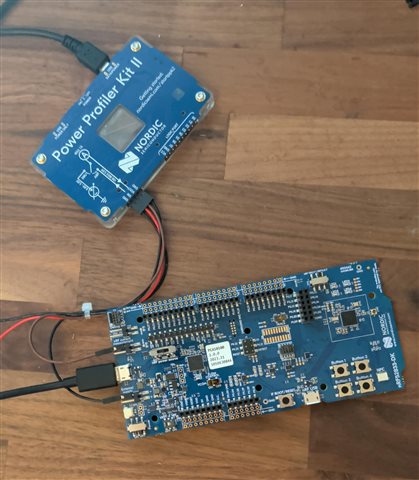
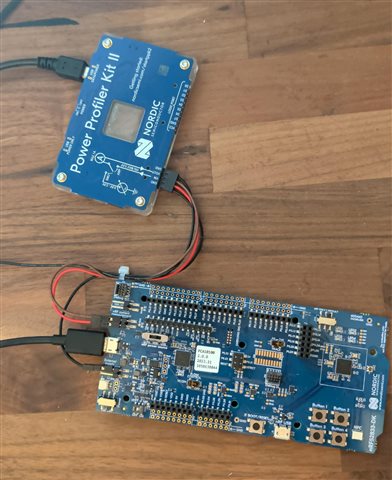
    Source Mode                                              Ampere Meter Mode

    BR

    Tobias

  • Hello Tobias,

    I can see in the picture that your board is not powered by USB. So the entire board is powered by only PPK2. That's why you are observing more current.

  • Hi,

    Neither the PPK nor the dk were powered for the pictures.
    Could you explain further, what you meant with that the enitre board is powered with the PPK?

    It is self explanatory, that the current for the whole board is measured with the PPK in source mode.
    However that was never my question.
    (But in meter mode, the current measured was higher than in source mode, when measured in the LED low state.
      And the LED current was not measured in meter mode)

    BR

  • Hello,

    ''Neither the PPK nor the dk were powered for the pictures.
    Could you explain further, what you meant with that the enitre board is powered with the PPK?''

    The connection I saw from the picture you sent; I observed SW8 is on OFF position. I was assuming that when you measured the power with ppk2, if the connection is like that (SW8 is off, SW6 is on default position and SW9 is set on VDD) then the interface MCU is still connected with the VDD_nRF rail. In such situation, PPK2 is powering both the target nRF52833 chip, all board peripherals (LEDs, pull-ups, sensors) and the interface MCU.

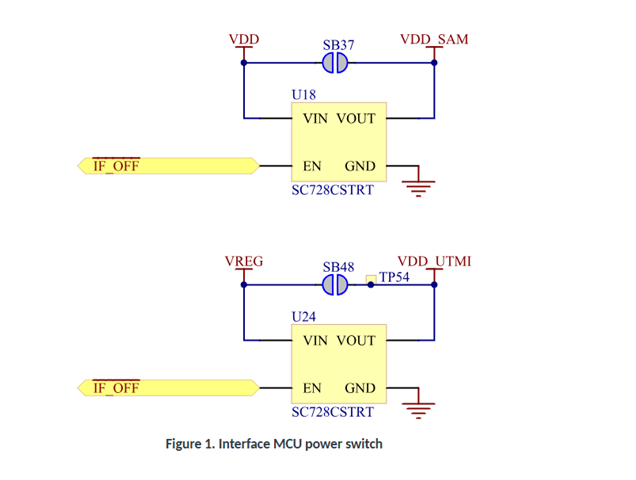
    The power for the interface MCU is routed through two load switches. One of the switches is for the VDD supply, and the other switch is for the USB supply. This enables the disconnecting of the interface MCU from the power domain when it is not in use.

    These switches are controlled by the presence of a USB connected to the interface MCU USB connector J2 and the state of the nRF ONLY switch SW6. In the picture, these were opposite.

    This will increase the current consumption. That's what I meant by saying in my reply.

Related