AOA received iq data is so poor

with the samples code:
direction_finding_connectionless_tx
direction_finding_connectionless_rx


CTE[0]: samples type: 8 bits int, samples count 45, cte type AOA, slot durations: 2 [us], packet status CRC OK, RSSI -450 IQ[0]: -12, 1 IQ[1]: -1, 0 IQ[2]: 0, 0 IQ[3]: -1, 0 IQ[4]: -1, -1 IQ[5]: -1, 0 IQ[6]: 0, 0 IQ[7]: 0, -1 IQ[8]: -1, -1 IQ[9]: -1, 0 IQ[10]: -1, 0 IQ[11]: 0, 0 IQ[12]: 0, 0 IQ[13]: 0, 0 IQ[14]: 0, 0 IQ[15]: -1, -1 IQ[16]: 0, 0 IQ[17]: -1, -1 IQ[18]: 0, -1 IQ[19]: 0, 0 IQ[20]: -1, 0 IQ[21]: 0, 0 IQ[22]: 0, -1 IQ[23]: -1, -1 IQ[24]: 0, 0 IQ[25]: -1, -1 IQ[26]: 0, 0 IQ[27]: 0, 0 IQ[28]: 0, -1 IQ[29]: 0, 0 IQ[30]: 0, 0 IQ[31]: -1, 0 IQ[32]: 0, 0 IQ[33]: 0, -1 IQ[34]: 0, 0 IQ[35]: 0, 0 IQ[36]: -1, 0 IQ[37]: 0, 0 IQ[38]: 0, 0 IQ[39]: 0, -1 IQ[40]: 0, -1 IQ[41]: 0, -1 IQ[42]: 0, 0 IQ[43]: -1, -1 IQ[44]: 0, -1 CTE[0]: samples type: 8 bits int, samples count 45, cte type AOA, slot durations: 2 [us], packet status CRC OK, RSSI -460 IQ[0]: 13, 7 IQ[1]: 10, 1 IQ[2]: -10, -2 IQ[3]: 8, -2 IQ[4]: 10, 0 IQ[5]: -10, -1 IQ[6]: 7, -2 IQ[7]: 8, -3 IQ[8]: -8, 3 IQ[9]: 9, -3 IQ[10]: 6, -5 IQ[11]: 8, -6 IQ[12]: -6, 6 IQ[13]: -7, 7 IQ[14]: -4, 7 IQ[15]: 5, -9 IQ[16]: 4, -10 IQ[17]: 2, -10 IQ[18]: 0, -9 IQ[19]: 1, 8 IQ[20]: -3, -8 IQ[21]: -2, -10 IQ[22]: 1, 9 IQ[23]: 3, 8 IQ[24]: -6, -9 IQ[25]: 6, 7 IQ[26]: -8, -5 IQ[27]: 7, 3 IQ[28]: -9, -6 IQ[29]: -8, -2 IQ[30]: -9, -1 IQ[31]: -8, 0 IQ[32]: 9, 0 IQ[33]: -8, 2 IQ[34]: 7, -4 IQ[35]: -10, 2 IQ[36]: 6, -5 IQ[37]: -9, 5 IQ[38]: 6, -7 IQ[39]: 6, -8 IQ[40]: -7, 7 IQ[41]: -4, 8 IQ[42]: -2, 8 IQ[43]: 2, -10 IQ[44]: 1, -11

the samples iq is so poor.
about 90% values is 0, 1.
10% values looks bigger (below 10)

would you please post some good iq ?
I want to know what is the normal iq.

thanks.

Parents
  • Hello,

    I agree that these measurements look a bit poor. 

    Perhaps you can share some more details on your project:

    1: What NCS version are you using?

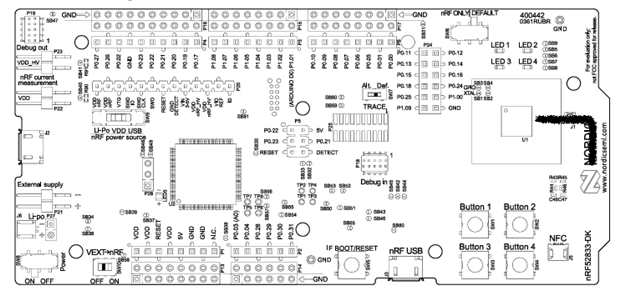
    2: What HW are you using? 

    3: I assume that these samples are what you received on your device. Is this also the device with the antenna array? Or is it from a receiver with a single antenna receiving packets from a device sending packets from an antenna array?

    4: What sort of antenna array are you using?

    5: Are both devices nRF Devices?

    Best regards,

    Edvin

  • thanks,Edvin。
    environment:
    ncs2.4.0
    the hardware is dk (one run rx, another run tx), without antenna array.  I think the real antenna is fixed (PCB antenna) but the iq should be normal as sample the constant signal with constant gap. even without real phase difference.
    and the dfe gpio pin is unconnected.

    now, I have no chance to see the normal sampled iq with constant gap.


    cte code with fixed pcb antenna

  • nick yong said:
    without antenna array

    Wait. What is it that you are trying to do? Is it AoA, meaning you are trying to measure the direction where the signal is coming from? Or are you trying to do something else here?

    BR,

    Edvin

  • thanks, Edvin.
           the final goal is get direction of signal. but now, even the iq data is abnormal. So, I need verify the simple case first.
           I have two hardware in fact. one is DK (fixed  single PCB antenna ),  antenna array is the same observation. 
           If I use the AOA code (direction_finding_connectionless_tx)(direction_finding_connectionless_rx) with DK(which has the single fixed pcb antenna), the GPIO for antenna switch is running. but the signall always from the fixed antenna. that means, the signal is from sources with constant phase. (NO phase difference)

    but, now , why the rssi is so poor? even the bigger iq data (10% occurrence), cannot show constant phase. it looks more like noise?

  • Hi,

    This is a common mistake, you shouldn't look at the IQ data directly, you should look at the phase/amplitude data so convert the I/Q data to that and then look at the result. Plenty of posts on DevZone explaining how to do this.

  • PaKa,

            if the IQ is so small , means the amplitude is so small. 

Reply Children
No Data
Related