Hello Nordic Support Team,
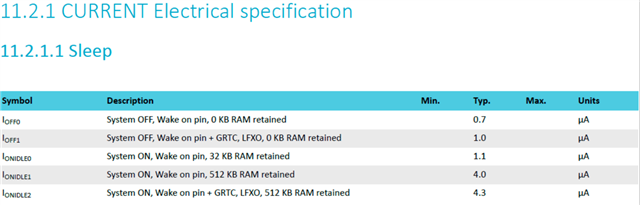
I am working on a project using the nRF54LM20B controller, and my application requires operation in a very low-power mode.
To optimize power consumption, I would like to know whether it is possible to control or change the CPU clock frequency at runtime in the application.
Could you please confirm the following points?
- Does the nRF54LM20B support runtime CPU clock frequency scaling/control?
- If yes, is there any supported API or driver in the nRF Connect SDK / Zephyr to change the CPU frequency during runtime?
- Are there any limitations or recommended practices for changing the CPU clock frequency while the application is running?
- Could you please share any official sample project, application note, or documentation related to runtime CPU frequency control or low-power configuration for nRF54LM20B?
- If runtime CPU frequency control is not supported, what is the recommended approach to achieve the lowest possible power consumption on this device?
My main goal is to reduce power consumption by dynamically adjusting the CPU operating frequency depending on the application state.
Please guide me on the best approach for implementing this on nRF54LM20B.
Thank you.