I'm planning to connect The nRF52840 MCU GPIO in series to a 1.8V 20mA LED and a Resistor then to ground.
Would the current from the MCU be sufficient to power the LED ?
Thank you
I'm planning to connect The nRF52840 MCU GPIO in series to a 1.8V 20mA LED and a Resistor then to ground.
Would the current from the MCU be sufficient to power the LED ?
Thank you
The Product Specification tells you the current capabilities of the GPIO pins.
Take a look at the Dev Kit schematics for examples.
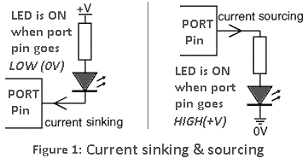
It's generally better to have a microcontroller GPIO switching to ground (ie, "sinking" the LED current)
https://startingelectronics.org/articles/current-sourcing-sinking/

The Product Specification tells you the current capabilities of the GPIO pins.
Take a look at the Dev Kit schematics for examples.
It's generally better to have a microcontroller GPIO switching to ground (ie, "sinking" the LED current)
https://startingelectronics.org/articles/current-sourcing-sinking/


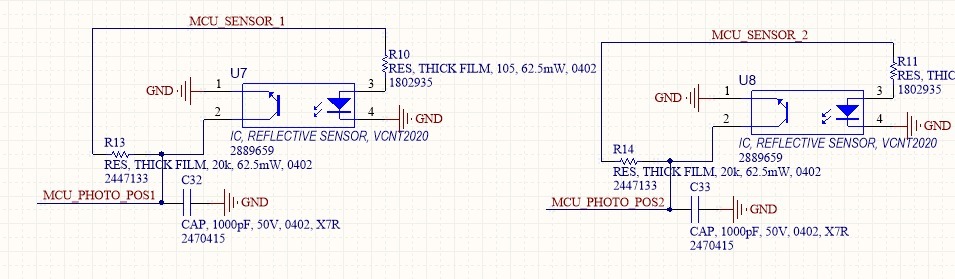
I have 2 photo sensors. How do I do a current sinking circuit for this ? Thank you
That seems to have been copied from some other schematic?
So start by understanding how that other circuit works.
Electrically, the nRF GPIOs aren't much different from GPIOs on other microcontrollers - compare the nRF specification against the other microcontroller's documentation ...
EDIT
Note that I only said sinking is "generally better" - I didn't say that sourcing is impossible!
Your circuits don't seem to make much sense - how do you think they are supposed to work?

Hi
I have changed it to current sink. The mcu_photo_pos1 is connected to a gpio (adc) to read the voltage of the photo sensor.
Thank you
Best regards
Chong