I have an application scenario where a client can communicate with more than 30 nodes in both directions. Which demo should I refer to?
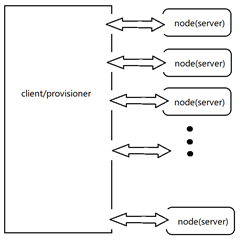
I have an application scenario where a client can communicate with more than 30 nodes in both directions. Which demo should I refer to?

Hi,
The main example in the nRF5 SDK for Mesh is the Light switch example, which showcases a client communicating with n servers.
Depending on the information you want to communicate, you probably need to switch from using the generic on/off models to using a different model, maybe creating your own.
Regards,
Terje
Hi Terje,
Thank you for your answer.
/** Parameters for the Generic OnOff Status message. */
typedef struct
{
uint8_t present_on_off; /**< The present value of the Generic OnOff state */
uint8_t target_on_off; /**< The target value of the Generic OnOff state (optional) */
uint32_t remaining_time_ms; /**< Remaining time value in milliseconds */
} generic_onoff_status_params_t;
Can I modify this structure to achieve my purpose of transmitting data?
For example, change to the following code
/** Parameters for the Generic OnOff Status message. */
typedef struct
{
uint8_t present_on_off; /**< The present value of the Generic OnOff state */
uint8_t* additional;
uint8_t target_on_off; /**< The target value of the Generic OnOff state (optional) */
uint32_t remaining_time_ms; /**< Remaining time value in milliseconds */
} generic_onoff_status_params_t;
Hi,
Sorry for the late reply. Instead of starting from the Generic OnOff model, which is a model specified by the Bluetooth SIG, it may be better to start off with the "Simple OnOff model" from our SDK. We have a thorough walkthrough on how this model works and how it is made.
Once you understand how the Simple OnOff model works, and how the messages are mapped, then you can switch over to sending other information (as other structures), and handle them appropriately in both ends.
Regards,
Terje
Hi,
Thanks for replying,I have completed this function with the Simple OnOff model
Regards,
ching