This post is older than 2 years and might not be relevant anymore
More Info: Consider searching for newer posts
This discussion has been locked.
You can no longer post new replies to this discussion. If you have a question you can start a new discussion

nrf52840 can be used for asset tracking?

Hello,

I am new to Nordic, I was previously using Cypress CYBT343026-01. But there were some drawbacks found during development.

1. It was consuming 315μA at 0 dBm BLE tx(1024ms).

2. When deep sleep is used it wakeups by rebooting the controller and it was giving a spike in the current during reboot of 13mA. which is 41 times higher than 315μA.

3. I2C HW buffer is 64 bytes. In that slave address is 1 byte. So maximum payload is 63 bytes. (this is on low priority.).

I am looking nRF52840 for asset tracking and expecting a minimum of 1 year backup of BLE5.0 or above Tx (500-1024ms) at 0dbm without any deep sleep.

I saw the datasheet of nRF52840 and in that "Applications" section I don't see it can be used for asset tracking. So my question is that can I use this nRF52840 for asset tracking? or you suggest any other controller for this purpose?

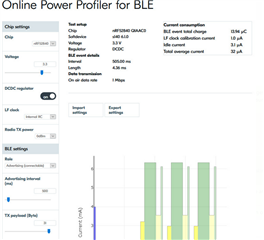
I saw an Online power profiler for BLE and I have calculated CPU takes 35.1μA + BLE tx at 0dbm 32μA = 67μA total average consumption. is this is correct?

Do nRF52840 wakeup by rebooting the controller? if yes, then how much current does it consumes during reboot?
Parents
  • The nRF52840 can be used for asset tracking but its a larger and more expensive IC. It would be simpler to start with the nRF52832 and then check if you can fit inside the nRF52810 for your application. Yes, your calculations for average current look ok. Look at the peak currents as well, these seem to be only visually represented, so hover over the bars to look at the peaks.

    The numbers reported are averageso look at the peaks visually so you don't miss anything.

    Usually asset tracking may use some crypto to ensure that there is no spoofing of the radio packets and some level of replay protection, so you may want to look at the crypto available as well.

    By reboot I assumed that you meant the IC starts from the start vector ? usually the Flash, CPU and the 16MHZ(RC at least), All RAM,  will run on start, so you add those to get the expected peak currents. Look at section 17. in the nRF52832 PS (v1.4) 

    You can also run some of the code from RAM, running from RAM will save more power as compared to running from Flash.

    Additionally don't forget that the numbers reported may be "typical" so the maximum numbers are likely to be different especially at higher temperatures (higher usually means higher than 25 deg C)

Reply
  • The nRF52840 can be used for asset tracking but its a larger and more expensive IC. It would be simpler to start with the nRF52832 and then check if you can fit inside the nRF52810 for your application. Yes, your calculations for average current look ok. Look at the peak currents as well, these seem to be only visually represented, so hover over the bars to look at the peaks.

    The numbers reported are averageso look at the peaks visually so you don't miss anything.

    Usually asset tracking may use some crypto to ensure that there is no spoofing of the radio packets and some level of replay protection, so you may want to look at the crypto available as well.

    By reboot I assumed that you meant the IC starts from the start vector ? usually the Flash, CPU and the 16MHZ(RC at least), All RAM,  will run on start, so you add those to get the expected peak currents. Look at section 17. in the nRF52832 PS (v1.4) 

    You can also run some of the code from RAM, running from RAM will save more power as compared to running from Flash.

    Additionally don't forget that the numbers reported may be "typical" so the maximum numbers are likely to be different especially at higher temperatures (higher usually means higher than 25 deg C)

Children
Related