This post is older than 2 years and might not be relevant anymore
More Info: Consider searching for newer posts

Custom boards not drawing enough current while advertising (programmable, PPK shows advertising state, but boards not discoverable in mobile app)

Hey all! So I'm working on some custom boards using the nRF52810-CAAA chip, I write firmware using SDK V15.2.0 (outdated I know). I'm having an issue with a recent batch of PCBs I received - some of the boards work fine, power consumption is great, antenna strength is great, etc, but some of the boards are not BLE discoverable. As in they can be succesfully programmed, when I use the PPK I can see advertising "spikes", but the boards do not show up on my mobile application (nRF connect or Adafruit Bluefruit apps). 

I noticed that on all of my "good" boards, the BLE advertising spikes are around ~12mA peak current as shown in the following PPK capture:
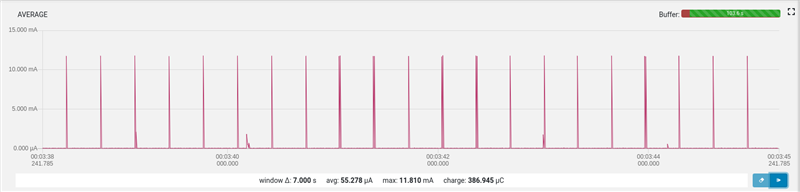
The "bad" boards have advertising peaks of ~5mA:
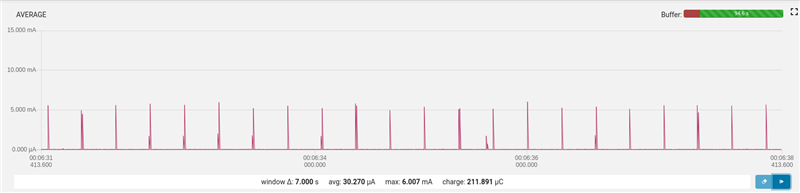
I believe this is an indicator that for some reason, my custom antenna is not drawing/receiving enough power and thus not advertising at a strong enough signal to be discovered. Here is the relevant schematic I am using, all GPIO inputs/outputs are disabled when during advertising (periods shown in the above graphs):
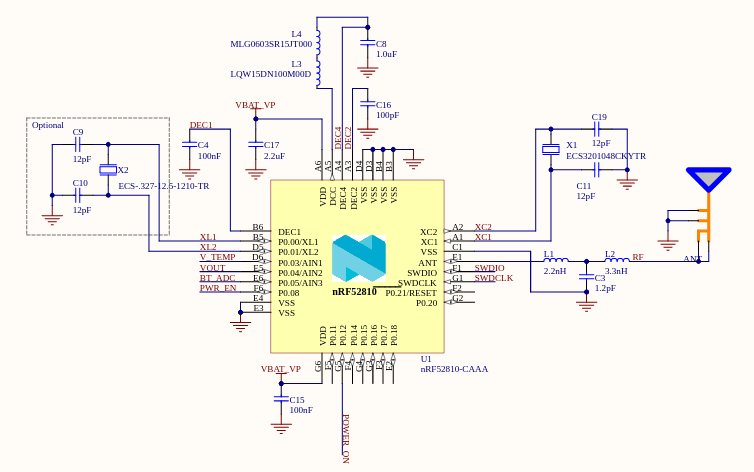
Does anybody have some ideas on what components, if placed poorly/incorrect component placed, would cause less current to be drawn? I've had issues previously where bad regulator connections caused too much current to be drawn, but have never seen an issue that caused not enough current to be drawn. Sleep current is comparable between the two boards, the only discrepancy is between BLE advertising spikes. I am thinking that perhaps a bad connection on DEC2, the antenna power regulator, might cause problems? If the capacitor is the wrong value or something. If L1 and L2 are accidentally swapped (L2 where L1 should be, L1 where L2 should be), would this cause issues? The boards are flashed with the same firmware, which has been verified to be good across 100's of prototypes and testing boards so the issue is definitely hardware related. Any insights or suggestions on components/places to inspect would be very much appreciated. Thanks!

Parents
  • Hi, are you able to zoom in on the advertising event, and compare the two plots. I think maybe you will have to use the bottom graph in the PPK software to get a good enough resolution. I was thinking if we were able to identify which parts of the advertising event that are consuming less current (if it's only TX, or both RX and TX, CPU etc), it should help us debug this further.

    If you are using DCDC I think that the "good" plot has too high peak current consumption, even with 4 dBm output power the TX should not be higher than 8-9 mA. And with a 0 dBm output power the bottom plot looks normal. This is of course if nothing else is running at the same time. To me it looks like DCDC is not enabled?

    Maybe you can try to flash a test FW where you both enable and disable the DCDC, and then check if the current consumption changes. Or if the failing boards are working when the DCDC is disabled.

    Yes, a bad connection on DEC2 might cause problems, so maybe you can try to swap out the capacitor with a new one.

    Are you able to measure the voltage on the decoupling caps? DEC1, 2 and 4? Preferably with a scope to see the ripples, and max/min voltages.

Reply
  • Hi, are you able to zoom in on the advertising event, and compare the two plots. I think maybe you will have to use the bottom graph in the PPK software to get a good enough resolution. I was thinking if we were able to identify which parts of the advertising event that are consuming less current (if it's only TX, or both RX and TX, CPU etc), it should help us debug this further.

    If you are using DCDC I think that the "good" plot has too high peak current consumption, even with 4 dBm output power the TX should not be higher than 8-9 mA. And with a 0 dBm output power the bottom plot looks normal. This is of course if nothing else is running at the same time. To me it looks like DCDC is not enabled?

    Maybe you can try to flash a test FW where you both enable and disable the DCDC, and then check if the current consumption changes. Or if the failing boards are working when the DCDC is disabled.

    Yes, a bad connection on DEC2 might cause problems, so maybe you can try to swap out the capacitor with a new one.

    Are you able to measure the voltage on the decoupling caps? DEC1, 2 and 4? Preferably with a scope to see the ripples, and max/min voltages.

Children
Related