This discussion has been locked.
You can no longer post new replies to this discussion. If you have a question you can start a new discussion

nRF51822 rf layout

Hi,

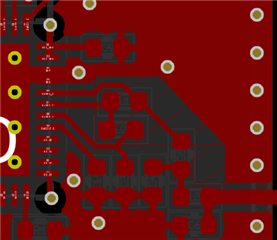
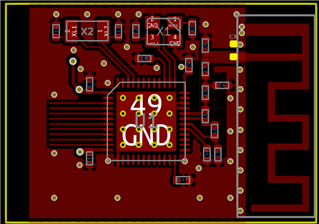
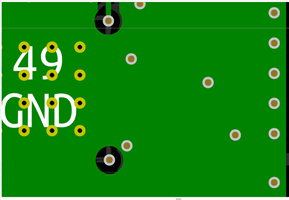
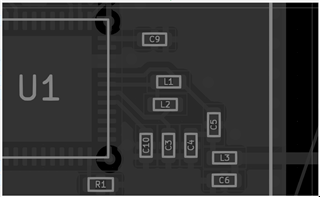
I am new to microwave board design, so I'd like a little advice please.  I have attached photos of the 2.4ghz section of my board and would like to know if the component layout is okay. The circuit should be identical (with reference to DC resistance) to the reference design, but I just need to know if it's okay to rearrange the component locations/orientations as I've done.  
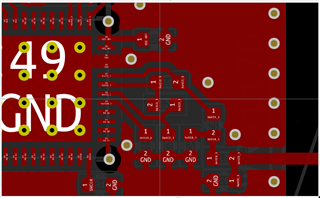
I noticed in the reference design there are not ground planes near the RF section. I presume that's to reduce the stray capacitance and thereby keeping the impedance more constant. 

Should I add keepout zones?

Thanks in advance!

Parents
  • Hi Brian,

    I just need to know if it's okay to rearrange the component locations/orientations as I've done.
    We highly recommend our customers to copy the reference layout as close as possible, as that configuration is what the board has been characterized with and the configuration where we can guarantee optimal RF performance. Changing the layout of the components might affect the performance, but it's difficult for us to say without doing physical testing on the board.

    I noticed in the reference design there are not ground planes near the RF section. I presume that's to reduce the stray capacitance and thereby keeping the impedance more constant. 

    That's correct.

    Should I add keepout zones?

    Again, it's difficult to give any recommendations other than following the reference layout here.

    Best regards,

    Martin S.

Reply
  • Hi Brian,

    I just need to know if it's okay to rearrange the component locations/orientations as I've done.
    We highly recommend our customers to copy the reference layout as close as possible, as that configuration is what the board has been characterized with and the configuration where we can guarantee optimal RF performance. Changing the layout of the components might affect the performance, but it's difficult for us to say without doing physical testing on the board.

    I noticed in the reference design there are not ground planes near the RF section. I presume that's to reduce the stray capacitance and thereby keeping the impedance more constant. 

    That's correct.

    Should I add keepout zones?

    Again, it's difficult to give any recommendations other than following the reference layout here.

    Best regards,

    Martin S.

Children
  • Ok, I have gone back to the reference design for the RF section.

    I have two questions now...

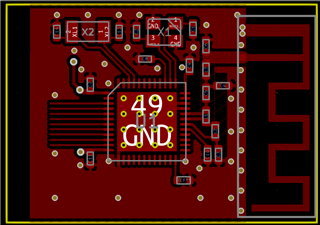
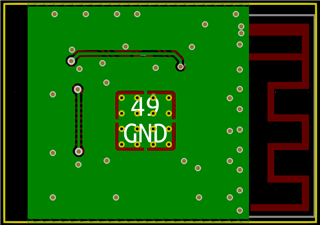
    1. Does the distance from the ground plane to the antenna look correct?

    2. Did I connect the antenna ground correctly by bringing the ground plane right up to the pad on both top/bottom layer?

  • Hi Brian, 

    Brian said:
    1. Does the distance from the ground plane to the antenna look correct?

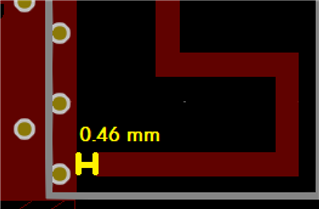
    The distance to ground on the top layer looks good, the distance to ground on the bottom layer is a little bit tight. It looks like you're using this antenna, and the distance to ground should be 0.46 mm.

    Brian said:
    2. Did I connect the antenna ground correctly by bringing the ground plane right up to the pad on both top/bottom layer?

    Yes, we have seen good performance connecting it like that.

    I'd also recommend adding a shunt component (usually a 1.0 pF capacitor) right up to the antenna feed point to be able to fine tune the antenna, we usually get good results by just adjusting the length of the antenna and the value of the capacitor:

    Best regards,

    Martin S.

  • the distance to ground on the bottom layer is a little bit tight.

    I aligned the edges of my ground planes.

    It looks like you're using this antenna, and the distance to ground should be 0.46 mm.

    Yes, but TI's AN043 didn't specify the distance from the final leg to the ground plane, so I took the difference L6-L1 = 0.96mm and divided by 2.  Thank you for the specific answer. 

    I'd also recommend adding a shunt component

    Done!

Related