Hi All,
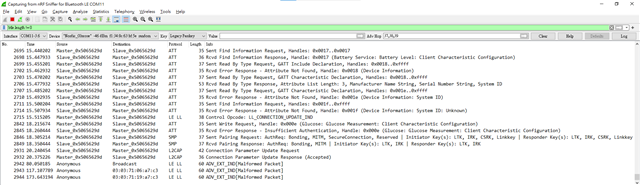
Here is the sniff graph of my Sniffer.

Seems to be different from what the bluetooth spec says

Best regards,
Kai
Hi All,
Here is the sniff graph of my Sniffer.
Seems to be different from what the bluetooth spec says
Best regards,
Kai
Hi Kai,
In Legacy pairing, there are 2 similar terms but different which are "pairing" and "bonding".
In pairing the LTK will not be distributed. But if you do bonding, meaning pairing + key distribution, there will be bond information (LTK included) be exchanged for subsequent connections.
LTK is needed when the connection is re-established and the link need to be re-encrypted without a new pairing process. This applied for both LE Secure connection and Legacy pairing.
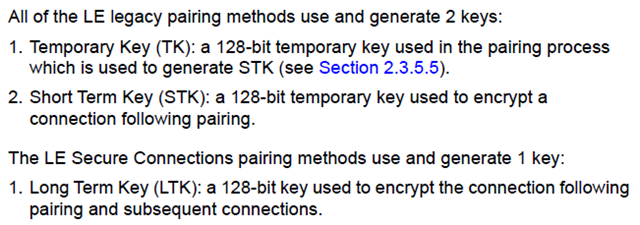
My understanding is that the Pairing process in Legacy Pairing doesn't generate the LTK, but it's only "distributed" after the pairing process which is "bonding" phase (key distribution).
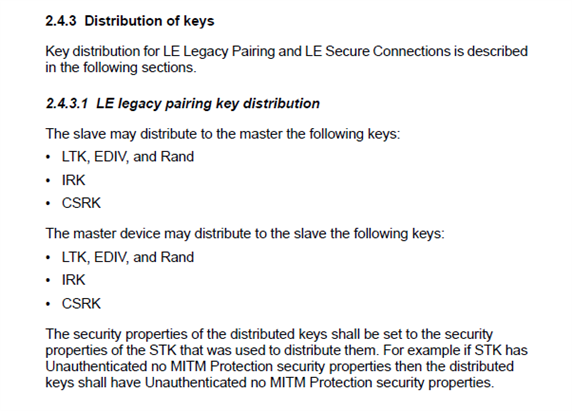
You can find the info here in the spec:

Hi Kai,
In Legacy pairing, there are 2 similar terms but different which are "pairing" and "bonding".
In pairing the LTK will not be distributed. But if you do bonding, meaning pairing + key distribution, there will be bond information (LTK included) be exchanged for subsequent connections.
LTK is needed when the connection is re-established and the link need to be re-encrypted without a new pairing process. This applied for both LE Secure connection and Legacy pairing.
My understanding is that the Pairing process in Legacy Pairing doesn't generate the LTK, but it's only "distributed" after the pairing process which is "bonding" phase (key distribution).
You can find the info here in the spec:

Hi Hung,
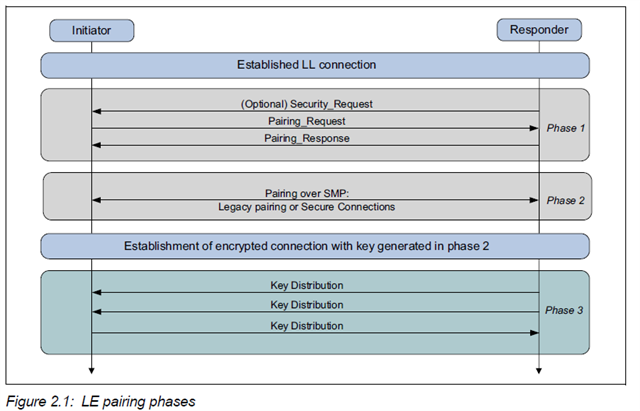
According to this diagram, if I use legacy pairing + bonding,
Phase2 deals with the pairing mechanism, and the key generation method is STK.
Phase3 deals with the bonding mechanism, and the key distribution method is LTK.
Is it correct?