Hi,
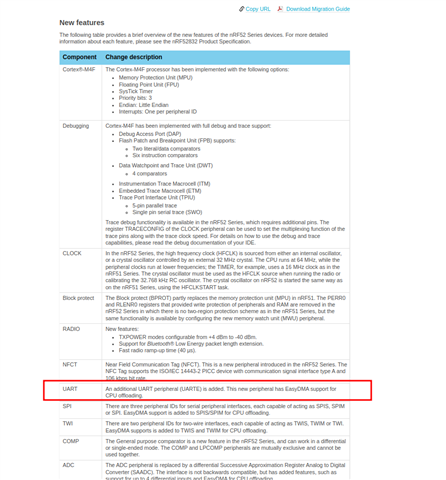
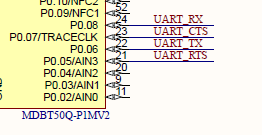
I have recently migrated by code from the nRF52832 to the nRF52840 on a custom board. This board uses UART to an STMH7 for the DFU.
When trying to do a DFU in the bootloader I get the UART error 12 = 0x1100 which are frame and block mask bits as far as I understand it. After this error the module just restarts the Bootloader
00> <error> app: p_event->type 2
00> <error> app: NRF_DRV_UART_EVT_ERROR
00> <error> app: UART_DFU_Mng_EventHandler p_event->data.error.error_mask 12
00> <error> app: ./Components/Middleware/UART_DFU_Mng/UART_DFU_Mng_Md0.c:168
I am using the following configuration (relevant extraits):
// <e> NRFX_UARTE_ENABLED - nrfx_uarte - UARTE peripheral driver
//==========================================================
#ifndef NRFX_UARTE_ENABLED
#define NRFX_UARTE_ENABLED 1
#endif
// <o> NRFX_UARTE0_ENABLED - Enable UARTE0 instance
#ifndef NRFX_UARTE0_ENABLED
#define NRFX_UARTE0_ENABLED 0
#endif

// <o> NRFX_UARTE_DEFAULT_CONFIG_HWFC  - Hardware Flow Control

// <0=> Disabled
// <1=> Enabled

#ifndef NRFX_UARTE_DEFAULT_CONFIG_HWFC
#define NRFX_UARTE_DEFAULT_CONFIG_HWFC 0
#endif

// <o> NRFX_UARTE_DEFAULT_CONFIG_PARITY  - Parity

// <0=> Excluded
// <14=> Included

#ifndef NRFX_UARTE_DEFAULT_CONFIG_PARITY
#define NRFX_UARTE_DEFAULT_CONFIG_PARITY 0
#endif

// <o> NRFX_UARTE_DEFAULT_CONFIG_BAUDRATE  - Default Baudrate

// <323584=> 1200 baud
// <643072=> 2400 baud
// <1290240=> 4800 baud
// <2576384=> 9600 baud
// <3862528=> 14400 baud
// <5152768=> 19200 baud
// <7716864=> 28800 baud
// <8388608=> 31250 baud
// <10289152=> 38400 baud
// <15007744=> 56000 baud
// <15400960=> 57600 baud
// <20615168=> 76800 baud
// <30801920=> 115200 baud
// <61865984=> 230400 baud
// <67108864=> 250000 baud
// <121634816=> 460800 baud
// <251658240=> 921600 baud
// <268435456=> 1000000 baud

#ifndef NRFX_UARTE_DEFAULT_CONFIG_BAUDRATE
#define NRFX_UARTE_DEFAULT_CONFIG_BAUDRATE 251658240
#endif

// <o> NRFX_UARTE_DEFAULT_CONFIG_IRQ_PRIORITY  - Interrupt priority

// <0=> 0 (highest)
// <1=> 1
// <2=> 2
// <3=> 3
// <4=> 4
// <5=> 5
// <6=> 6
// <7=> 7

#ifndef NRFX_UARTE_DEFAULT_CONFIG_IRQ_PRIORITY
#define NRFX_UARTE_DEFAULT_CONFIG_IRQ_PRIORITY 6
#endif

// <e> NRFX_UARTE_CONFIG_LOG_ENABLED - Enables logging in the module.
//==========================================================
#ifndef NRFX_UARTE_CONFIG_LOG_ENABLED
#define NRFX_UARTE_CONFIG_LOG_ENABLED 0
#endif
// <o> NRFX_UARTE_CONFIG_LOG_LEVEL  - Default Severity level

// <0=> Off
// <1=> Error
// <2=> Warning
// <3=> Info
// <4=> Debug

#ifndef NRFX_UARTE_CONFIG_LOG_LEVEL
#define NRFX_UARTE_CONFIG_LOG_LEVEL 3
#endif

// <o> NRFX_UARTE_CONFIG_INFO_COLOR  - ANSI escape code prefix.

// <0=> Default
// <1=> Black
// <2=> Red
// <3=> Green
// <4=> Yellow
// <5=> Blue
// <6=> Magenta
// <7=> Cyan
// <8=> White

#ifndef NRFX_UARTE_CONFIG_INFO_COLOR
#define NRFX_UARTE_CONFIG_INFO_COLOR 0
#endif

// <o> NRFX_UARTE_CONFIG_DEBUG_COLOR  - ANSI escape code prefix.

// <0=> Default
// <1=> Black
// <2=> Red
// <3=> Green
// <4=> Yellow
// <5=> Blue
// <6=> Magenta
// <7=> Cyan
// <8=> White

#ifndef NRFX_UARTE_CONFIG_DEBUG_COLOR
#define NRFX_UARTE_CONFIG_DEBUG_COLOR 0
#endif

// </e>

// </e>

// <e> NRFX_UART_ENABLED - nrfx_uart - UART peripheral driver
//==========================================================
#ifndef NRFX_UART_ENABLED
#define NRFX_UART_ENABLED 1
#endif
// <o> NRFX_UART0_ENABLED - Enable UART0 instance
#ifndef NRFX_UART0_ENABLED
#define NRFX_UART0_ENABLED 0
#endif

// <o> NRFX_UART_DEFAULT_CONFIG_HWFC  - Hardware Flow Control

// <0=> Disabled
// <1=> Enabled

#ifndef NRFX_UART_DEFAULT_CONFIG_HWFC
#define NRFX_UART_DEFAULT_CONFIG_HWFC 0
#endif

// <o> NRFX_UART_DEFAULT_CONFIG_PARITY  - Parity

// <0=> Excluded
// <14=> Included

#ifndef NRFX_UART_DEFAULT_CONFIG_PARITY
#define NRFX_UART_DEFAULT_CONFIG_PARITY 0
#endif

// <o> NRFX_UART_DEFAULT_CONFIG_BAUDRATE  - Default Baudrate

// <323584=> 1200 baud
// <643072=> 2400 baud
// <1290240=> 4800 baud
// <2576384=> 9600 baud
// <3866624=> 14400 baud
// <5152768=> 19200 baud
// <7729152=> 28800 baud
// <8388608=> 31250 baud
// <10309632=> 38400 baud
// <15007744=> 56000 baud
// <15462400=> 57600 baud
// <20615168=> 76800 baud
// <30924800=> 115200 baud
// <61845504=> 230400 baud
// <67108864=> 250000 baud
// <123695104=> 460800 baud
// <247386112=> 921600 baud
// <268435456=> 1000000 baud

#ifndef NRFX_UART_DEFAULT_CONFIG_BAUDRATE
#define NRFX_UART_DEFAULT_CONFIG_BAUDRATE 247386112
#endif

// <o> NRFX_UART_DEFAULT_CONFIG_IRQ_PRIORITY  - Interrupt priority

// <0=> 0 (highest)
// <1=> 1
// <2=> 2
// <3=> 3
// <4=> 4
// <5=> 5
// <6=> 6
// <7=> 7

#ifndef NRFX_UART_DEFAULT_CONFIG_IRQ_PRIORITY
#define NRFX_UART_DEFAULT_CONFIG_IRQ_PRIORITY 6
#endif

// <e> NRFX_UART_CONFIG_LOG_ENABLED - Enables logging in the module.
//==========================================================
#ifndef NRFX_UART_CONFIG_LOG_ENABLED
#define NRFX_UART_CONFIG_LOG_ENABLED 0
#endif
// <o> NRFX_UART_CONFIG_LOG_LEVEL  - Default Severity level

// <0=> Off
// <1=> Error
// <2=> Warning
// <3=> Info
// <4=> Debug

#ifndef NRFX_UART_CONFIG_LOG_LEVEL
#define NRFX_UART_CONFIG_LOG_LEVEL 3
#endif

// <o> NRFX_UART_CONFIG_INFO_COLOR  - ANSI escape code prefix.

// <0=> Default
// <1=> Black
// <2=> Red
// <3=> Green
// <4=> Yellow
// <5=> Blue
// <6=> Magenta
// <7=> Cyan
// <8=> White

#ifndef NRFX_UART_CONFIG_INFO_COLOR
#define NRFX_UART_CONFIG_INFO_COLOR 0
#endif

// <o> NRFX_UART_CONFIG_DEBUG_COLOR  - ANSI escape code prefix.

// <0=> Default
// <1=> Black
// <2=> Red
// <3=> Green
// <4=> Yellow
// <5=> Blue
// <6=> Magenta
// <7=> Cyan
// <8=> White

#ifndef NRFX_UART_CONFIG_DEBUG_COLOR
#define NRFX_UART_CONFIG_DEBUG_COLOR 0
#endif

// </e>

// </e>

// <e> UART_ENABLED - nrf_drv_uart - UART/UARTE peripheral driver - legacy layer
//==========================================================
#ifndef UART_ENABLED
#define UART_ENABLED 1
#endif
// <o> UART_DEFAULT_CONFIG_HWFC  - Hardware Flow Control

// <0=> Disabled
// <1=> Enabled

#ifndef UART_DEFAULT_CONFIG_HWFC
#define UART_DEFAULT_CONFIG_HWFC 0
#endif

// <o> UART_DEFAULT_CONFIG_PARITY  - Parity

// <0=> Excluded
// <14=> Included

#ifndef UART_DEFAULT_CONFIG_PARITY
#define UART_DEFAULT_CONFIG_PARITY 0
#endif

// <o> UART_DEFAULT_CONFIG_BAUDRATE  - Default Baudrate

// <323584=> 1200 baud
// <643072=> 2400 baud
// <1290240=> 4800 baud
// <2576384=> 9600 baud
// <3862528=> 14400 baud
// <5152768=> 19200 baud
// <7716864=> 28800 baud
// <10289152=> 38400 baud
// <15400960=> 57600 baud
// <20615168=> 76800 baud
// <30801920=> 115200 baud
// <61865984=> 230400 baud
// <67108864=> 250000 baud
// <121634816=> 460800 baud
// <251658240=> 921600 baud
// <268435456=> 1000000 baud

#ifndef UART_DEFAULT_CONFIG_BAUDRATE
#define UART_DEFAULT_CONFIG_BAUDRATE 251658240
#endif

// <o> UART_DEFAULT_CONFIG_IRQ_PRIORITY  - Interrupt priority


// <i> Priorities 0,2 (nRF51) and 0,1,4,5 (nRF52) are reserved for SoftDevice
// <0=> 0 (highest)
// <1=> 1
// <2=> 2
// <3=> 3
// <4=> 4
// <5=> 5
// <6=> 6
// <7=> 7

#ifndef UART_DEFAULT_CONFIG_IRQ_PRIORITY
#define UART_DEFAULT_CONFIG_IRQ_PRIORITY 6
#endif

// <q> UART_EASY_DMA_SUPPORT  - Driver supporting EasyDMA


#ifndef UART_EASY_DMA_SUPPORT
#define UART_EASY_DMA_SUPPORT 1
#endif

// <q> UART_LEGACY_SUPPORT  - Driver supporting Legacy mode


#ifndef UART_LEGACY_SUPPORT
#define UART_LEGACY_SUPPORT 0
#endif

// <e> UART0_ENABLED - Enable UART0 instance
//==========================================================
#ifndef UART0_ENABLED
#define UART0_ENABLED 1
#endif
// <q> UART0_CONFIG_USE_EASY_DMA  - Default setting for using EasyDMA


#ifndef UART0_CONFIG_USE_EASY_DMA
#define UART0_CONFIG_USE_EASY_DMA 1
#endif
I have used this configuration and it worked fine with the nRF52832 but somehow now I am getting errors.
My questions are:
- Is there specific requirements for DMA or similar when switching to the nRF52840? eg I have seen this line in nrf_drv_uart_init:
#ifdef NRF52840_XXAA
    NRF_LOG_ERROR("NRF52840_XXAA");
    if (inst_idx == 1)
    {
        ASSERT(p_config->use_easy_dma);
    }
#endif
- What exactly is the difference between NRFX_UART(E)_ENABLED and UART_ENABLED?
- when should I use UART_LEGACY_SUPPORT?
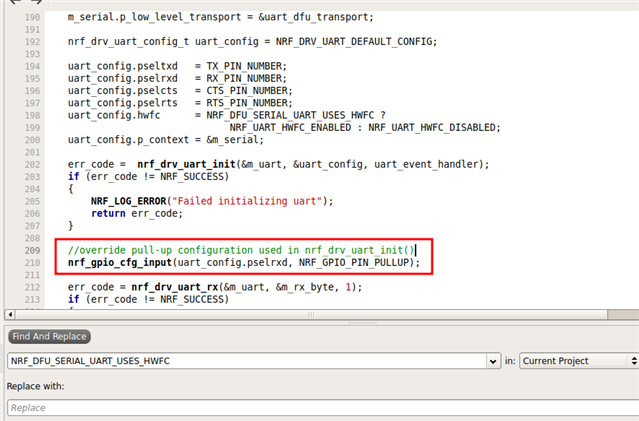
The initialization in the code looks like this:
   nrf_drv_uart_config_t uart_config = NRF_DRV_UART_DEFAULT_CONFIG;

   uart_config.pselrxd   = RX_PIN_NUMBER_MDBT50Q;
   uart_config.pseltxd   = TX_PIN_NUMBER_MDBT50Q;
   uart_config.pselcts   = CTS_PIN_NUMBER_MDBT50Q;
   uart_config.pselrts   = RTS_PIN_NUMBER_MDBT50Q;

   uart_config.hwfc      = NRF_DFU_SERIAL_UART_USES_HWFC ?
         NRF_UART_HWFC_ENABLED : NRF_UART_HWFC_DISABLED;
   uart_config.p_context = &m_serial;


   err_code =  nrf_drv_uart_init(&m_uart, &uart_config, UART_DFU_Mng_EventHandler);