

hi,
I am testing the flash erasing times of nRF52832, and i find that the minimum times of flash erase\write are 10000 documented in the data sheet.
I konw the times are tested at very high temperature(non-normal temperature), so I 'm curious about how many times of flash erase/write are at room tempetature.
The FS and NVMC are programing and downloaded in the nRF52832 chip.
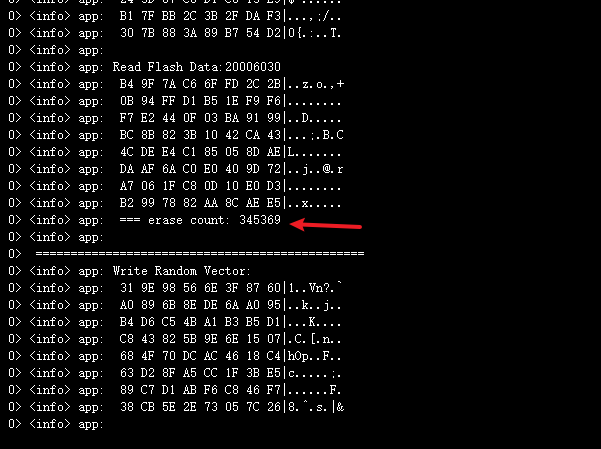
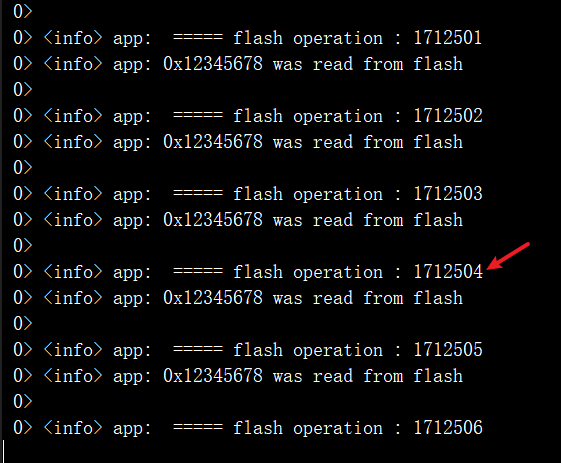
The erase times can get by J-link RTT Viewer, and the codes generate random numbers and write them to flash.
Just pay attention to this times of flash erase (the red arrow is marked) .
Regarding the question:
1) are the times right? Why is it that the flash is still not damaged after so many erases?
2) if not, could i know the times of flash erase/write at room tempetature?
3) are the codes right attached the end of the page?
FS code log: run many times and reset by manual (erase times more than a million times in total)
NVMC code log: erase times more than a million times in total
FS code:
while(true)
	{
		NRF_LOG_FLUSH();
		NRF_LOG_INFO("\n =============================================== ");

		uint8_t p_buff[RANDOM_BUFF_SIZE];
    uint8_t length = random_vector_generate(p_buff,RANDOM_BUFF_SIZE);

		NRF_LOG_INFO("Write Random Vector:");
		NRF_LOG_HEXDUMP_INFO(p_buff, length);
		NRF_LOG_INFO("");
		NRF_LOG_FLUSH();

		nrf_delay_ms(20);

		memcpy(my_fs_info.write_data, p_buff, length);
		my_fs_info.write_len = length;
    nrf_delay_ms(100);


		// flash write
		if((my_fs_info.need_write == true) && (my_fs_info.busy == false)&&(reverse_flag == false))
		{
				if((write_err_cnt > 100) || (erase_err_cnt > 100))
				{
						NRF_LOG_INFO(" ==== write enough!!!! ====");
						NRF_LOG_INFO(" ==== write enough!!!! ====");
						continue;
				}
				if(my_fs_info.write_len == 0)
				{
						continue;
				}
				my_fs_info.busy = true;
			  my_fs_info.need_write = false;
				my_fs_info.need_read = true;
				reverse_flag = true;

				NRF_LOG_INFO("Address: %08X", FLASH_START_ADDR);
				rc = nrf_fstorage_write(&my_fs, FLASH_START_ADDR, &my_fs_info.write_data, my_fs_info.write_len, NULL);
				if(rc != NRF_SUCCESS)
				{
					write_err_cnt += 1;
					NRF_LOG_INFO("== fs write error: 0x%x",rc);
				}
				else
				{
					write_cnt += 1;
					NRF_LOG_INFO(" === write count: %d", write_cnt);
				}
		}

		// flash read
		if((my_fs_info.need_read == true)&&(my_fs_info.busy == false))
		{
				my_fs_info.need_read = false;

				rc = nrf_fstorage_read(&my_fs, FLASH_START_ADDR, &my_fs_info.read_data,256);

			  if(rc != NRF_SUCCESS)
				{
					NRF_LOG_INFO("0x%x",rc);
				}
				else
				{
					NRF_LOG_INFO("Read Flash Data:");
					NRF_LOG_HEXDUMP_INFO(my_fs_info.read_data, RANDOM_BUFF_SIZE);
				}
		}

		// flash erase
		if((my_fs_info.need_write == false) && (my_fs_info.busy == false)&&(reverse_flag == true))
		{
				if((write_err_cnt > 100) || (erase_err_cnt > 100))
				{
						NRF_LOG_INFO(" ==== erase enough!!!! ====");
						NRF_LOG_INFO(" ==== erase enough!!!! ====");
						continue;
				}
				my_fs_info.need_read = true;
				my_fs_info.need_write = true;
				my_fs_info.busy = true;
				reverse_flag = false;
				rc = nrf_fstorage_erase(&my_fs, FLASH_START_ADDR, 1, NULL);
				if(rc != NRF_SUCCESS)/
				{
					erase_err_cnt += 1;
					NRF_LOG_INFO("== fs erase error: 0x%x",rc);
				}
				else
				{
					erase_cnt += 1;
					NRF_LOG_INFO(" === erase count: %d", erase_cnt);
				}
		}

		idle_state_handle();
	}
}
NVMC code:
while(status)
{
      addr = 0x00072000;
      nrf_nvmc_page_erase(addr);
      nrf_nvmc_write_word(addr,src_value);
      pdat = (uint32_t *)addr;

      NRF_LOG_INFO("0x%x was read from flash\r\n", *pdat);

      if((*pdat) != src_value)
      {
          status = false;

          NRF_LOG_INFO(" ===== Flash Error !!! =====");
          NRF_LOG_FLUSH();
          break;
      }
      opt_cnt += 1;
      NRF_LOG_INFO(" ===== flash operation : %d", opt_cnt);
      NRF_LOG_FLUSH();
  }
}
best wishes,
thanks.


