SSD1306 OLED display fails for nRF52840 boards using nRF Connect SDK 3.2.1

Hello,

I’ve been using SSD1306 128x64 OLED displays with nRF52840 boards for several years without any issues, building with nRF Connect SDK 2.5.x to 3.1.0. Recently, I've been attempting to move existing NCS 3.1.0 projects over to NCS 3.2.1. However, I’m unable to successfully get the SSD1306 OLED display to work with any of the nRF52840 boards using the latest nRF Connect SDK 3.2.1.

All the nRF52840 boards with SSD1306 display work fine when built with vanilla Zephyr 4.1.x and 4.2.x.

Also, the target for thingy53/nrf5340/cpuapp/ns failed to run successfully with both NCS 3.1.0 and NCS 3.2.1. The target thingy53/nrf5340/cpuapp ran fine with the SSD1306 OLED.

To try to isolate the issue, I’ve taken the Zephyr sample, “/opt/nordic/ncs/v3.2.1/zephyr/samples/subsys/display/cfb_custom_font” and built it for a couple of different nRF52840 boards (e.g. particle_xenon_nrf52840, promicro_nrf52840) plus thingy/nrf5340/cpuapp.

Built exactly the same sample "cfb_custom_font" main.c (modified to display board target and Zephyr version) & used the same devicetree overlays. All the builds compiled and linked without any issues.  However, only particle_xenon/nrf52840 using NCS 3.1.0 and thingy53/nrf5340/cpuapp using NCS 3.2.1 ran successfully with the SSD1306 displays.

I used the below board configuration and the overlays with the ssd1306 devicetree included in the I2C sections of the overlays. Default sysbuild option used from with the nRF Connect SDKs.

I don't see anything that is obvious that may be wrong. I would appreciate if you could determine the cause of the issue with the nRF52840 boards with SSD1306 when using  nRF Connect SDK 3.2.1.

Also, Is there any reason as to why the target for thingy53/nrf5340/ns doesn’t run successfully with the I2C SSD1306 display?

Thank you.

particle_xenon_nrf52840.overlay:

/ {
	chosen {
		zephyr,display = &ssd1306;
		zephyr,console = &uart0;
		zephyr,shell-uart = &uart0;
	};
};

&uart0 {
	compatible = "nordic,nrf-uarte";
	status = "okay";
	current-speed = <115200>;
	pinctrl-0 = <&uart0_default>;
	pinctrl-1 = <&uart0_sleep>;
	pinctrl-names = "default", "sleep";
};

&gpio0{
	status = "okay";
};

&i2c0 {
	compatible = "nordic,nrf-twi";
	status = "okay";
	pinctrl-0 = <&i2c0_default>;
	pinctrl-1 = <&i2c0_sleep>;
    pinctrl-names = "default", "sleep";
	ssd1306: ssd1306@3c {
		compatible = "solomon,ssd1306fb";
		reg = <0x3c>;
		width = <128>;
		height = <64>;
		segment-offset = <0>;
		page-offset = <0>;
		display-offset = <0>;
		multiplex-ratio = <63>;
		segment-remap;
		com-invdir;
		prechargep = <0x22>;
	};
};

thingy53_nrf5340_cpuapp.overlay

/ {
	chosen {
		zephyr,display = &ssd1306;
	};
};

&pinctrl {
	i2c0_default: i2c0_default {
		group1 {
			psels = <NRF_PSEL(TWIM_SDA, 0, 5)>,
				<NRF_PSEL(TWIM_SCL, 0, 4)>;
		};
	};

	i2c0_sleep: i2c0_sleep {
		group1 {
			psels = <NRF_PSEL(TWIM_SDA, 0, 5)>,
				<NRF_PSEL(TWIM_SCL, 0, 4)>;
		};
	};
};

&i2c0 {
	compatible = "nordic,nrf-twim";
	status = "okay";
	clock-frequency = <I2C_BITRATE_FAST>;
	zephyr,concat-buf-size = <4096>;
	pinctrl-0 = <&i2c0_default>;
	pinctrl-1 = <&i2c0_sleep>;
    pinctrl-names = "default", "sleep";
	ssd1306: ssd1306@3c {
		compatible = "solomon,ssd1306fb";
		reg = <0x3c>;
		width = <128>;
		height = <64>;
		segment-offset = <0>;
		page-offset = <0>;
		display-offset = <0>;
		multiplex-ratio = <63>;
		segment-remap;
		com-invdir;
		prechargep = <0x22>;
	};
};

prj.conf:

CONFIG_HEAP_MEM_POOL_SIZE=16384

CONFIG_DISPLAY=y
CONFIG_SSD1306=y

CONFIG_CHARACTER_FRAMEBUFFER=y
CONFIG_CHARACTER_FRAMEBUFFER_USE_DEFAULT_FONTS=n

CONFIG_LOG=y

# Preferred SHELL options
CONFIG_SHELL=y
CONFIG_DEVICE_SHELL=y
CONFIG_INIT_STACKS=y
CONFIG_KERNEL_SHELL=y
CONFIG_SHELL_STATS=n
CONFIG_I2C_SHELL=y

# Enable RTT to replace UART
CONFIG_UART_CONSOLE=y
CONFIG_USE_SEGGER_RTT=n
CONFIG_SHELL_BACKEND_RTT=n

CONFIG_LOG_BACKEND_UART=y
CONFIG_SHELL_LOG_BACKEND=y

Console Output 

NCS 3.2.1 build  - particle_xenon_nrf52840 with  SSD1306 (particle_xenon/nrf52840):

*** Booting nRF Connect SDK v3.2.1-d8887f6f32df ***
*** Using Zephyr OS v4.2.99-ec78104f1569 ***

Display device not ready

Failed to turn off display blanking

NCS 3.1.0 build  - particle_xenon_nrf52840 with  SSD1306 (particle_xenon/nrf52840):

*** Booting nRF Connect SDK v3.1.0-6c6e5b32496e ***
*** Using Zephyr OS v4.1.99-1612683d4010 ***
Zephyr v4.1.99
Board target: particle_xenon/nrf52840
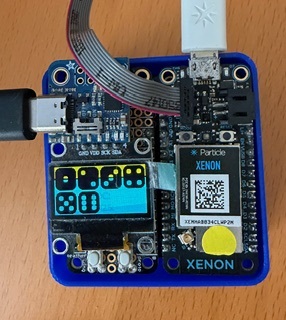
NCS 3.2.1 build  - thingy53_nrf5340_cpuapp with  SSD1306:

*** Booting nRF Connect SDK v3.2.1-d8887f6f32df ***
*** Using Zephyr OS v4.2.99-ec78104f1569 ***
[00:00:00.035,614] <inf> udc_nrf: Initialized
Zephyr v4.2.99
Board target: thingy53/nrf5340/cpuapp
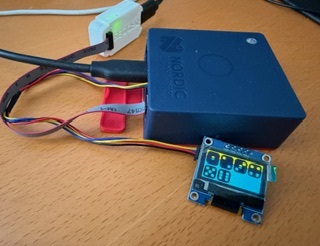
NCS 3.1.0 build  - thingy53_nrf5340_cpuapp with  SSD1306:

[Disconnected]
[Connected]
*** Booting nRF Connect SDK v3.1.0-6c6e5b32496e ***
*** Using Zephyr OS v4.1.99-1612683d4010 ***
Zephyr v4.1.99
Board target: thingy53/nrf5340/cpuapp

Vanilla Zephyr 4.2.x from terminal command line: SSD1306 displays works fine.

*** Booting Zephyr OS build v4.2.0-717-g85e135362445 ***
Zephyr v4.2.99
Board target: particle_xenon/nrf52840
uart:~$ 

Parents
  • Hello,

    There was a major update to the nrfx layer in SDK v3.2.0, which included a switch to standard POSIX error codes. Unfortunately, for the legacy TWI driver, we missed updating the Zephyr integration to handle the new return codes. This was later fixed in Zephyr, and we also added tests to improve the driver’s test coverage, see https://github.com/nrfconnect/sdk-zephyr/pull/3624/changes/1a8ca7c52da4e7b8083a2fe09b61bcd5f819f557

    You could cherry pick this commit, but the best solution is to switch from using TWI to TWIM by selecting "nordic,nrf-twim" binding in your overlay instead of "nordic,nrf-twi". 

    Best regards,

    Vidar

  • Hi Vidar,

    Thank you for your quick response. It's much appreciated.

    After posting the ticket yesterday, I noticed that the Thingy53 device overlay was using TWIM, so I did switch from TWI to TWIM for the nRF52840 boards. This has resolved the SSD1306 issue with Particle Xenon nRF52840 when building the application with NCS 3.2.1.

    However, I'm still having problems with a promicro_nrf52840 board when hooked up to a SSD1306 display.

    When building promicro/nrf52840/uf2 with the default build setting (i.e. sysbuild), the SD1306 doesn't show anything and the USB-C serial console doesn't come up. A no-sysbuild with NCS 3.2.1 works fine with the SSD1306.

    Any thoughts on why the sysbuild doesn't bring up the display & serial console? Thanks.

    Also, the build for target thingy53/nrf5340/ns fails to start successfully. Thanks.


    Best Regards,
    Ravi

  • Hi Vidar,

    I'm getting a little further as to why the NS applications may be bus faulting when a TF-M configurable build is run.

    On Thingy53, as TF-M logging is output to UART0, I'm able to observe the TF-M logs using P0.12 (Tx) and P0.11 on the “Current Measurement & Debug Board” connected to the Thingy53.

    With the "cfb" sample and using the following "thingy53_nrf5340_cpuapp_ns.conf" & TF-M size of 96kB, TF-M throws a BusFault.

    # TF-M profile has to be properly configured to be able to run
    # the Bluetooth stack which uses PSA crypto API.
    # The following configuration is a minimal set of options required.
    CONFIG_TFM_PROFILE_TYPE_NOT_SET=y
    CONFIG_TFM_PARTITION_PLATFORM=y
    CONFIG_TFM_PARTITION_CRYPTO=y
    CONFIG_TFM_PARTITION_INTERNAL_TRUSTED_STORAGE=y
    CONFIG_TFM_PARTITION_PROTECTED_STORAGE=n
    CONFIG_TFM_PARTITION_INITIAL_ATTESTATION=n
    
    # This Board implies building Non-Secure firmware
    CONFIG_TRUSTED_EXECUTION_NONSECURE=y
    
    # Enable TF-M logging on UART0
    CONFIG_TFM_SECURE_UART0=y
    CONFIG_TFM_SECURE_UART_SHARE_INSTANCE=n
    CONFIG_TFM_LOG_LEVEL_SILENCE=n
    CONFIG_TFM_EXCEPTION_INFO_DUMP=y
    CONFIG_TFM_SPM_LOG_LEVEL_DEBUG=y

    Thingy53 Console output:

    Nothing as a BUsFault occurs and the console is not available.

    TF-M Log output on Thingy53 UART0:

    [Disconnected]
    [Connected]
    All pins have been configured as non-secure
    Booting TF-M v2.2.0
    [Sec Thread] Secure image initializing!
    TF-M isolation level is: 0x00000001
    TF-M Float ABI: Hard
    Lazy stacking enabled
    FATAL ERROR: BusFault
    Here is some context for the exception:
        EXC_RETURN (LR): 0xFFFFFFBD
        Exception came from non-secure FW in thread mode.
        xPSR:    0x80000005
        MSP:     0x20002BF8
        PSP:     0x2000AEC8
        MSP_NS:  0x2003F018
        PSP_NS:  0x20040098
        Exception frame at: 0x20040098
           (Note that the exception frame may be corrupted for this type of error.)
            R0:   0x0006A9B4
            R1:   0x00000000
            R2:   0x00072240
            R3:   0x00000008
            R12:  0x00000000
            LR:   0x000649E5
            PC:   0x0004D3F6
            xPSR: 0x81000000
        Callee saved register state:
            R4:   0x00000005
            R5:   0x20032E58
            R6:   0x40008000
            R7:   0x00000000
            R8:   0x0006A9BC
            R9:   0x000001FF
            R10:  0x0006A9B4
            R11:  0xFFFCF0F0
        CFSR:  0x00008200
        BFSR:  0x00000082
        BFAR: 0x4000850C
        MMFSR: 0x00000000
        MMFAR: Not Valid
        UFSR:  0x00000000
        HFSR:  0x00000000
        SFSR:  0x00000000
        SFAR: Not Valid

    The BusFault appears to occur in the pinctrl driver at "/opt/nordic/ncs/v3.2.1/zephyr/drivers/pinctrl/pinctrl_nrf.c:274"

    case NRF_FUN_TWIM_SDA:
    NRF_PSEL_TWIM(reg, SDA) = psel;
    if (drive == NRF_GPIO_PIN_S0S1) {
    drive = NRF_GPIO_PIN_S0D1;
    }
    dir = NRF_GPIO_PIN_DIR_INPUT;
    input = NRF_GPIO_PIN_INPUT_CONNECT;
    break;

    pioneer15@pioneer15 ~ % /opt/nordic/ncs/toolchains/5c0d382932/opt/zephyr-sdk/arm-zephyr-eabi/bin/arm-zephyr-eabi-addr2line  -e /Volumes/PioneerD/2026_dev/2026_zephyr_dev/original/cfb/build/thingy53_nrf5340_cpuapp_ns/cfb/zephyr/zephyr.elf 0x00032462 
    
    /opt/nordic/ncs/v3.2.1/zephyr/drivers/pinctrl/pinctrl_nrf.c:274

    Here is the "thingy53_nrf5340_cpuapp_ns.overlay" overlay being used for the SSD1306.

    / {
    	chosen {
    		zephyr,display = &ssd1306;
    	};
    };
    
    &pinctrl {
    	i2c0_default: i2c0_default {
    		group1 {
    			psels = <NRF_PSEL(TWIM_SDA, 0, 5)>,
    				<NRF_PSEL(TWIM_SCL, 0, 4)>;
    		};
    	};
    
    	i2c0_sleep: i2c0_sleep {
    		group1 {
    			psels = <NRF_PSEL(TWIM_SDA, 0, 5)>,
    				<NRF_PSEL(TWIM_SCL, 0, 4)>;
    		};
    	};
    };
    
    &i2c0 {
    	compatible = "nordic,nrf-twim";
    	status = "okay";
    	clock-frequency = <I2C_BITRATE_FAST>;
    	zephyr,concat-buf-size = <4096>;
    	pinctrl-0 = <&i2c0_default>;
    	pinctrl-1 = <&i2c0_sleep>;
        pinctrl-names = "default", "sleep";
    	ssd1306: ssd1306@3c {
    		compatible = "solomon,ssd1306fb";
    		reg = <0x3c>;
    		width = <128>;
    		height = <64>;
    		segment-offset = <0>;
    		page-offset = <0>;
    		display-offset = <0>;
    		multiplex-ratio = <63>;
    		segment-remap;
    		com-invdir;
    		prechargep = <0x22>;
    	};
    };


    As mentioned before, the "cfb" (and all my other NS applications" run successfully if the TF-M logs are silenced or if I share the TF-M with the application console. Is the latter the same as TF_M silenced since the USB console isn't using UART0 at all?

    Do you mind looking into why the bus fault occurs? Thank you.

    Best Regards,
    Ravi

  • Hi,

    It all makes sense now, and I should have caught it earlier. The issue is exactly the same as the one discussed in the linked ticket below, except that the Thingy is using UART0 instead of UART1. TWIM0(i2c0) is shared with uart0.

    Are you using the same overlay as you were using for your thingy53/nrf5340/cpuapp build? If not, please make sure you are not using the i2c1 instance while also having logging enabled in TF-M: https://devzone.nordicsemi.com/f/nordic-q-a/109959/i2c-problems-in-sdk-v2-6-0-on-nrf5340dk
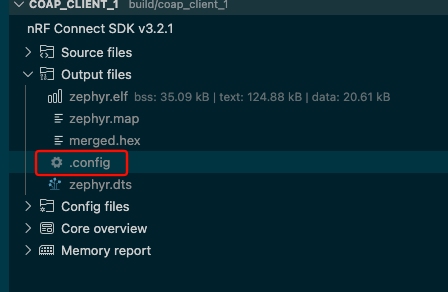
    With CONFIG_TFM_SECURE_UART0=y selected in your case (you can see this in the app's .config build output), the application will trigger a secure fault as soon as it writes the pins to the TWIM0 pin registers since the same registers belong to UART0 reserved to the TF-M image.

    Best regards,

    Vidar

  • Hi Vidar,

    Thank you for the explanation regarding the TWIM0(i2c0) being shared with UART0 on the Thingy53, and that the application will trigger a secure fault on any writes to the shared TWIM0 / UART0 pin registers reserved for the TF-M image. This all makes perfect sense. Thank you.

    On the Thingy53, I'm now using i2c2 for the SSD1306 & BME688 sensor. Now have NS applications, including BT NS applications, running successfully with TF-M logs appearing on P0.12 / P0.11 of the "Current Measurement & Debug" board plugged into the Thingy53.

    As nRF5340DK uses UART1 for TF-M, I've switched over from i2c1 to i2c2 as well. So, no more TF-M bus faults there. Of course, one could if needed silence the TF-M logs and use i2c1.

    One thing I did notice on the nRF54l15DK, with TF-M logging on one of the BT non-secure application, was the appearance of  Crypto Accelerator Engine (CRACEN) in the TF-M logs.

    What's triggering these "Powered on/off CRACEN". I don't see them on the Thingy53 or nRF5340DK for the same application.

    Powered on CRACEN.
    Powered off CRACEN.
    Powered on CRACEN.
    Powered off CRACEN.


     I really appreciate your help on issues related to getting the SSD1306 OLED working (i.e. switch from TWI to TWIM)  and, of course, how to use TF-M logging on Thingy53 / nRF5340DK / nRF54L15DK without the applications triggering secure faults. 

    I plan using security 
    peripherals in a TF-M partition in a few projects soon. So, hopefully this exposure to TF-M will assist.

    I don't know if the DevAcademy Team have a TF-M Services in the works but it would be welcomed as IoT security requirements are gaining considerable attention in the market.

    Best Regards,
    Ravi

  • Hi Ravi,

    Thanks for update. I think this summarises the problems you have experienced.

    zpm1066 said:
    One thing I did notice on the nRF54l15DK, with TF-M logging on one of the BT non-secure application, was the appearance of  Crypto Accelerator Engine (CRACEN) in the TF-M logs.

    The CRACEN is powered off between uses to avoid affecting the idle current. The same is done when using the CC312 crypto accelerator with the nRF5340, but it is simply not logged.

    zpm1066 said:
    I plan using security peripherals in a TF-M partition in a few projects soon. So, hopefully this exposure to TF-M will assist.

    I don't know if the DevAcademy Team have a TF-M Services in the works but it would be welcomed as IoT security requirements are gaining considerable attention in the market.

    I agree, and security in general is also something we are focusing on more now. I will forward your request internally.

    Best regards,

    Vidar

  • Hi Vidar,

    Thank you. Your efforts are very much appreciated.

    I'll go ahead and close this ticket.


    Best Regards,
    Ravi

Reply Children
No Data
Related