nRF54L15 BLE RX current comsumption

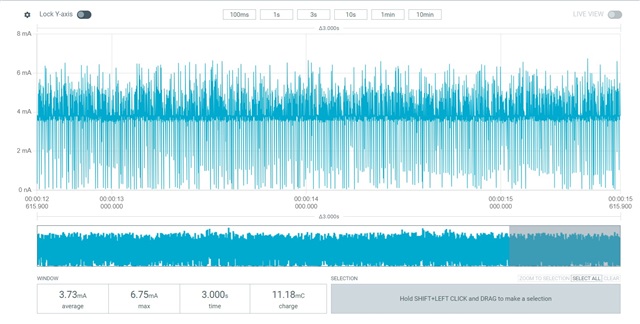
I measured the power consumption of the BLE RX using the nRF54L15.(nRF54L15-DK v1.0.0)
3.0V operation
apps: scan_adv (delete advertising)
west build -b nrf54l15dk/nrf54l15/cpuapp
proj.conf
CONFIG_BT=y
CONFIG_BT_BROADCASTER=y
CONFIG_BT_OBSERVER=y
CONFIG_LOG=n
CONFIG_SERIAL=n

Result: The average current consumption was 3.73mA.
This is 330uA higher than the 3.4mA stated in the datasheet.
Is this correct behavior? Is further processing required to reduce it to 3.4mA?
Parents
  • Hi

    To be clear. With just the radio running in RX, the current consumption is indeed drawing 3.4mA.

    However, the SoftDevice controller, which is what controls the radio peripheral, enables constant latency mode when running, which draws the additional 3.7mA.

    So, the datasheet is correct, but the datasheet doesn't cover how the SoftDevice controller operates, which is where you're confused I believe. 

    The last snippet you added is an example of the system in idle mode (no radio or any other peripherals running), with the constant latency mode enabled.

    Best regards,

    Simon

  • We prioritize power consumption when selecting devices.
    We have been using the nRF52832, but later discovered a significant discrepancy between the RF power consumption listed in its datasheet and the actual measured values ​​(the measured values ​​were higher than the listed values).
    This time, the measured values ​​are also considerably higher than those listed in the datasheet.
    We have used several devices from other companies in the past, and have never encountered this kind of error.
    We hope that accurate information will be provided in the future.
    The nRF54LM20 likely has a similar problem.

Reply
  • We prioritize power consumption when selecting devices.
    We have been using the nRF52832, but later discovered a significant discrepancy between the RF power consumption listed in its datasheet and the actual measured values ​​(the measured values ​​were higher than the listed values).
    This time, the measured values ​​are also considerably higher than those listed in the datasheet.
    We have used several devices from other companies in the past, and have never encountered this kind of error.
    We hope that accurate information will be provided in the future.
    The nRF54LM20 likely has a similar problem.

Children
No Data
Related