nfc antenna tuning

HI,

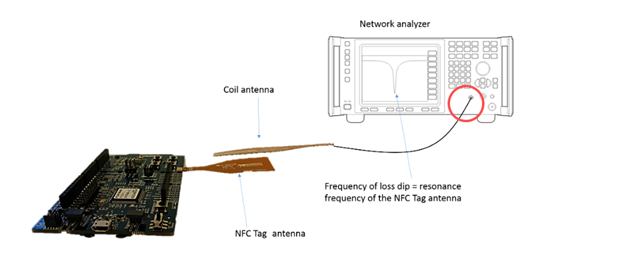
I'm reading this post about NFC antenna matching. It says in Method 1 to connect the coil antenna to the S11 port of the network analyzer. How should I make the connection? Should I connect one pin of the antenna to GND and the other to the signal port?
Thanks!

Parents
  • Hi.

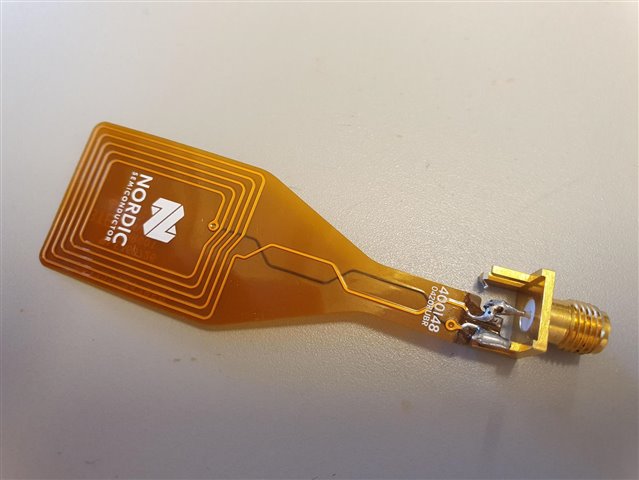
    Yes, one end of the antenna to the signal cable and the other end to the grounded shielding. Here you can see what it looks like on an NFC antenna we have in our lab.
      

    Best regards,
    Mathias

  • Thanks for your reply.
    For the test result, do we only need to ensure that the 13.56 MHz signal falls at the notch dip?
    Are there any required numerical specifications for the return loss?
    After tuning the signal to the notch dip, what further debugging and optimization steps are still needed?
  • joey said:
    For the test result, do we only need to ensure that the 13.56 MHz signal falls at the notch dip?

    Yes, that's pretty much what you'll be able to do. Remember to check what it looks like when including the casing as well.

    joey said:
    Are there any required numerical specifications for the return loss?

    Well, the greater the return loss, the better. But you might not be able to do much more than moving the frequency of the dip during the tuning. The return loss would also depend on the antenna itself, distance between the antennas, etc. These components would already be fixed when you do the tuning. I'd recommend you to tune to the correct frequency, and then, do some tests to see if the product behaves as expected.

    joey said:
    After tuning the signal to the notch dip, what further debugging and optimization steps are still needed?

    After tuning the dip you've finished the tuning. As mentioned above, I'd recommend running some tests as well, to check that everything works as expected.

    Some further reading:

Reply
  • joey said:
    For the test result, do we only need to ensure that the 13.56 MHz signal falls at the notch dip?

    Yes, that's pretty much what you'll be able to do. Remember to check what it looks like when including the casing as well.

    joey said:
    Are there any required numerical specifications for the return loss?

    Well, the greater the return loss, the better. But you might not be able to do much more than moving the frequency of the dip during the tuning. The return loss would also depend on the antenna itself, distance between the antennas, etc. These components would already be fixed when you do the tuning. I'd recommend you to tune to the correct frequency, and then, do some tests to see if the product behaves as expected.

    joey said:
    After tuning the signal to the notch dip, what further debugging and optimization steps are still needed?

    After tuning the dip you've finished the tuning. As mentioned above, I'd recommend running some tests as well, to check that everything works as expected.

    Some further reading:

Children
Related