How to reach datasheet-level 2.9 µA System ON IDLE current on nRF54L15 DK with NCS Matter sample?

We are planning to use the nRF54L15 for a Matter over Thread product, so we are currently evaluating the low-power performance of this device.

According to the nRF54L15 product specification / datasheet, the sleep current for:
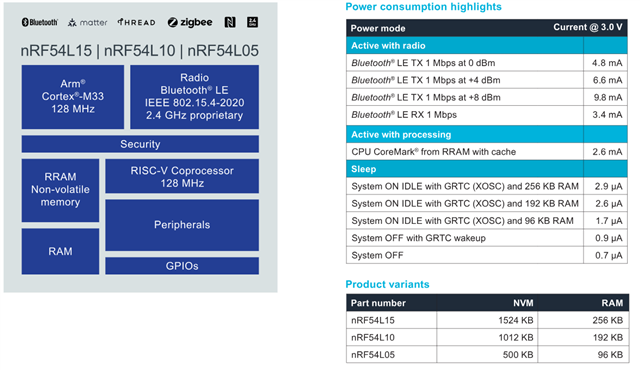
is listed as approximately 2.9 µA. Since the nRF54L15 has 256 KB RAM, I expected that it should be possible to observe a sleep current close to this value under the proper low-power configuration.

I used the following setup for the test:

  • Board: nRF54L15 DK
  • Chip: nRF54L15
  • SDK: nRF Connect SDK v3.2.1
  • Sample: nrf/samples/matter/window_covering
  • Build command:  west build -b nrf54l15dk/nrf54l15/cpuapp -p always -- -DCONF_FILE=prj_release.conf
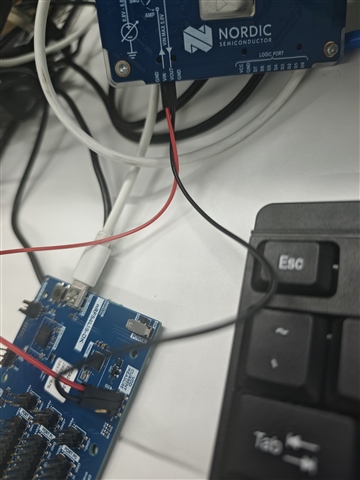
  • Measurement tool: Nordic PPK
  • Measurement mode: Ammeter mode
  • Measurement point: VDD CURRENT MEASURE on the nRF54L15 DK
Test 1: Original sample without modifications

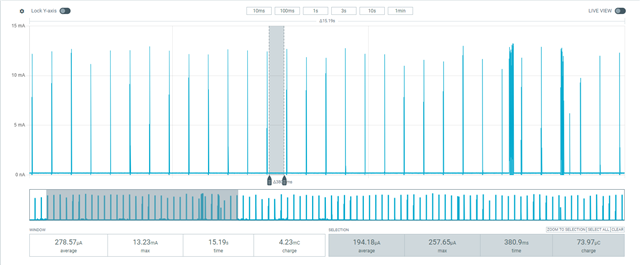
First, I built and flashed the sample using the original prj_release.conf without any modifications.

In this case, the measured baseline current was about 194.18 µA.
Test 2: After disabling shell/banner/early console

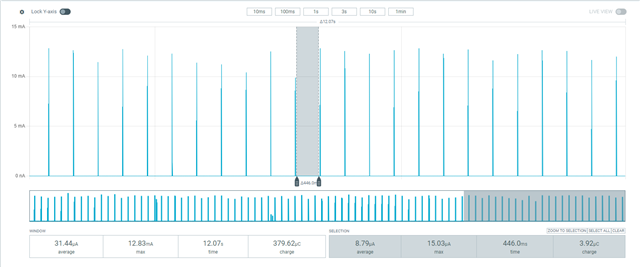
I suspected that some UART/logging-related functionality might still be enabled, so I added the following configurations to prj_release.conf:

CONFIG_CHIP_LIB_SHELL=n
CONFIG_NCS_BOOT_BANNER=n
CONFIG_BOOT_BANNER=n
CONFIG_EARLY_CONSOLE=n

After adding the above configurations, I rebuilt and flashed the application again.

The measured baseline current dropped significantly, and the lowest current I observed was about 8.79 µA.

This is much better than the original result, but it is still higher than the 2.9 µA value listed in the datasheet for System ON IDLE with GRTC and 256 KB RAM.
Questions

  1. Is it expected that the Matter window_covering sample on the nRF54L15 DK cannot reach the datasheet-level System ON IDLE current of around 2.9 µA without further modifications?
  2. What are the remaining contributors that may keep the current at around 8.8 µA in this sample? For example, could this be caused by Thread/Matter timers, enabled peripherals, DK board circuitry, retained RAM configuration, logging backend, UART state, or other subsystems?
  3. What additional project configuration changes, device tree changes, or board-level settings are required in order to observe a sleep current close to 2.9 µA on the nRF54L15 DK?
  4. Is there a recommended minimal low-power sample or reference configuration for measuring the lowest System ON IDLE current on nRF54L15?

Thanks.

Parents Reply Children
  • Hi Amanda,

    Thanks for the explanation.

    I understand that the 2.9 µA value in the datasheet represents the minimum System ON IDLE current of the SoC, and that a complete Matter over Thread application will have additional current consumption due to Thread/Matter activity.

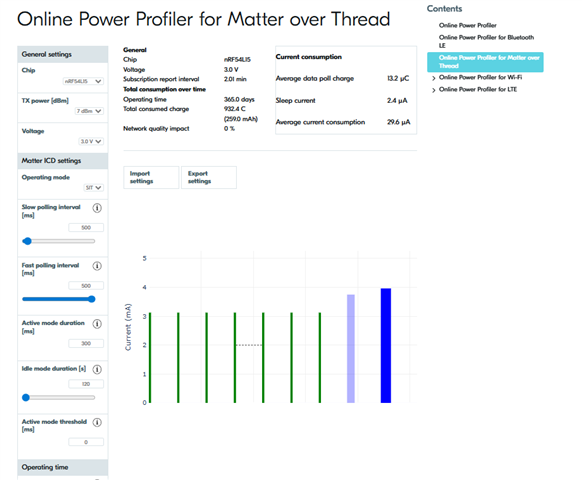
    I also tried the Online Power Profiler for Matter over Thread. With nRF54L15 selected, the tool reports a sleep current of about 2.4–2.5 µA, depending on the selected parameters. This is close to the datasheet-level sleep current.

    However, my main question is not about the long-term average current estimation. What I would like to clarify is how to actually observe a sleep current close to this level on the nRF54L15 DK with a Matter over Thread firmware.

    In my test, using the `nrf/samples/matter/window_covering` sample with `prj_release.conf`, and after disabling the shell/banner/early console, the lowest current I can observe on the PPK is still around 8.8 µA.

    So I would like to ask:

    1. Is the `nrf/samples/matter/window_covering` sample expected to enter a low-power sleep state close to the sleep current reported by the Online Power Profiler, for example around 2.5–3 µA, on the nRF54L15 DK?

    2. If this sample is not expected to reach that level, what are the specific reasons? For example, are there still active peripherals, UART/logging backends, RAM retention settings, Thread/Matter timers, ICD settings, or DK-specific circuits that keep the current around 8.8 µA?

    3. What exact configuration changes are required to make a Matter over Thread firmware on nRF54L15 DK enter the lowest possible sleep state? For example, should I modify ICD polling parameters, disable additional peripherals in devicetree, change logging/UART settings, or use a different sample/configuration?

    4. Is there a Nordic-recommended Matter over Thread sample or reference configuration on nRF54L15 DK that can be used to verify the sleep current shown in the Online Power Profiler?

    My goal is to measure the actual low-current sleep level on the nRF54L15 DK with Matter over Thread firmware, not only to estimate the average current with the profiler.

    Thanks.

  • Hi Amanda,

    I did one more test and found a very strange behavior.

    Based on my previous low-power configuration, I additionally disabled the sample LEDs:

    CONFIG_NCS_SAMPLE_MATTER_LEDS=n
    

    With this change, the observed sleep baseline current dropped to around 7 µA.

    Then I tried to additionally disable the sample watchdog:

    CONFIG_NCS_SAMPLE_MATTER_WATCHDOG=n
    

    After this change, the sleep baseline current dropped further to around 3.5 µA, which is much closer to the expected low sleep current level.

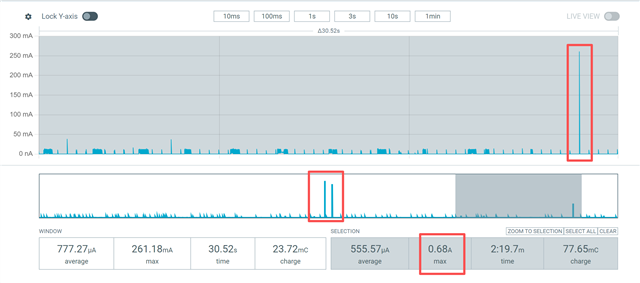
    However, I observed very abnormal current spikes in the PPK measurement. The peak current can even exceed 500 mA, which does not look normal for the nRF54L15 DK running this Matter sample.

    Could you please help explain why disabling CONFIG_NCS_SAMPLE_MATTER_WATCHDOG reduces the sleep baseline current to around 3.5 µA, but also causes such extremely large current spikes?

    Is the watchdog required for this sample to operate correctly, or could disabling it cause the device to enter an abnormal state such as a crash/reboot loop or another unexpected condition?

    I will attach the PPK screenshot showing this behavior.

    Thanks.

Related