

Hello, I am
I'm a Beginner at developing NRF 51822
My Development Environment
sdk : 12.3
IDE: KEIL v5
SoftDevices : s130
Recently, I've been experiencing a lot of problems combining various functions.
The contents of main.c are combined with uart examples of peripheral and timers examples of peripheral devices.
#include <stdbool.h>
#include <stdint.h>
#include <stdio.h>
#include "app_uart.h"
#include "app_error.h"
#include "nrf_delay.h"
#include "nrf.h"
#include "bsp.h"

//add timer define
#include "nrf_drv_timer.h"
#include "nrf_timer.h"

//#define ENABLE_LOOPBACK_TEST  /**< if defined, then this example will be a loopback test, which means that TX should be connected to RX to get data loopback. */

#define MAX_TEST_DATA_BYTES     (15U)                /**< max number of test bytes to be used for tx and rx. */
#define UART_TX_BUF_SIZE 256                         /**< UART TX buffer size. */
#define UART_RX_BUF_SIZE 256                         /**< UART RX buffer size. */
//#define ENABLE_LOOPBACK_TEST											 	 /**< ENABLE_LOOPBACK_TEST */

const nrf_drv_timer_t TIMER_test = NRF_DRV_TIMER_INSTANCE(1);


void uart_error_handle(app_uart_evt_t * p_event)
{
    if (p_event->evt_type == APP_UART_COMMUNICATION_ERROR)
    {
        APP_ERROR_HANDLER(p_event->data.error_communication);
    }
    else if (p_event->evt_type == APP_UART_FIFO_ERROR)
    {
        APP_ERROR_HANDLER(p_event->data.error_code);
    }
}


#ifdef ENABLE_LOOPBACK_TEST
/** @brief Function for setting the @ref ERROR_PIN high, and then enter an infinite loop.
 */
static void show_error(void)
{

    bsp_board_leds_on();
    while (true)
    {
        // Do nothing.
    }
}


/** @brief Function for testing UART loop back.
 *  @details Transmitts one character at a time to check if the data received from the loopback is same as the transmitted data.
 *  @note  @ref TX_PIN_NUMBER must be connected to @ref RX_PIN_NUMBER)
 */
static void uart_loopback_test()
{
    uint8_t * tx_data = (uint8_t *)("\r\nLOOPBACK_TEST\r\n");
    uint8_t   rx_data;

    // Start sending one byte and see if you get the same
    for (uint32_t i = 0; i < MAX_TEST_DATA_BYTES; i++)
    {
        uint32_t err_code;
        while (app_uart_put(tx_data[i]) != NRF_SUCCESS);

        nrf_delay_ms(10);
        err_code = app_uart_get(&rx_data);

        if ((rx_data != tx_data[i]) || (err_code != NRF_SUCCESS))
        {
            show_error();
        }
    }
    return;
}


#endif

#define led1 15
#define led2	17

void gpio_init()
{
		nrf_gpio_cfg_output(led1);
		nrf_gpio_cfg_output(led2);
}
 void sonic_handler(nrf_timer_event_t event_type, void* p_context)
 {
	 //static uint32_t i;

	 switch (event_type)
    {
        case NRF_TIMER_EVENT_COMPARE0:
           // bsp_board_led_invert(led_to_invert);
				nrf_gpio_pin_toggle(led2);
            break;

        default:
            //Do nothing.
            break;
    }

 }
void uart_start()
{
	uint32_t err_code;

    //bsp_board_leds_init();

    const app_uart_comm_params_t comm_params =
      {
          RX_PIN_NUMBER,
          TX_PIN_NUMBER,
          RTS_PIN_NUMBER,
          CTS_PIN_NUMBER,
          APP_UART_FLOW_CONTROL_DISABLED,
          false,
          UART_BAUDRATE_BAUDRATE_Baud115200
      };

    APP_UART_FIFO_INIT(&comm_params,
                         UART_RX_BUF_SIZE,
                         UART_TX_BUF_SIZE,
                         uart_error_handle,
                         APP_IRQ_PRIORITY_LOWEST,
                         err_code);

    APP_ERROR_CHECK(err_code);

}

void timer_start()
{
		uint32_t time_ms = 1000; //Time(in miliseconds) between consecutive compare events.
    uint32_t time_ticks;
    uint32_t err_code = NRF_SUCCESS;
		nrf_drv_timer_config_t timer_cfg = NRF_DRV_TIMER_DEFAULT_CONFIG;
    err_code = nrf_drv_timer_init(&TIMER_test, &timer_cfg, sonic_handler);
    APP_ERROR_CHECK(err_code);

    time_ticks = nrf_drv_timer_ms_to_ticks(&TIMER_test, time_ms);

    nrf_drv_timer_extended_compare(
         &TIMER_test, NRF_TIMER_CC_CHANNEL0, time_ticks, NRF_TIMER_SHORT_COMPARE0_CLEAR_MASK, true);

    nrf_drv_timer_enable(&TIMER_test);
}
/**
 * @brief Function for main application entry.
 */
int main(void)
{
		uint8_t cr;
		gpio_init();
		timer_start();
		uart_start();

#ifndef ENABLE_LOOPBACK_TEST
    printf("\r\nStart: \r\n");

    while (true)
    {

				nrf_gpio_pin_toggle(led1);
				nrf_gpio_pin_toggle(led2);


       while (app_uart_get(&cr) != NRF_SUCCESS);
       while (app_uart_put(cr) != NRF_SUCCESS);


        if (cr == 'q' || cr == 'Q')
        {
            printf(" \r\nExit!\r\n");

            while (true)
            {
                // Do nothing.
            }
        }

		//	__WFI();

    }
#else

    // This part of the example is just for testing the loopback .
    while (true)
    {
        uart_loopback_test();
    }
#endif
}
There were many errors in the process of merging, but the modification of sdk_config.h resolved.
#ifndef SDK_CONFIG_H
#define SDK_CONFIG_H
// <<< Use Configuration Wizard in Context Menu >>>\n
#define USE_APP_CONFIG
#ifdef USE_APP_CONFIG
#include "app_config.h"
#endif
// <h> nRF_Drivers

//==========================================================
// <e> PERIPHERAL_RESOURCE_SHARING_ENABLED - nrf_drv_common - Peripheral drivers common module
//==========================================================
#ifndef PERIPHERAL_RESOURCE_SHARING_ENABLED
#define PERIPHERAL_RESOURCE_SHARING_ENABLED 0
#endif
#if  PERIPHERAL_RESOURCE_SHARING_ENABLED
// <e> COMMON_CONFIG_LOG_ENABLED - Enables logging in the module.
//==========================================================
#ifndef COMMON_CONFIG_LOG_ENABLED
#define COMMON_CONFIG_LOG_ENABLED 0
#endif
#if  COMMON_CONFIG_LOG_ENABLED
// <o> COMMON_CONFIG_LOG_LEVEL  - Default Severity level

// <0=> Off
// <1=> Error
// <2=> Warning
// <3=> Info
// <4=> Debug

#ifndef COMMON_CONFIG_LOG_LEVEL
#define COMMON_CONFIG_LOG_LEVEL 3
#endif

// <o> COMMON_CONFIG_INFO_COLOR  - ANSI escape code prefix.

// <0=> Default
// <1=> Black
// <2=> Red
// <3=> Green
// <4=> Yellow
// <5=> Blue
// <6=> Magenta
// <7=> Cyan
// <8=> White

#ifndef COMMON_CONFIG_INFO_COLOR
#define COMMON_CONFIG_INFO_COLOR 0
#endif

// <o> COMMON_CONFIG_DEBUG_COLOR  - ANSI escape code prefix.

// <0=> Default
// <1=> Black
// <2=> Red
// <3=> Green
// <4=> Yellow
// <5=> Blue
// <6=> Magenta
// <7=> Cyan
// <8=> White

#ifndef COMMON_CONFIG_DEBUG_COLOR
#define COMMON_CONFIG_DEBUG_COLOR 0
#endif

#endif //COMMON_CONFIG_LOG_ENABLED
// </e>

#endif //PERIPHERAL_RESOURCE_SHARING_ENABLED
//</e>


// <e> TIMER_ENABLED - nrf_drv_timer - TIMER periperal driver
//==========================================================
#ifndef TIMER_ENABLED
#define TIMER_ENABLED 1
#endif
#if  TIMER_ENABLED
// <o> TIMER_DEFAULT_CONFIG_FREQUENCY  - Timer frequency if in Timer mode

// <0=> 16 MHz
// <1=> 8 MHz
// <2=> 4 MHz
// <3=> 2 MHz
// <4=> 1 MHz
// <5=> 500 kHz
// <6=> 250 kHz
// <7=> 125 kHz
// <8=> 62.5 kHz
// <9=> 31.25 kHz

#ifndef TIMER_DEFAULT_CONFIG_FREQUENCY
#define TIMER_DEFAULT_CONFIG_FREQUENCY 0
#endif

// <o> TIMER_DEFAULT_CONFIG_MODE  - Timer mode or operation

// <0=> Timer
// <1=> Counter

#ifndef TIMER_DEFAULT_CONFIG_MODE
#define TIMER_DEFAULT_CONFIG_MODE 0
#endif

// <o> TIMER_DEFAULT_CONFIG_BIT_WIDTH  - Timer counter bit width

// <0=> 16 bit
// <1=> 8 bit
// <2=> 24 bit
// <3=> 32 bit

#ifndef TIMER_DEFAULT_CONFIG_BIT_WIDTH
#define TIMER_DEFAULT_CONFIG_BIT_WIDTH 3
#endif

// <o> TIMER_DEFAULT_CONFIG_IRQ_PRIORITY  - Interrupt priority


// <i> Priorities 0,2 (nRF51) and 0,1,4,5 (nRF52) are reserved for SoftDevice
// <0=> 0 (highest)
// <1=> 1
// <2=> 2
// <3=> 3

#ifndef TIMER_DEFAULT_CONFIG_IRQ_PRIORITY
#define TIMER_DEFAULT_CONFIG_IRQ_PRIORITY 3
#endif

// <q> TIMER0_ENABLED  - Enable TIMER0 instance


#ifndef TIMER0_ENABLED
#define TIMER0_ENABLED 1
#endif

// <q> TIMER1_ENABLED  - Enable TIMER1 instance


#ifndef TIMER1_ENABLED
#define TIMER1_ENABLED 0
#endif

// <q> TIMER2_ENABLED  - Enable TIMER2 instance


#ifndef TIMER2_ENABLED
#define TIMER2_ENABLED 0
#endif

// <q> TIMER3_ENABLED  - Enable TIMER3 instance


#ifndef TIMER3_ENABLED
#define TIMER3_ENABLED 0
#endif

// <q> TIMER4_ENABLED  - Enable TIMER4 instance


#ifndef TIMER4_ENABLED
#define TIMER4_ENABLED 0
#endif

// <e> TIMER_CONFIG_LOG_ENABLED - Enables logging in the module.
//==========================================================
#ifndef TIMER_CONFIG_LOG_ENABLED
#define TIMER_CONFIG_LOG_ENABLED 0
#endif
#if  TIMER_CONFIG_LOG_ENABLED
// <o> TIMER_CONFIG_LOG_LEVEL  - Default Severity level

// <0=> Off
// <1=> Error
// <2=> Warning
// <3=> Info
// <4=> Debug

#ifndef TIMER_CONFIG_LOG_LEVEL
#define TIMER_CONFIG_LOG_LEVEL 3
#endif

// <o> TIMER_CONFIG_INFO_COLOR  - ANSI escape code prefix.

// <0=> Default
// <1=> Black
// <2=> Red
// <3=> Green
// <4=> Yellow
// <5=> Blue
// <6=> Magenta
// <7=> Cyan
// <8=> White

#ifndef TIMER_CONFIG_INFO_COLOR
#define TIMER_CONFIG_INFO_COLOR 0
#endif

// <o> TIMER_CONFIG_DEBUG_COLOR  - ANSI escape code prefix.

// <0=> Default
// <1=> Black
// <2=> Red
// <3=> Green
// <4=> Yellow
// <5=> Blue
// <6=> Magenta
// <7=> Cyan
// <8=> White

#ifndef TIMER_CONFIG_DEBUG_COLOR
#define TIMER_CONFIG_DEBUG_COLOR 0
#endif

#endif //TIMER_CONFIG_LOG_ENABLED
// </e>

#endif //TIMER_ENABLED
// </e>
// <e> UART_ENABLED - nrf_drv_uart - UART/UARTE peripheral driver
//==========================================================
#ifndef UART_ENABLED
#define UART_ENABLED 1
#endif
#if  UART_ENABLED
// <o> UART_DEFAULT_CONFIG_HWFC  - Hardware Flow Control

// <0=> Disabled
// <1=> Enabled

#ifndef UART_DEFAULT_CONFIG_HWFC
#define UART_DEFAULT_CONFIG_HWFC 0
#endif

// <o> UART_DEFAULT_CONFIG_PARITY  - Parity

// <0=> Excluded
// <14=> Included

#ifndef UART_DEFAULT_CONFIG_PARITY
#define UART_DEFAULT_CONFIG_PARITY 0
#endif

// <o> UART_DEFAULT_CONFIG_BAUDRATE  - Default Baudrate

// <323584=> 1200 baud
// <643072=> 2400 baud
// <1290240=> 4800 baud
// <2576384=> 9600 baud
// <3862528=> 14400 baud
// <5152768=> 19200 baud
// <7716864=> 28800 baud
// <10289152=> 38400 baud
// <15400960=> 57600 baud
// <20615168=> 76800 baud
// <30924800=> 115200 baud
// <61865984=> 230400 baud
// <67108864=> 250000 baud
// <121634816=> 460800 baud
// <251658240=> 921600 baud
// <268435456=> 57600 baud

#ifndef UART_DEFAULT_CONFIG_BAUDRATE
#define UART_DEFAULT_CONFIG_BAUDRATE 30924800
#endif

// <o> UART_DEFAULT_CONFIG_IRQ_PRIORITY  - Interrupt priority


// <i> Priorities 0,2 (nRF51) and 0,1,4,5 (nRF52) are reserved for SoftDevice
// <0=> 0 (highest)
// <1=> 1
// <2=> 2
// <3=> 3

#ifndef UART_DEFAULT_CONFIG_IRQ_PRIORITY
#define UART_DEFAULT_CONFIG_IRQ_PRIORITY 3
#endif

// <q> UART_EASY_DMA_SUPPORT  - Driver supporting EasyDMA


#ifndef UART_EASY_DMA_SUPPORT
#define UART_EASY_DMA_SUPPORT 1
#endif

// <q> UART_LEGACY_SUPPORT  - Driver supporting Legacy mode


#ifndef UART_LEGACY_SUPPORT
#define UART_LEGACY_SUPPORT 1
#endif

// <e> UART0_ENABLED - Enable UART0 instance
//==========================================================
#ifndef UART0_ENABLED
#define UART0_ENABLED 1
#endif
#if  UART0_ENABLED
// <q> UART0_CONFIG_USE_EASY_DMA  - Default setting for using EasyDMA


#ifndef UART0_CONFIG_USE_EASY_DMA
#define UART0_CONFIG_USE_EASY_DMA 1
#endif

#endif //UART0_ENABLED
// </e>

// <e> UART_CONFIG_LOG_ENABLED - Enables logging in the module.
//==========================================================
#ifndef UART_CONFIG_LOG_ENABLED
#define UART_CONFIG_LOG_ENABLED 0
#endif
#if  UART_CONFIG_LOG_ENABLED
// <o> UART_CONFIG_LOG_LEVEL  - Default Severity level

// <0=> Off
// <1=> Error
// <2=> Warning
// <3=> Info
// <4=> Debug

#ifndef UART_CONFIG_LOG_LEVEL
#define UART_CONFIG_LOG_LEVEL 3
#endif

// <o> UART_CONFIG_INFO_COLOR  - ANSI escape code prefix.

// <0=> Default
// <1=> Black
// <2=> Red
// <3=> Green
// <4=> Yellow
// <5=> Blue
// <6=> Magenta
// <7=> Cyan
// <8=> White

#ifndef UART_CONFIG_INFO_COLOR
#define UART_CONFIG_INFO_COLOR 0
#endif

// <o> UART_CONFIG_DEBUG_COLOR  - ANSI escape code prefix.

// <0=> Default
// <1=> Black
// <2=> Red
// <3=> Green
// <4=> Yellow
// <5=> Blue
// <6=> Magenta
// <7=> Cyan
// <8=> White

#ifndef UART_CONFIG_DEBUG_COLOR
#define UART_CONFIG_DEBUG_COLOR 0
#endif

#endif //UART_CONFIG_LOG_ENABLED
// </e>

#endif //UART_ENABLED
// </e>

// </h>
//==========================================================

// <h> nRF_Libraries

//==========================================================
// <q> APP_FIFO_ENABLED  - app_fifo - Software FIFO implementation


#ifndef APP_FIFO_ENABLED
#define APP_FIFO_ENABLED 1
#endif

// <e> APP_UART_ENABLED - app_uart - UART driver
//==========================================================
#ifndef APP_UART_ENABLED
#define APP_UART_ENABLED 1
#endif
#if  APP_UART_ENABLED
// <o> APP_UART_DRIVER_INSTANCE  - UART instance used

// <0=> 0

#ifndef APP_UART_DRIVER_INSTANCE
#define APP_UART_DRIVER_INSTANCE 0
#endif

#endif //APP_UART_ENABLED
// </e>

// <q> RETARGET_ENABLED  - retarget - Retargeting stdio functions


#ifndef RETARGET_ENABLED
#define RETARGET_ENABLED 1
#endif

// </h>
//==========================================================

// <h> nRF_Log

//==========================================================
// <e> NRF_LOG_ENABLED - nrf_log - Logging
//==========================================================
#ifndef NRF_LOG_ENABLED
#define NRF_LOG_ENABLED 0
#endif
#if  NRF_LOG_ENABLED
// <e> NRF_LOG_USES_COLORS - If enabled then ANSI escape code for colors is prefixed to every string
//==========================================================
#ifndef NRF_LOG_USES_COLORS
#define NRF_LOG_USES_COLORS 0
#endif
#if  NRF_LOG_USES_COLORS
// <o> NRF_LOG_COLOR_DEFAULT  - ANSI escape code prefix.

// <0=> Default
// <1=> Black
// <2=> Red
// <3=> Green
// <4=> Yellow
// <5=> Blue
// <6=> Magenta
// <7=> Cyan
// <8=> White

#ifndef NRF_LOG_COLOR_DEFAULT
#define NRF_LOG_COLOR_DEFAULT 0
#endif

// <o> NRF_LOG_ERROR_COLOR  - ANSI escape code prefix.

// <0=> Default
// <1=> Black
// <2=> Red
// <3=> Green
// <4=> Yellow
// <5=> Blue
// <6=> Magenta
// <7=> Cyan
// <8=> White

#ifndef NRF_LOG_ERROR_COLOR
#define NRF_LOG_ERROR_COLOR 0
#endif

// <o> NRF_LOG_WARNING_COLOR  - ANSI escape code prefix.

// <0=> Default
// <1=> Black
// <2=> Red
// <3=> Green
// <4=> Yellow
// <5=> Blue
// <6=> Magenta
// <7=> Cyan
// <8=> White

#ifndef NRF_LOG_WARNING_COLOR
#define NRF_LOG_WARNING_COLOR 0
#endif

#endif //NRF_LOG_USES_COLORS
// </e>

// <o> NRF_LOG_DEFAULT_LEVEL  - Default Severity level

// <0=> Off
// <1=> Error
// <2=> Warning
// <3=> Info
// <4=> Debug

#ifndef NRF_LOG_DEFAULT_LEVEL
#define NRF_LOG_DEFAULT_LEVEL 3
#endif

// <e> NRF_LOG_DEFERRED - Enable deffered logger.

// <i> Log data is buffered and can be processed in idle.
//==========================================================
#ifndef NRF_LOG_DEFERRED
#define NRF_LOG_DEFERRED 1
#endif
#if  NRF_LOG_DEFERRED
// <o> NRF_LOG_DEFERRED_BUFSIZE - Size of the buffer for logs in words.
// <i> Must be power of 2

#ifndef NRF_LOG_DEFERRED_BUFSIZE
#define NRF_LOG_DEFERRED_BUFSIZE 256
#endif

#endif //NRF_LOG_DEFERRED
// </e>

// <q> NRF_LOG_USES_TIMESTAMP  - Enable timestamping


// <i> Function for getting the timestamp is provided by the user

#ifndef NRF_LOG_USES_TIMESTAMP
#define NRF_LOG_USES_TIMESTAMP 0
#endif

#endif //NRF_LOG_ENABLED
// </e>

// <h> nrf_log_backend - Logging sink

//==========================================================
// <o> NRF_LOG_BACKEND_MAX_STRING_LENGTH - Buffer for storing single output string
// <i> Logger backend RAM usage is determined by this value.

#ifndef NRF_LOG_BACKEND_MAX_STRING_LENGTH
#define NRF_LOG_BACKEND_MAX_STRING_LENGTH 256
#endif

// <o> NRF_LOG_TIMESTAMP_DIGITS - Number of digits for timestamp
// <i> If higher resolution timestamp source is used it might be needed to increase that

#ifndef NRF_LOG_TIMESTAMP_DIGITS
#define NRF_LOG_TIMESTAMP_DIGITS 8
#endif

// <e> NRF_LOG_BACKEND_SERIAL_USES_UART - If enabled data is printed over UART
//==========================================================
#ifndef NRF_LOG_BACKEND_SERIAL_USES_UART
#define NRF_LOG_BACKEND_SERIAL_USES_UART 1
#endif
#if  NRF_LOG_BACKEND_SERIAL_USES_UART
// <o> NRF_LOG_BACKEND_SERIAL_UART_BAUDRATE  - Default Baudrate

// <323584=> 1200 baud
// <643072=> 2400 baud
// <1290240=> 4800 baud
// <2576384=> 9600 baud
// <3862528=> 14400 baud
// <5152768=> 19200 baud
// <7716864=> 28800 baud
// <10289152=> 38400 baud
// <15400960=> 57600 baud
// <20615168=> 76800 baud
// <30924800=> 115200 baud
// <61865984=> 230400 baud
// <67108864=> 250000 baud
// <121634816=> 460800 baud
// <251658240=> 921600 baud
// <268435456=> 57600 baud

#ifndef NRF_LOG_BACKEND_SERIAL_UART_BAUDRATE
#define NRF_LOG_BACKEND_SERIAL_UART_BAUDRATE 30924800
#endif

// <o> NRF_LOG_BACKEND_SERIAL_UART_TX_PIN - UART TX pin
#ifndef NRF_LOG_BACKEND_SERIAL_UART_TX_PIN
#define NRF_LOG_BACKEND_SERIAL_UART_TX_PIN 9
#endif

// <o> NRF_LOG_BACKEND_SERIAL_UART_RX_PIN - UART RX pin
#ifndef NRF_LOG_BACKEND_SERIAL_UART_RX_PIN
#define NRF_LOG_BACKEND_SERIAL_UART_RX_PIN 11
#endif

// <o> NRF_LOG_BACKEND_SERIAL_UART_RTS_PIN - UART RTS pin
#ifndef NRF_LOG_BACKEND_SERIAL_UART_RTS_PIN
#define NRF_LOG_BACKEND_SERIAL_UART_RTS_PIN 8
#endif

// <o> NRF_LOG_BACKEND_SERIAL_UART_CTS_PIN - UART CTS pin
#ifndef NRF_LOG_BACKEND_SERIAL_UART_CTS_PIN
#define NRF_LOG_BACKEND_SERIAL_UART_CTS_PIN 10
#endif

// <o> NRF_LOG_BACKEND_SERIAL_UART_FLOW_CONTROL  - Hardware Flow Control

// <0=> Disabled
// <1=> Enabled

#ifndef NRF_LOG_BACKEND_SERIAL_UART_FLOW_CONTROL
#define NRF_LOG_BACKEND_SERIAL_UART_FLOW_CONTROL 0
#endif

// <o> NRF_LOG_BACKEND_UART_INSTANCE  - UART instance used

// <0=> 0

#ifndef NRF_LOG_BACKEND_UART_INSTANCE
#define NRF_LOG_BACKEND_UART_INSTANCE 0
#endif

#endif //NRF_LOG_BACKEND_SERIAL_USES_UART
// </e>

// <e> NRF_LOG_BACKEND_SERIAL_USES_RTT - If enabled data is printed using RTT
//==========================================================
#ifndef NRF_LOG_BACKEND_SERIAL_USES_RTT
#define NRF_LOG_BACKEND_SERIAL_USES_RTT 0
#endif
#if  NRF_LOG_BACKEND_SERIAL_USES_RTT
// <o> NRF_LOG_BACKEND_RTT_OUTPUT_BUFFER_SIZE - RTT output buffer size.
// <i> Should be equal or bigger than \ref NRF_LOG_BACKEND_MAX_STRING_LENGTH.
// <i> This value is used in Segger RTT configuration to set the buffer size
// <i> if it is bigger than default RTT buffer size.

#ifndef NRF_LOG_BACKEND_RTT_OUTPUT_BUFFER_SIZE
#define NRF_LOG_BACKEND_RTT_OUTPUT_BUFFER_SIZE 512
#endif

#endif //NRF_LOG_BACKEND_SERIAL_USES_RTT
// </e>

// </h>
//==========================================================

// </h>
//==========================================================

// <h> nRF_Segger_RTT

//==========================================================
// <h> segger_rtt - SEGGER RTT

//==========================================================
// <o> SEGGER_RTT_CONFIG_BUFFER_SIZE_UP - Size of upstream buffer.
#ifndef SEGGER_RTT_CONFIG_BUFFER_SIZE_UP
#define SEGGER_RTT_CONFIG_BUFFER_SIZE_UP 64
#endif

// <o> SEGGER_RTT_CONFIG_MAX_NUM_UP_BUFFERS - Size of upstream buffer.
#ifndef SEGGER_RTT_CONFIG_MAX_NUM_UP_BUFFERS
#define SEGGER_RTT_CONFIG_MAX_NUM_UP_BUFFERS 2
#endif

// <o> SEGGER_RTT_CONFIG_BUFFER_SIZE_DOWN - Size of upstream buffer.
#ifndef SEGGER_RTT_CONFIG_BUFFER_SIZE_DOWN
#define SEGGER_RTT_CONFIG_BUFFER_SIZE_DOWN 16
#endif

// <o> SEGGER_RTT_CONFIG_MAX_NUM_DOWN_BUFFERS - Size of upstream buffer.
#ifndef SEGGER_RTT_CONFIG_MAX_NUM_DOWN_BUFFERS
#define SEGGER_RTT_CONFIG_MAX_NUM_DOWN_BUFFERS 2
#endif

// </h>
//==========================================================

// </h>
//==========================================================

// <<< end of configuration section >>>
#endif //SDK_CONFIG_H
I saw the program stop during the 'uart' operation.
If the operation is normal, the letter 'start :' will appear and wait for input, but only "star" will operate and stop.
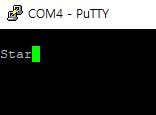
However, I have confirmed that deleting 'timer_start();' from my source code will work properly.
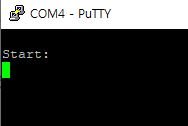
Add-
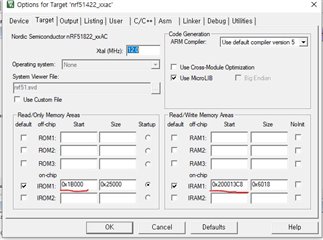
For use with 'softdevice s130', irom and iram have been modified and operated.
Q 1. Did I set the timer wrong and the program died?
Q 2. Where are the documents describing how to modify sdk_config.h or the function and its contents?
Q 3. I forcibly modified iram and irom for use with 'soft device s130', is it correct to use them like that?

