

Hello, i'm using the example ble app uart and I would like to know the maximum data that I cand send to my putty and my phone. Could I have to procedure? I would like to send a lot of data
Thank you in advance
Hello, i'm using the example ble app uart and I would like to know the maximum data that I cand send to my putty and my phone. Could I have to procedure? I would like to send a lot of data
Thank you in advance
Hello,
To increase your throughput you will need to modify your connection parameters.
Please see the throughput documentation for the SoftDevice you are using for details about which parameters you should use for maximum throughput.
Best regards,
Karl

Hello Karl, i saw this document but i'm going to explain to you my goal : send unlimited data/informations (maybe 100k of data) how can i do this? because for now I have a limit of 244 bytes/data and it is not useful for me. Thank you in advance
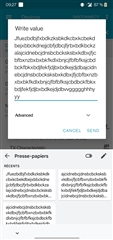
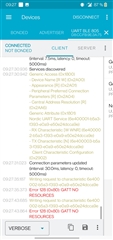 I'm showing what I have when I try to send more than 244 bytes
Hello, I would like to have a fast transfer, 5seconds is okay for 10k data.
could you explain to me how to chunk the bytes? I'm new with dev...
and yes I put the debug options thank you :)

lm said:I'm showing what I have when I try to send more than 244 bytes
This is likely because the application does not have the reserved space to hold the entire sending.
Do I understand it correctly that you would like to send the 10 kB data from your mobile phone to the connected peripheral device?
lm said:I would like to have a fast transfer, 5seconds is okay for 10k data.
10 kB in 5 seconds is 16 kbps, which is not regarded as a fast transfer when you look at what is possible with the throughput documentation - 16 kbps is absolutely do-able! :)
lm said:could you explain to me how to chunk the bytes? I'm new with dev...
The answer to this will depend on if you need to send the 10 kB from the peripheral to the central, or the other way around.
Best regards,
Karl
hello,
I want to send the information from my phone to the computer so yes the peripheral device.
okay for 16Kbps and I have to add this
define MIN_CONN_INTERVAL               MSEC_TO_UNITS(20, UNIT_1_25_MS)
#define MAX_CONN_INTERVAL               MSEC_TO_UNITS(75, UNIT_1_25_MS)

//16k
I need a 10k data from my phone to the computer so the write value. Thank you :)
lm said:I want to send the information from my phone to the computer so yes the peripheral device.
Do you intend to create an application for your computer that communicates and works with the peripheral device? Is there anything more than the 10 kB one-way transfer that needs to happen?
If so, you might instead want to look into using the pc-ble-driver or any of its ports (python or nodejs), since this lets you better control the central device and integrate it into your application.
If I have misunderstood, please elaborate on the use-case for the 10 kB transfer so that I may better advice.
The nRF Connect Bluetooth Low Energy application is made to easily visualize the GATT table of a device, and confirm that it is operating as expected - so it is not well suited for use in operations.
For example in the case we are discussing now using the NUS service you would have to fragment the 10 kB data yourself, and send them sequentially, which is a massive endeavor using the nRF Connect BLE GUI.
lm said:okay for 16Kbps and I have to add this
I do not understand what you mean when you say this. The MIN_ and MAX_CONN_INTERVAL defines are used to set the peripherals connection parameter preferences. These two in particular denotes which range the peripheral would like the connection interval to be in.
Either way, it is also entirely up to the central device to decide which connection parameters that are actually used - it may disregard the preferences of the peripheral device completely, it if chooses to.
Best regards,
Karl
Hello, Actually I'm using the BLE app uart and trying to send data but the limit as you told me is 244 bytes so I have to fragment the data that is sent from the phone to the computer. But I'm struggling. For now, my goal is not to send 10k bytes but at least 1000 bytes if it's working but for now, I don't know how to code the fragmentation. I understand that the buffer is full and that I have to create a loop to have notifications sent by packets of 244 but I don't know how to develop this.
/**
 * Copyright (c) 2014 - 2021, Nordic Semiconductor ASA
 *
 * All rights reserved.
 *
 * Redistribution and use in source and binary forms, with or without modification,
 * are permitted provided that the following conditions are met:
 *
 * 1. Redistributions of source code must retain the above copyright notice, this
 *    list of conditions and the following disclaimer.
 *
 * 2. Redistributions in binary form, except as embedded into a Nordic
 *    Semiconductor ASA integrated circuit in a product or a software update for
 *    such product, must reproduce the above copyright notice, this list of
 *    conditions and the following disclaimer in the documentation and/or other
 *    materials provided with the distribution.
 *
 * 3. Neither the name of Nordic Semiconductor ASA nor the names of its
 *    contributors may be used to endorse or promote products derived from this
 *    software without specific prior written permission.
 *
 * 4. This software, with or without modification, must only be used with a
 *    Nordic Semiconductor ASA integrated circuit.
 *
 * 5. Any software provided in binary form under this license must not be reverse
 *    engineered, decompiled, modified and/or disassembled.
 *
 * THIS SOFTWARE IS PROVIDED BY NORDIC SEMICONDUCTOR ASA "AS IS" AND ANY EXPRESS
 * OR IMPLIED WARRANTIES, INCLUDING, BUT NOT LIMITED TO, THE IMPLIED WARRANTIES
 * OF MERCHANTABILITY, NONINFRINGEMENT, AND FITNESS FOR A PARTICULAR PURPOSE ARE
 * DISCLAIMED. IN NO EVENT SHALL NORDIC SEMICONDUCTOR ASA OR CONTRIBUTORS BE
 * LIABLE FOR ANY DIRECT, INDIRECT, INCIDENTAL, SPECIAL, EXEMPLARY, OR
 * CONSEQUENTIAL DAMAGES (INCLUDING, BUT NOT LIMITED TO, PROCUREMENT OF SUBSTITUTE
 * GOODS OR SERVICES; LOSS OF USE, DATA, OR PROFITS; OR BUSINESS INTERRUPTION)
 * HOWEVER CAUSED AND ON ANY THEORY OF LIABILITY, WHETHER IN CONTRACT, STRICT
 * LIABILITY, OR TORT (INCLUDING NEGLIGENCE OR OTHERWISE) ARISING IN ANY WAY OUT
 * OF THE USE OF THIS SOFTWARE, EVEN IF ADVISED OF THE POSSIBILITY OF SUCH DAMAGE.
 *
 */
/** @file
 *
 * @defgroup ble_sdk_uart_over_ble_main main.c
 * @{
 * @ingroup  ble_sdk_app_nus_eval
 * @brief    UART over BLE application main file.
 *
 * This file contains the source code for a sample application that uses the Nordic UART service.
 * This application uses the @ref srvlib_conn_params module.
 */


#include <stdint.h>
#include <string.h>
#include "nordic_common.h"
#include "nrf.h"
#include "ble_hci.h"
#include "ble_advdata.h"
#include "ble_advertising.h"
#include "ble_conn_params.h"
#include "nrf_sdh.h"
#include "nrf_sdh_soc.h"
#include "nrf_sdh_ble.h"
#include "nrf_ble_gatt.h"
#include "nrf_ble_qwr.h"
#include "app_timer.h"
#include "ble_nus.h"
#include "app_uart.h"
#include "app_util_platform.h"
#include "bsp_btn_ble.h"
#include "nrf_pwr_mgmt.h"
#include "nrf_delay.h"

#if defined (UART_PRESENT)
#include "nrf_uart.h"
#endif
#if defined (UARTE_PRESENT)
#include "nrf_uarte.h"
#endif

#include "nrf_log.h"
#include "nrf_log_ctrl.h"
#include "nrf_log_default_backends.h"

#define APP_BLE_CONN_CFG_TAG            1                                           /**< A tag identifying the SoftDevice BLE configuration. */

#define DEVICE_NAME                     "UART BLE 805"                                  /**< Name of device. Will be included in the advertising data. */
#define NUS_SERVICE_UUID_TYPE           BLE_UUID_TYPE_VENDOR_BEGIN                  /**< UUID type for the Nordic UART Service (vendor specific). */

#define APP_BLE_OBSERVER_PRIO           3                                           /**< Application's BLE observer priority. You shouldn't need to modify this value. */

#define APP_ADV_INTERVAL                64                                          /**< The advertising interval (in units of 0.625 ms. This value corresponds to 40 ms). */

#define APP_ADV_DURATION                0                                          /**< The advertising duration (180 seconds) in units of 10 milliseconds. */

#define MIN_CONN_INTERVAL               MSEC_TO_UNITS(7.5, UNIT_1_25_MS)             /**< Minimum acceptable connection interval (20 ms), Connection interval uses 1.25 ms units. */
#define MAX_CONN_INTERVAL               MSEC_TO_UNITS(100, UNIT_1_25_MS)            /**< Maximum acceptable connection interval (75 ms), Connection interval uses 1.25 ms units. */
#define SLAVE_LATENCY                   0                                           /**< Slave latency. */
#define CONN_SUP_TIMEOUT                MSEC_TO_UNITS(4000, UNIT_10_MS)             /**< Connection supervisory timeout (4 seconds), Supervision Timeout uses 10 ms units. */
#define FIRST_CONN_PARAMS_UPDATE_DELAY  APP_TIMER_TICKS(5000)                       /**< Time from initiating event (connect or start of notification) to first time sd_ble_gap_conn_param_update is called (5 seconds). */
#define NEXT_CONN_PARAMS_UPDATE_DELAY   APP_TIMER_TICKS(30000)                      /**< Time between each call to sd_ble_gap_conn_param_update after the first call (30 seconds). */
#define MAX_CONN_PARAMS_UPDATE_COUNT    3                                           /**< Number of attempts before giving up the connection parameter negotiation. */

#define DEAD_BEEF                       0xDEADBEEF                                  /**< Value used as error code on stack dump, can be used to identify stack location on stack unwind. */

#define UART_TX_BUF_SIZE                256                                         /**< UART TX buffer size. */
#define UART_RX_BUF_SIZE                256                                         /**< UART RX buffer size. */


BLE_NUS_DEF(m_nus, NRF_SDH_BLE_TOTAL_LINK_COUNT);                                   /**< BLE NUS service instance. */
NRF_BLE_GATT_DEF(m_gatt);                                                           /**< GATT module instance. */
NRF_BLE_QWR_DEF(m_qwr);                                                             /**< Context for the Queued Write module.*/
BLE_ADVERTISING_DEF(m_advertising);             //voir timeout                                    /**< Advertising module instance. */

static uint16_t   m_conn_handle          = BLE_CONN_HANDLE_INVALID;                 /**< Handle of the current connection. */
static uint16_t   m_ble_nus_max_data_len = BLE_GATT_ATT_MTU_DEFAULT - 3;            /**< Maximum length of data (in bytes) that can be transmitted to the peer by the Nordic UART service module. */
static ble_uuid_t m_adv_uuids[]          =                                          /**< Universally unique service identifier. */
{
    {BLE_UUID_NUS_SERVICE, NUS_SERVICE_UUID_TYPE}
};


//static void on_send_data_timer(void *p);
static void send_long_buffer(uint8_t *buf, uint16_t buf_length);

/**@brief Function for assert macro callback.
 *
 * @details This function will be called in case of an assert in the SoftDevice.
 *
 * @warning This handler is an example only and does not fit a final product. You need to analyse
 *          how your product is supposed to react in case of Assert.
 * @warning On assert from the SoftDevice, the system can only recover on reset.
 *
 * @param[in] line_num    Line number of the failing ASSERT call.
 * @param[in] p_file_name File name of the failing ASSERT call.
 */
void assert_nrf_callback(uint16_t line_num, const uint8_t * p_file_name)
{
    app_error_handler(DEAD_BEEF, line_num, p_file_name);
}

/**@brief Function for initializing the timer module.
 */
static void timers_init(void)
{
    ret_code_t err_code = app_timer_init();
    //err_code = app_timer_create(&m_send_data_timer, APP_TIMER_MODE_REPEATED, on_send_data_timer);
    APP_ERROR_CHECK(err_code);
}

/**@brief Function for the GAP initialization.
 *
 * @details This function will set up all the necessary GAP (Generic Access Profile) parameters of
 *          the device. It also sets the permissions and appearance.
 */
static void gap_params_init(void)
{
    uint32_t                err_code;
    ble_gap_conn_params_t   gap_conn_params;
    ble_gap_conn_sec_mode_t sec_mode;

    BLE_GAP_CONN_SEC_MODE_SET_OPEN(&sec_mode);

    err_code = sd_ble_gap_device_name_set(&sec_mode,
                                          (const uint8_t *) DEVICE_NAME,
                                          strlen(DEVICE_NAME));
    APP_ERROR_CHECK(err_code);

    memset(&gap_conn_params, 0, sizeof(gap_conn_params));

    gap_conn_params.min_conn_interval = MIN_CONN_INTERVAL;
    gap_conn_params.max_conn_interval = MAX_CONN_INTERVAL;
    gap_conn_params.slave_latency     = SLAVE_LATENCY;
    gap_conn_params.conn_sup_timeout  = CONN_SUP_TIMEOUT;

    err_code = sd_ble_gap_ppcp_set(&gap_conn_params);
    APP_ERROR_CHECK(err_code);
}


/**@brief Function for handling Queued Write Module errors.
 *
 * @details A pointer to this function will be passed to each service which may need to inform the
 *          application about an error.
 *
 * @param[in]   nrf_error   Error code containing information about what went wrong.
 */
static void nrf_qwr_error_handler(uint32_t nrf_error)
{
    APP_ERROR_HANDLER(nrf_error);
}


/**@brief Function for handling the data from the Nordic UART Service.
 *
 * @details This function will process the data received from the Nordic UART BLE Service and send
 *          it to the UART module.
 *
 * @param[in] p_evt       Nordic UART Service event.
 */
/**@snippet [Handling the data received over BLE] */

static void nus_data_handler(ble_nus_evt_t * p_evt)
{

    if (p_evt->type == BLE_NUS_EVT_RX_DATA)
    {
        uint32_t err_code;

        NRF_LOG_DEBUG("Received data from BLE NUS. Writing data on UART.");
        NRF_LOG_HEXDUMP_DEBUG(p_evt->params.rx_data.p_data, p_evt->params.rx_data.length);

        nrf_gpio_cfg_output(DRIVER_ENABLE); //config
        nrf_gpio_pin_write(DRIVER_ENABLE, 1);

        for (uint32_t i = 0; i < p_evt->params.rx_data.length; i++)
        {
            do
            {
                err_code = app_uart_put(p_evt->params.rx_data.p_data[i]);
                if ((err_code != NRF_SUCCESS) && (err_code != NRF_ERROR_BUSY))
                {
                    NRF_LOG_ERROR("Failed receiving NUS message. Error 0x%x. ", err_code);
                    APP_ERROR_CHECK(err_code);
                }
            } while (err_code == NRF_ERROR_BUSY);
        }
        if (p_evt->params.rx_data.p_data[p_evt->params.rx_data.length - 1] == '\r')
        {
            while (app_uart_put('\n') == NRF_ERROR_BUSY);
        }
    }

   // nrf_gpio_pin_write(DRIVER_ENABLE, 0);
}


/**@snippet [Handling the data received over BLE] */


/**@brief Function for initializing services that will be used by the application.
 */
static void services_init(void)
{
    uint32_t           err_code;
    ble_nus_init_t     nus_init;
    nrf_ble_qwr_init_t qwr_init = {0};

    // Initialize Queued Write Module.
    qwr_init.error_handler = nrf_qwr_error_handler;

    err_code = nrf_ble_qwr_init(&m_qwr, &qwr_init);
    APP_ERROR_CHECK(err_code);

    // Initialize NUS.
    memset(&nus_init, 0, sizeof(nus_init));

    nus_init.data_handler = nus_data_handler;

    err_code = ble_nus_init(&m_nus, &nus_init);
    APP_ERROR_CHECK(err_code);
}


/**@brief Function for handling an event from the Connection Parameters Module.
 *
 * @details This function will be called for all events in the Connection Parameters Module
 *          which are passed to the application.
 *
 * @note All this function does is to disconnect. This could have been done by simply setting
 *       the disconnect_on_fail config parameter, but instead we use the event handler
 *       mechanism to demonstrate its use.
 *
 * @param[in] p_evt  Event received from the Connection Parameters Module.
 */
static void on_conn_params_evt(ble_conn_params_evt_t * p_evt)
{
    uint32_t err_code;

    if (p_evt->evt_type == BLE_CONN_PARAMS_EVT_FAILED)
    {
        err_code = sd_ble_gap_disconnect(m_conn_handle, BLE_HCI_CONN_INTERVAL_UNACCEPTABLE);
        APP_ERROR_CHECK(err_code);
    }
}


/**@brief Function for handling errors from the Connection Parameters module.
 *
 * @param[in] nrf_error  Error code containing information about what went wrong.
 */
static void conn_params_error_handler(uint32_t nrf_error)
{
    APP_ERROR_HANDLER(nrf_error);
}


/**@brief Function for initializing the Connection Parameters module.
 */
static void conn_params_init(void)
{
    uint32_t               err_code;
    ble_conn_params_init_t cp_init;

    memset(&cp_init, 0, sizeof(cp_init));

    cp_init.p_conn_params                  = NULL;
    cp_init.first_conn_params_update_delay = FIRST_CONN_PARAMS_UPDATE_DELAY;
    cp_init.next_conn_params_update_delay  = NEXT_CONN_PARAMS_UPDATE_DELAY;
    cp_init.max_conn_params_update_count   = MAX_CONN_PARAMS_UPDATE_COUNT;
    cp_init.start_on_notify_cccd_handle    = BLE_GATT_HANDLE_INVALID;
    cp_init.disconnect_on_fail             = false;
    cp_init.evt_handler                    = on_conn_params_evt;
    cp_init.error_handler                  = conn_params_error_handler;

    err_code = ble_conn_params_init(&cp_init);
    APP_ERROR_CHECK(err_code);
}


/**@brief Function for putting the chip into sleep mode.
 *
 * @note This function will not return.
 */
static void sleep_mode_enter(void)
{
    uint32_t err_code = bsp_indication_set(BSP_INDICATE_IDLE);
    APP_ERROR_CHECK(err_code);

    // Prepare wakeup buttons.
    err_code = bsp_btn_ble_sleep_mode_prepare();
    APP_ERROR_CHECK(err_code);

    // Go to system-off mode (this function will not return; wakeup will cause a reset).
    (void) sd_power_system_off();
    while(1);
    APP_ERROR_CHECK(err_code);
}


/**@brief Function for handling advertising events.
 *
 * @details This function will be called for advertising events which are passed to the application.
 *
 * @param[in] ble_adv_evt  Advertising event.
 */
static void on_adv_evt(ble_adv_evt_t ble_adv_evt)
{
    uint32_t err_code;

    switch (ble_adv_evt)
    {
        case BLE_ADV_EVT_FAST:
            err_code = bsp_indication_set(BSP_INDICATE_ADVERTISING);
            APP_ERROR_CHECK(err_code);
            break;
        case BLE_ADV_EVT_IDLE:
            sleep_mode_enter();
            break;
        default:
            break;
    }
}


/**@brief Function for handling BLE events.
 *
 * @param[in]   p_ble_evt   Bluetooth stack event.
 * @param[in]   p_context   Unused.
 */
static void ble_evt_handler(ble_evt_t const * p_ble_evt, void * p_context)
{
    uint32_t err_code;

    switch (p_ble_evt->header.evt_id)
    {
        case BLE_GAP_EVT_CONNECTED:
            NRF_LOG_INFO("Connected");
            err_code = bsp_indication_set(BSP_INDICATE_CONNECTED);
            APP_ERROR_CHECK(err_code);
            m_conn_handle = p_ble_evt->evt.gap_evt.conn_handle;
            err_code = nrf_ble_qwr_conn_handle_assign(&m_qwr, m_conn_handle);
            APP_ERROR_CHECK(err_code);
            break;

        case BLE_GAP_EVT_DISCONNECTED:
            NRF_LOG_INFO("Disconnected");
            // LED indication will be changed when advertising starts.
            m_conn_handle = BLE_CONN_HANDLE_INVALID;
            break;

        case BLE_GAP_EVT_PHY_UPDATE_REQUEST:
        {
            NRF_LOG_DEBUG("PHY update request.");
            ble_gap_phys_t const phys =
            {
                .rx_phys = BLE_GAP_PHY_2MBPS,
                .tx_phys = BLE_GAP_PHY_2MBPS,
            };
            err_code = sd_ble_gap_phy_update(p_ble_evt->evt.gap_evt.conn_handle, &phys);
            APP_ERROR_CHECK(err_code);
        } break;

        case BLE_GAP_EVT_SEC_PARAMS_REQUEST:
            // Pairing not supported
            err_code = sd_ble_gap_sec_params_reply(m_conn_handle, BLE_GAP_SEC_STATUS_PAIRING_NOT_SUPP, NULL, NULL);
            APP_ERROR_CHECK(err_code);
            break;

        case BLE_GATTS_EVT_SYS_ATTR_MISSING:
            // No system attributes have been stored.
            err_code = sd_ble_gatts_sys_attr_set(m_conn_handle, NULL, 0, 0);
            APP_ERROR_CHECK(err_code);
            break;

        case BLE_GATTC_EVT_TIMEOUT:
            // Disconnect on GATT Client timeout event.
            err_code = sd_ble_gap_disconnect(p_ble_evt->evt.gattc_evt.conn_handle,
                                             BLE_HCI_REMOTE_USER_TERMINATED_CONNECTION);
            APP_ERROR_CHECK(err_code);
            break;

        case BLE_GATTS_EVT_TIMEOUT:
            // Disconnect on GATT Server timeout event.
            err_code = sd_ble_gap_disconnect(p_ble_evt->evt.gatts_evt.conn_handle,
                                             BLE_HCI_REMOTE_USER_TERMINATED_CONNECTION);
            APP_ERROR_CHECK(err_code);
            break;

        default:
            // No implementation needed.
            break;
    }
}


/**@brief Function for the SoftDevice initialization.
 *
 * @details This function initializes the SoftDevice and the BLE event interrupt.
 */
static void ble_stack_init(void)
{
    ret_code_t err_code;

    err_code = nrf_sdh_enable_request();
    APP_ERROR_CHECK(err_code);

    // Configure the BLE stack using the default settings.
    // Fetch the start address of the application RAM.
    uint32_t ram_start = 0;
    err_code = nrf_sdh_ble_default_cfg_set(APP_BLE_CONN_CFG_TAG, &ram_start);
    APP_ERROR_CHECK(err_code);

    // Enable BLE stack.
    err_code = nrf_sdh_ble_enable(&ram_start);
    APP_ERROR_CHECK(err_code);

    // Register a handler for BLE events.
    NRF_SDH_BLE_OBSERVER(m_ble_observer, APP_BLE_OBSERVER_PRIO, ble_evt_handler, NULL);
}


/**@brief Function for handling events from the GATT library. */
void gatt_evt_handler(nrf_ble_gatt_t * p_gatt, nrf_ble_gatt_evt_t const * p_evt)
{
    if ((m_conn_handle == p_evt->conn_handle) && (p_evt->evt_id == NRF_BLE_GATT_EVT_ATT_MTU_UPDATED))
    {
        m_ble_nus_max_data_len = p_evt->params.att_mtu_effective - OPCODE_LENGTH - HANDLE_LENGTH;
        NRF_LOG_INFO("Data len is set to 0x%X(%d)", m_ble_nus_max_data_len, m_ble_nus_max_data_len);
    }
    NRF_LOG_DEBUG("ATT MTU exchange completed. central 0x%x peripheral 0x%x",
                  p_gatt->att_mtu_desired_central,
                  p_gatt->att_mtu_desired_periph);
}


/**@brief Function for initializing the GATT library. */
void gatt_init(void)
{
    ret_code_t err_code;

    err_code = nrf_ble_gatt_init(&m_gatt, gatt_evt_handler);
    APP_ERROR_CHECK(err_code);

    err_code = nrf_ble_gatt_att_mtu_periph_set(&m_gatt, NRF_SDH_BLE_GATT_MAX_MTU_SIZE);
    APP_ERROR_CHECK(err_code);
}


/**@brief Function for handling events from the BSP module.
 *
 * @param[in]   event   Event generated by button press.
 */
void bsp_event_handler(bsp_event_t event)
{
    uint32_t err_code;
    switch (event)
    {
        case BSP_EVENT_SLEEP:
            sleep_mode_enter();
            break;

        case BSP_EVENT_DISCONNECT:
            err_code = sd_ble_gap_disconnect(m_conn_handle, BLE_HCI_REMOTE_USER_TERMINATED_CONNECTION);
            if (err_code != NRF_ERROR_INVALID_STATE)
            {
                APP_ERROR_CHECK(err_code);
            }
            break;

        case BSP_EVENT_WHITELIST_OFF:
            if (m_conn_handle == BLE_CONN_HANDLE_INVALID)
            {
                err_code = ble_advertising_restart_without_whitelist(&m_advertising);
                if (err_code != NRF_ERROR_INVALID_STATE)
                {
                    APP_ERROR_CHECK(err_code);
                }
            }
            break;

        default:
            break;
    }
}


/**@brief   Function for handling app_uart events.
 *
 * @details This function will receive a single character from the app_uart module and append it to
 *          a string. The string will be be sent over BLE when the last character received was a
 *          'new line' '\n' (hex 0x0A) or if the string has reached the maximum data length.
 */
/**@snippet [Handling the data received over UART] */
void uart_event_handle(app_uart_evt_t * p_event)
{
    static uint8_t data_array[BLE_NUS_MAX_DATA_LEN];
    static uint8_t index = 0;
    uint32_t       err_code;

    switch (p_event->evt_type)
    {
        case APP_UART_DATA_READY:
            UNUSED_VARIABLE(app_uart_get(&data_array[index]));
            index++;

            if ((data_array[index - 1] == '\n') ||
                (data_array[index - 1] == '\r') ||
                (index >= m_ble_nus_max_data_len))
            {
                if (index > 1)
                {
                    NRF_LOG_DEBUG("Ready to send data over BLE NUS");
                    NRF_LOG_HEXDUMP_DEBUG(data_array, index);

                    do
                    {
                        uint16_t length = (uint16_t)index;

                       // ret_val = ble_nus_c_string_send(&m_ble_nus_c, send_data, length);
                        // err_code = ble_nus_data_send(&m_nus, data_array, &length, m_conn_handle);
                        // err_code = send_long_buffer(&buf, buf_length);

                        if ((err_code != NRF_ERROR_INVALID_STATE) &&
                            (err_code != NRF_ERROR_RESOURCES) &&
                            (err_code != NRF_ERROR_NOT_FOUND))
                        {
                            APP_ERROR_CHECK(err_code);
                        }
                    } while (err_code == NRF_ERROR_RESOURCES);

                }

                index = 0;
            }
            break;

            /*
            if ((data_array[index - 1] == '\n') || (index >= (BLE_NUS_MAX_DATA_LEN)))
            {
                while (ble_nus_c_string_send(&m_ble_nus_c, data_array, index) != NRF_SUCCESS)
                {
                    // repeat until sent.
                }
                index = 0;
            }
            break;
            */

        case APP_UART_COMMUNICATION_ERROR:
            APP_ERROR_HANDLER(p_event->data.error_communication);
            break;

        case APP_UART_FIFO_ERROR:
            APP_ERROR_HANDLER(p_event->data.error_code);
            break;

        default:
            break;
    }
}
/**@snippet [Handling the data received over UART] */


/**@brief  Function for initializing the UART module.
 */
/**@snippet [UART Initialization] */
static void uart_init(void)
{
    uint32_t                     err_code;
    app_uart_comm_params_t const comm_params =
    {
        .rx_pin_no    = RX_PIN_NUMBER,
        .tx_pin_no    = TX_PIN_NUMBER,
        .rts_pin_no   = RTS_PIN_NUMBER,
        .cts_pin_no   = CTS_PIN_NUMBER,
        .flow_control = APP_UART_FLOW_CONTROL_DISABLED,
        .use_parity   = false,
#if defined (UART_PRESENT)
        .baud_rate    = NRF_UART_BAUDRATE_115200
#else
        .baud_rate    = NRF_UARTE_BAUDRATE_115200
#endif
    };

    APP_UART_FIFO_INIT(&comm_params,
                       UART_RX_BUF_SIZE,
                       UART_TX_BUF_SIZE,
                       uart_event_handle,
                       APP_IRQ_PRIORITY_LOWEST,
                       err_code);
    APP_ERROR_CHECK(err_code);
}
/**@snippet [UART Initialization] */


/**@brief Function for initializing the Advertising functionality.
 */
static void advertising_init(void)
{
    uint32_t               err_code;
    ble_advertising_init_t init;

    memset(&init, 0, sizeof(init));

    init.advdata.name_type          = BLE_ADVDATA_FULL_NAME;
    init.advdata.include_appearance = false;
    init.advdata.flags              = BLE_GAP_ADV_FLAGS_LE_ONLY_GENERAL_DISC_MODE;

    init.srdata.uuids_complete.uuid_cnt = sizeof(m_adv_uuids) / sizeof(m_adv_uuids[0]);
    init.srdata.uuids_complete.p_uuids  = m_adv_uuids;

    init.config.ble_adv_fast_enabled  = true;
    init.config.ble_adv_fast_interval = APP_ADV_INTERVAL;
    init.config.ble_adv_fast_timeout  = APP_ADV_DURATION;
    init.evt_handler = on_adv_evt;

    err_code = ble_advertising_init(&m_advertising, &init);
    APP_ERROR_CHECK(err_code);

    ble_advertising_conn_cfg_tag_set(&m_advertising, APP_BLE_CONN_CFG_TAG);
}


/**@brief Function for initializing buttons and leds.
 *
 * @param[out] p_erase_bonds  Will be true if the clear bonding button was pressed to wake the application up.
 */
static void buttons_leds_init(bool * p_erase_bonds)
{
    bsp_event_t startup_event;

    uint32_t err_code = bsp_init(BSP_INIT_LEDS | BSP_INIT_BUTTONS, bsp_event_handler);
    APP_ERROR_CHECK(err_code);

    err_code = bsp_btn_ble_init(NULL, &startup_event);
    APP_ERROR_CHECK(err_code);

    *p_erase_bonds = (startup_event == BSP_EVENT_CLEAR_BONDING_DATA);
}


/**@brief Function for initializing the nrf log module.
 */
static void log_init(void)
{
    ret_code_t err_code = NRF_LOG_INIT(NULL);
    APP_ERROR_CHECK(err_code);

    NRF_LOG_DEFAULT_BACKENDS_INIT();
}


/**@brief Function for initializing power management.
 */
static void power_management_init(void)
{
    ret_code_t err_code;
    err_code = nrf_pwr_mgmt_init();
    APP_ERROR_CHECK(err_code);
}


/**@brief Function for handling the idle state (main loop).
 *
 * @details If there is no pending log operation, then sleep until next the next event occurs.
 */
static void idle_state_handle(void)
{
    if (NRF_LOG_PROCESS() == false)
    {
        nrf_pwr_mgmt_run();
    }
}


/**@brief Function for starting advertising.
 */
static void advertising_start(void)
{
    uint32_t err_code = ble_advertising_start(&m_advertising, BLE_ADV_MODE_FAST);
    APP_ERROR_CHECK(err_code);
}

#define TEST_DATA_SIZE 200
static void on_send_data_timer(void *p)
{
    printf("Attempting to send %i bytes\r\n", TEST_DATA_SIZE);
    static uint8_t test_data[TEST_DATA_SIZE];
    //for(int i = 0; i < TEST_DATA_SIZE; i++) test_data[i] = 'a' + (i % 26);
    uint16_t length = TEST_DATA_SIZE;
    int err = ble_nus_data_send(&m_nus, test_data, &length, m_conn_handle);
    APP_ERROR_CHECK(err);
    printf("Bytes sent: %i\r\n", length);
}

// Fonction pour segmenter un long tampon en charges utiles et envoyer sous forme de notifications
// note : Cette fonction ne doit pas être appelée depuis un contexte d'interruption !!
static void send_long_buffer(uint8_t *buf, uint16_t buf_length)
{
    uint32_t err_code;
    uint16_t length;
    uint32_t offset = 0;
    uint32_t max_payload_size = 244;

    // Exécutez cette boucle jusqu'à ce que le buffer entier soit transmis avec succès

    while(buf_length > 0)
    {
        //Envoyer un segment du buffer total
        do
        {
            length = (buf_length > max_payload_size) ? max_payload_size : buf_length;
            err_code = ble_nus_data_send(&m_nus, buf + offset, &length, m_conn_handle);
            if ((err_code != NRF_ERROR_INVALID_STATE) &&
                (err_code != NRF_ERROR_RESOURCES) &&
                (err_code != NRF_ERROR_NOT_FOUND))
            {
                APP_ERROR_CHECK(err_code);
            }
        } while (err_code == NRF_ERROR_RESOURCES);

        //Pour chaque téléchargement de paquet réussi, augmentez le décalage du buffer et réduisez la longueur de buffer restant
        offset += length;
        buf_length -= length;
    }
}


/**@brief Application main function.
 */
int main(void)
{
    bool erase_bonds;

    // Initialize.
    uart_init();
    log_init();
    timers_init();
    buttons_leds_init(&erase_bonds);
    power_management_init(); //voir
    ble_stack_init();
    gap_params_init();
    gatt_init();
    services_init();
    advertising_init();
    conn_params_init();

    // Start execution.
    printf("\r\nUART started.\r\n");
    NRF_LOG_INFO("Debug logging for UART over RTT started.");
    advertising_start();

    // Enter main loop.
    for (;;)
    {
        idle_state_handle();
    }
}


/**
 * @}
 */
Hello, Actually I'm using the BLE app uart and trying to send data but the limit as you told me is 244 bytes so I have to fragment the data that is sent from the phone to the computer. But I'm struggling. For now, my goal is not to send 10k bytes but at least 1000 bytes if it's working but for now, I don't know how to code the fragmentation. I understand that the buffer is full and that I have to create a loop to have notifications sent by packets of 244 but I don't know how to develop this.
/**
 * Copyright (c) 2014 - 2021, Nordic Semiconductor ASA
 *
 * All rights reserved.
 *
 * Redistribution and use in source and binary forms, with or without modification,
 * are permitted provided that the following conditions are met:
 *
 * 1. Redistributions of source code must retain the above copyright notice, this
 *    list of conditions and the following disclaimer.
 *
 * 2. Redistributions in binary form, except as embedded into a Nordic
 *    Semiconductor ASA integrated circuit in a product or a software update for
 *    such product, must reproduce the above copyright notice, this list of
 *    conditions and the following disclaimer in the documentation and/or other
 *    materials provided with the distribution.
 *
 * 3. Neither the name of Nordic Semiconductor ASA nor the names of its
 *    contributors may be used to endorse or promote products derived from this
 *    software without specific prior written permission.
 *
 * 4. This software, with or without modification, must only be used with a
 *    Nordic Semiconductor ASA integrated circuit.
 *
 * 5. Any software provided in binary form under this license must not be reverse
 *    engineered, decompiled, modified and/or disassembled.
 *
 * THIS SOFTWARE IS PROVIDED BY NORDIC SEMICONDUCTOR ASA "AS IS" AND ANY EXPRESS
 * OR IMPLIED WARRANTIES, INCLUDING, BUT NOT LIMITED TO, THE IMPLIED WARRANTIES
 * OF MERCHANTABILITY, NONINFRINGEMENT, AND FITNESS FOR A PARTICULAR PURPOSE ARE
 * DISCLAIMED. IN NO EVENT SHALL NORDIC SEMICONDUCTOR ASA OR CONTRIBUTORS BE
 * LIABLE FOR ANY DIRECT, INDIRECT, INCIDENTAL, SPECIAL, EXEMPLARY, OR
 * CONSEQUENTIAL DAMAGES (INCLUDING, BUT NOT LIMITED TO, PROCUREMENT OF SUBSTITUTE
 * GOODS OR SERVICES; LOSS OF USE, DATA, OR PROFITS; OR BUSINESS INTERRUPTION)
 * HOWEVER CAUSED AND ON ANY THEORY OF LIABILITY, WHETHER IN CONTRACT, STRICT
 * LIABILITY, OR TORT (INCLUDING NEGLIGENCE OR OTHERWISE) ARISING IN ANY WAY OUT
 * OF THE USE OF THIS SOFTWARE, EVEN IF ADVISED OF THE POSSIBILITY OF SUCH DAMAGE.
 *
 */
/** @file
 *
 * @defgroup ble_sdk_uart_over_ble_main main.c
 * @{
 * @ingroup  ble_sdk_app_nus_eval
 * @brief    UART over BLE application main file.
 *
 * This file contains the source code for a sample application that uses the Nordic UART service.
 * This application uses the @ref srvlib_conn_params module.
 */


#include <stdint.h>
#include <string.h>
#include "nordic_common.h"
#include "nrf.h"
#include "ble_hci.h"
#include "ble_advdata.h"
#include "ble_advertising.h"
#include "ble_conn_params.h"
#include "nrf_sdh.h"
#include "nrf_sdh_soc.h"
#include "nrf_sdh_ble.h"
#include "nrf_ble_gatt.h"
#include "nrf_ble_qwr.h"
#include "app_timer.h"
#include "ble_nus.h"
#include "app_uart.h"
#include "app_util_platform.h"
#include "bsp_btn_ble.h"
#include "nrf_pwr_mgmt.h"
#include "nrf_delay.h"

#if defined (UART_PRESENT)
#include "nrf_uart.h"
#endif
#if defined (UARTE_PRESENT)
#include "nrf_uarte.h"
#endif

#include "nrf_log.h"
#include "nrf_log_ctrl.h"
#include "nrf_log_default_backends.h"

#define APP_BLE_CONN_CFG_TAG            1                                           /**< A tag identifying the SoftDevice BLE configuration. */

#define DEVICE_NAME                     "UART BLE 805"                                  /**< Name of device. Will be included in the advertising data. */
#define NUS_SERVICE_UUID_TYPE           BLE_UUID_TYPE_VENDOR_BEGIN                  /**< UUID type for the Nordic UART Service (vendor specific). */

#define APP_BLE_OBSERVER_PRIO           3                                           /**< Application's BLE observer priority. You shouldn't need to modify this value. */

#define APP_ADV_INTERVAL                64                                          /**< The advertising interval (in units of 0.625 ms. This value corresponds to 40 ms). */

#define APP_ADV_DURATION                0                                          /**< The advertising duration (180 seconds) in units of 10 milliseconds. */

#define MIN_CONN_INTERVAL               MSEC_TO_UNITS(7.5, UNIT_1_25_MS)             /**< Minimum acceptable connection interval (20 ms), Connection interval uses 1.25 ms units. */
#define MAX_CONN_INTERVAL               MSEC_TO_UNITS(100, UNIT_1_25_MS)            /**< Maximum acceptable connection interval (75 ms), Connection interval uses 1.25 ms units. */
#define SLAVE_LATENCY                   0                                           /**< Slave latency. */
#define CONN_SUP_TIMEOUT                MSEC_TO_UNITS(4000, UNIT_10_MS)             /**< Connection supervisory timeout (4 seconds), Supervision Timeout uses 10 ms units. */
#define FIRST_CONN_PARAMS_UPDATE_DELAY  APP_TIMER_TICKS(5000)                       /**< Time from initiating event (connect or start of notification) to first time sd_ble_gap_conn_param_update is called (5 seconds). */
#define NEXT_CONN_PARAMS_UPDATE_DELAY   APP_TIMER_TICKS(30000)                      /**< Time between each call to sd_ble_gap_conn_param_update after the first call (30 seconds). */
#define MAX_CONN_PARAMS_UPDATE_COUNT    3                                           /**< Number of attempts before giving up the connection parameter negotiation. */

#define DEAD_BEEF                       0xDEADBEEF                                  /**< Value used as error code on stack dump, can be used to identify stack location on stack unwind. */

#define UART_TX_BUF_SIZE                256                                         /**< UART TX buffer size. */
#define UART_RX_BUF_SIZE                256                                         /**< UART RX buffer size. */


BLE_NUS_DEF(m_nus, NRF_SDH_BLE_TOTAL_LINK_COUNT);                                   /**< BLE NUS service instance. */
NRF_BLE_GATT_DEF(m_gatt);                                                           /**< GATT module instance. */
NRF_BLE_QWR_DEF(m_qwr);                                                             /**< Context for the Queued Write module.*/
BLE_ADVERTISING_DEF(m_advertising);             //voir timeout                                    /**< Advertising module instance. */

static uint16_t   m_conn_handle          = BLE_CONN_HANDLE_INVALID;                 /**< Handle of the current connection. */
static uint16_t   m_ble_nus_max_data_len = BLE_GATT_ATT_MTU_DEFAULT - 3;            /**< Maximum length of data (in bytes) that can be transmitted to the peer by the Nordic UART service module. */
static ble_uuid_t m_adv_uuids[]          =                                          /**< Universally unique service identifier. */
{
    {BLE_UUID_NUS_SERVICE, NUS_SERVICE_UUID_TYPE}
};


//static void on_send_data_timer(void *p);
static void send_long_buffer(uint8_t *buf, uint16_t buf_length);

/**@brief Function for assert macro callback.
 *
 * @details This function will be called in case of an assert in the SoftDevice.
 *
 * @warning This handler is an example only and does not fit a final product. You need to analyse
 *          how your product is supposed to react in case of Assert.
 * @warning On assert from the SoftDevice, the system can only recover on reset.
 *
 * @param[in] line_num    Line number of the failing ASSERT call.
 * @param[in] p_file_name File name of the failing ASSERT call.
 */
void assert_nrf_callback(uint16_t line_num, const uint8_t * p_file_name)
{
    app_error_handler(DEAD_BEEF, line_num, p_file_name);
}

/**@brief Function for initializing the timer module.
 */
static void timers_init(void)
{
    ret_code_t err_code = app_timer_init();
    //err_code = app_timer_create(&m_send_data_timer, APP_TIMER_MODE_REPEATED, on_send_data_timer);
    APP_ERROR_CHECK(err_code);
}

/**@brief Function for the GAP initialization.
 *
 * @details This function will set up all the necessary GAP (Generic Access Profile) parameters of
 *          the device. It also sets the permissions and appearance.
 */
static void gap_params_init(void)
{
    uint32_t                err_code;
    ble_gap_conn_params_t   gap_conn_params;
    ble_gap_conn_sec_mode_t sec_mode;

    BLE_GAP_CONN_SEC_MODE_SET_OPEN(&sec_mode);

    err_code = sd_ble_gap_device_name_set(&sec_mode,
                                          (const uint8_t *) DEVICE_NAME,
                                          strlen(DEVICE_NAME));
    APP_ERROR_CHECK(err_code);

    memset(&gap_conn_params, 0, sizeof(gap_conn_params));

    gap_conn_params.min_conn_interval = MIN_CONN_INTERVAL;
    gap_conn_params.max_conn_interval = MAX_CONN_INTERVAL;
    gap_conn_params.slave_latency     = SLAVE_LATENCY;
    gap_conn_params.conn_sup_timeout  = CONN_SUP_TIMEOUT;

    err_code = sd_ble_gap_ppcp_set(&gap_conn_params);
    APP_ERROR_CHECK(err_code);
}


/**@brief Function for handling Queued Write Module errors.
 *
 * @details A pointer to this function will be passed to each service which may need to inform the
 *          application about an error.
 *
 * @param[in]   nrf_error   Error code containing information about what went wrong.
 */
static void nrf_qwr_error_handler(uint32_t nrf_error)
{
    APP_ERROR_HANDLER(nrf_error);
}


/**@brief Function for handling the data from the Nordic UART Service.
 *
 * @details This function will process the data received from the Nordic UART BLE Service and send
 *          it to the UART module.
 *
 * @param[in] p_evt       Nordic UART Service event.
 */
/**@snippet [Handling the data received over BLE] */

static void nus_data_handler(ble_nus_evt_t * p_evt)
{

    if (p_evt->type == BLE_NUS_EVT_RX_DATA)
    {
        uint32_t err_code;

        NRF_LOG_DEBUG("Received data from BLE NUS. Writing data on UART.");
        NRF_LOG_HEXDUMP_DEBUG(p_evt->params.rx_data.p_data, p_evt->params.rx_data.length);

        nrf_gpio_cfg_output(DRIVER_ENABLE); //config
        nrf_gpio_pin_write(DRIVER_ENABLE, 1);

        for (uint32_t i = 0; i < p_evt->params.rx_data.length; i++)
        {
            do
            {
                err_code = app_uart_put(p_evt->params.rx_data.p_data[i]);
                if ((err_code != NRF_SUCCESS) && (err_code != NRF_ERROR_BUSY))
                {
                    NRF_LOG_ERROR("Failed receiving NUS message. Error 0x%x. ", err_code);
                    APP_ERROR_CHECK(err_code);
                }
            } while (err_code == NRF_ERROR_BUSY);
        }
        if (p_evt->params.rx_data.p_data[p_evt->params.rx_data.length - 1] == '\r')
        {
            while (app_uart_put('\n') == NRF_ERROR_BUSY);
        }
    }

   // nrf_gpio_pin_write(DRIVER_ENABLE, 0);
}


/**@snippet [Handling the data received over BLE] */


/**@brief Function for initializing services that will be used by the application.
 */
static void services_init(void)
{
    uint32_t           err_code;
    ble_nus_init_t     nus_init;
    nrf_ble_qwr_init_t qwr_init = {0};

    // Initialize Queued Write Module.
    qwr_init.error_handler = nrf_qwr_error_handler;

    err_code = nrf_ble_qwr_init(&m_qwr, &qwr_init);
    APP_ERROR_CHECK(err_code);

    // Initialize NUS.
    memset(&nus_init, 0, sizeof(nus_init));

    nus_init.data_handler = nus_data_handler;

    err_code = ble_nus_init(&m_nus, &nus_init);
    APP_ERROR_CHECK(err_code);
}


/**@brief Function for handling an event from the Connection Parameters Module.
 *
 * @details This function will be called for all events in the Connection Parameters Module
 *          which are passed to the application.
 *
 * @note All this function does is to disconnect. This could have been done by simply setting
 *       the disconnect_on_fail config parameter, but instead we use the event handler
 *       mechanism to demonstrate its use.
 *
 * @param[in] p_evt  Event received from the Connection Parameters Module.
 */
static void on_conn_params_evt(ble_conn_params_evt_t * p_evt)
{
    uint32_t err_code;

    if (p_evt->evt_type == BLE_CONN_PARAMS_EVT_FAILED)
    {
        err_code = sd_ble_gap_disconnect(m_conn_handle, BLE_HCI_CONN_INTERVAL_UNACCEPTABLE);
        APP_ERROR_CHECK(err_code);
    }
}


/**@brief Function for handling errors from the Connection Parameters module.
 *
 * @param[in] nrf_error  Error code containing information about what went wrong.
 */
static void conn_params_error_handler(uint32_t nrf_error)
{
    APP_ERROR_HANDLER(nrf_error);
}


/**@brief Function for initializing the Connection Parameters module.
 */
static void conn_params_init(void)
{
    uint32_t               err_code;
    ble_conn_params_init_t cp_init;

    memset(&cp_init, 0, sizeof(cp_init));

    cp_init.p_conn_params                  = NULL;
    cp_init.first_conn_params_update_delay = FIRST_CONN_PARAMS_UPDATE_DELAY;
    cp_init.next_conn_params_update_delay  = NEXT_CONN_PARAMS_UPDATE_DELAY;
    cp_init.max_conn_params_update_count   = MAX_CONN_PARAMS_UPDATE_COUNT;
    cp_init.start_on_notify_cccd_handle    = BLE_GATT_HANDLE_INVALID;
    cp_init.disconnect_on_fail             = false;
    cp_init.evt_handler                    = on_conn_params_evt;
    cp_init.error_handler                  = conn_params_error_handler;

    err_code = ble_conn_params_init(&cp_init);
    APP_ERROR_CHECK(err_code);
}


/**@brief Function for putting the chip into sleep mode.
 *
 * @note This function will not return.
 */
static void sleep_mode_enter(void)
{
    uint32_t err_code = bsp_indication_set(BSP_INDICATE_IDLE);
    APP_ERROR_CHECK(err_code);

    // Prepare wakeup buttons.
    err_code = bsp_btn_ble_sleep_mode_prepare();
    APP_ERROR_CHECK(err_code);

    // Go to system-off mode (this function will not return; wakeup will cause a reset).
    (void) sd_power_system_off();
    while(1);
    APP_ERROR_CHECK(err_code);
}


/**@brief Function for handling advertising events.
 *
 * @details This function will be called for advertising events which are passed to the application.
 *
 * @param[in] ble_adv_evt  Advertising event.
 */
static void on_adv_evt(ble_adv_evt_t ble_adv_evt)
{
    uint32_t err_code;

    switch (ble_adv_evt)
    {
        case BLE_ADV_EVT_FAST:
            err_code = bsp_indication_set(BSP_INDICATE_ADVERTISING);
            APP_ERROR_CHECK(err_code);
            break;
        case BLE_ADV_EVT_IDLE:
            sleep_mode_enter();
            break;
        default:
            break;
    }
}


/**@brief Function for handling BLE events.
 *
 * @param[in]   p_ble_evt   Bluetooth stack event.
 * @param[in]   p_context   Unused.
 */
static void ble_evt_handler(ble_evt_t const * p_ble_evt, void * p_context)
{
    uint32_t err_code;

    switch (p_ble_evt->header.evt_id)
    {
        case BLE_GAP_EVT_CONNECTED:
            NRF_LOG_INFO("Connected");
            err_code = bsp_indication_set(BSP_INDICATE_CONNECTED);
            APP_ERROR_CHECK(err_code);
            m_conn_handle = p_ble_evt->evt.gap_evt.conn_handle;
            err_code = nrf_ble_qwr_conn_handle_assign(&m_qwr, m_conn_handle);
            APP_ERROR_CHECK(err_code);
            break;

        case BLE_GAP_EVT_DISCONNECTED:
            NRF_LOG_INFO("Disconnected");
            // LED indication will be changed when advertising starts.
            m_conn_handle = BLE_CONN_HANDLE_INVALID;
            break;

        case BLE_GAP_EVT_PHY_UPDATE_REQUEST:
        {
            NRF_LOG_DEBUG("PHY update request.");
            ble_gap_phys_t const phys =
            {
                .rx_phys = BLE_GAP_PHY_2MBPS,
                .tx_phys = BLE_GAP_PHY_2MBPS,
            };
            err_code = sd_ble_gap_phy_update(p_ble_evt->evt.gap_evt.conn_handle, &phys);
            APP_ERROR_CHECK(err_code);
        } break;

        case BLE_GAP_EVT_SEC_PARAMS_REQUEST:
            // Pairing not supported
            err_code = sd_ble_gap_sec_params_reply(m_conn_handle, BLE_GAP_SEC_STATUS_PAIRING_NOT_SUPP, NULL, NULL);
            APP_ERROR_CHECK(err_code);
            break;

        case BLE_GATTS_EVT_SYS_ATTR_MISSING:
            // No system attributes have been stored.
            err_code = sd_ble_gatts_sys_attr_set(m_conn_handle, NULL, 0, 0);
            APP_ERROR_CHECK(err_code);
            break;

        case BLE_GATTC_EVT_TIMEOUT:
            // Disconnect on GATT Client timeout event.
            err_code = sd_ble_gap_disconnect(p_ble_evt->evt.gattc_evt.conn_handle,
                                             BLE_HCI_REMOTE_USER_TERMINATED_CONNECTION);
            APP_ERROR_CHECK(err_code);
            break;

        case BLE_GATTS_EVT_TIMEOUT:
            // Disconnect on GATT Server timeout event.
            err_code = sd_ble_gap_disconnect(p_ble_evt->evt.gatts_evt.conn_handle,
                                             BLE_HCI_REMOTE_USER_TERMINATED_CONNECTION);
            APP_ERROR_CHECK(err_code);
            break;

        default:
            // No implementation needed.
            break;
    }
}


/**@brief Function for the SoftDevice initialization.
 *
 * @details This function initializes the SoftDevice and the BLE event interrupt.
 */
static void ble_stack_init(void)
{
    ret_code_t err_code;

    err_code = nrf_sdh_enable_request();
    APP_ERROR_CHECK(err_code);

    // Configure the BLE stack using the default settings.
    // Fetch the start address of the application RAM.
    uint32_t ram_start = 0;
    err_code = nrf_sdh_ble_default_cfg_set(APP_BLE_CONN_CFG_TAG, &ram_start);
    APP_ERROR_CHECK(err_code);

    // Enable BLE stack.
    err_code = nrf_sdh_ble_enable(&ram_start);
    APP_ERROR_CHECK(err_code);

    // Register a handler for BLE events.
    NRF_SDH_BLE_OBSERVER(m_ble_observer, APP_BLE_OBSERVER_PRIO, ble_evt_handler, NULL);
}


/**@brief Function for handling events from the GATT library. */
void gatt_evt_handler(nrf_ble_gatt_t * p_gatt, nrf_ble_gatt_evt_t const * p_evt)
{
    if ((m_conn_handle == p_evt->conn_handle) && (p_evt->evt_id == NRF_BLE_GATT_EVT_ATT_MTU_UPDATED))
    {
        m_ble_nus_max_data_len = p_evt->params.att_mtu_effective - OPCODE_LENGTH - HANDLE_LENGTH;
        NRF_LOG_INFO("Data len is set to 0x%X(%d)", m_ble_nus_max_data_len, m_ble_nus_max_data_len);
    }
    NRF_LOG_DEBUG("ATT MTU exchange completed. central 0x%x peripheral 0x%x",
                  p_gatt->att_mtu_desired_central,
                  p_gatt->att_mtu_desired_periph);
}


/**@brief Function for initializing the GATT library. */
void gatt_init(void)
{
    ret_code_t err_code;

    err_code = nrf_ble_gatt_init(&m_gatt, gatt_evt_handler);
    APP_ERROR_CHECK(err_code);

    err_code = nrf_ble_gatt_att_mtu_periph_set(&m_gatt, NRF_SDH_BLE_GATT_MAX_MTU_SIZE);
    APP_ERROR_CHECK(err_code);
}


/**@brief Function for handling events from the BSP module.
 *
 * @param[in]   event   Event generated by button press.
 */
void bsp_event_handler(bsp_event_t event)
{
    uint32_t err_code;
    switch (event)
    {
        case BSP_EVENT_SLEEP:
            sleep_mode_enter();
            break;

        case BSP_EVENT_DISCONNECT:
            err_code = sd_ble_gap_disconnect(m_conn_handle, BLE_HCI_REMOTE_USER_TERMINATED_CONNECTION);
            if (err_code != NRF_ERROR_INVALID_STATE)
            {
                APP_ERROR_CHECK(err_code);
            }
            break;

        case BSP_EVENT_WHITELIST_OFF:
            if (m_conn_handle == BLE_CONN_HANDLE_INVALID)
            {
                err_code = ble_advertising_restart_without_whitelist(&m_advertising);
                if (err_code != NRF_ERROR_INVALID_STATE)
                {
                    APP_ERROR_CHECK(err_code);
                }
            }
            break;

        default:
            break;
    }
}


/**@brief   Function for handling app_uart events.
 *
 * @details This function will receive a single character from the app_uart module and append it to
 *          a string. The string will be be sent over BLE when the last character received was a
 *          'new line' '\n' (hex 0x0A) or if the string has reached the maximum data length.
 */
/**@snippet [Handling the data received over UART] */
void uart_event_handle(app_uart_evt_t * p_event)
{
    static uint8_t data_array[BLE_NUS_MAX_DATA_LEN];
    static uint8_t index = 0;
    uint32_t       err_code;

    switch (p_event->evt_type)
    {
        case APP_UART_DATA_READY:
            UNUSED_VARIABLE(app_uart_get(&data_array[index]));
            index++;

            if ((data_array[index - 1] == '\n') ||
                (data_array[index - 1] == '\r') ||
                (index >= m_ble_nus_max_data_len))
            {
                if (index > 1)
                {
                    NRF_LOG_DEBUG("Ready to send data over BLE NUS");
                    NRF_LOG_HEXDUMP_DEBUG(data_array, index);

                    do
                    {
                        uint16_t length = (uint16_t)index;

                       // ret_val = ble_nus_c_string_send(&m_ble_nus_c, send_data, length);
                        // err_code = ble_nus_data_send(&m_nus, data_array, &length, m_conn_handle);
                        // err_code = send_long_buffer(&buf, buf_length);

                        if ((err_code != NRF_ERROR_INVALID_STATE) &&
                            (err_code != NRF_ERROR_RESOURCES) &&
                            (err_code != NRF_ERROR_NOT_FOUND))
                        {
                            APP_ERROR_CHECK(err_code);
                        }
                    } while (err_code == NRF_ERROR_RESOURCES);

                }

                index = 0;
            }
            break;

            /*
            if ((data_array[index - 1] == '\n') || (index >= (BLE_NUS_MAX_DATA_LEN)))
            {
                while (ble_nus_c_string_send(&m_ble_nus_c, data_array, index) != NRF_SUCCESS)
                {
                    // repeat until sent.
                }
                index = 0;
            }
            break;
            */

        case APP_UART_COMMUNICATION_ERROR:
            APP_ERROR_HANDLER(p_event->data.error_communication);
            break;

        case APP_UART_FIFO_ERROR:
            APP_ERROR_HANDLER(p_event->data.error_code);
            break;

        default:
            break;
    }
}
/**@snippet [Handling the data received over UART] */


/**@brief  Function for initializing the UART module.
 */
/**@snippet [UART Initialization] */
static void uart_init(void)
{
    uint32_t                     err_code;
    app_uart_comm_params_t const comm_params =
    {
        .rx_pin_no    = RX_PIN_NUMBER,
        .tx_pin_no    = TX_PIN_NUMBER,
        .rts_pin_no   = RTS_PIN_NUMBER,
        .cts_pin_no   = CTS_PIN_NUMBER,
        .flow_control = APP_UART_FLOW_CONTROL_DISABLED,
        .use_parity   = false,
#if defined (UART_PRESENT)
        .baud_rate    = NRF_UART_BAUDRATE_115200
#else
        .baud_rate    = NRF_UARTE_BAUDRATE_115200
#endif
    };

    APP_UART_FIFO_INIT(&comm_params,
                       UART_RX_BUF_SIZE,
                       UART_TX_BUF_SIZE,
                       uart_event_handle,
                       APP_IRQ_PRIORITY_LOWEST,
                       err_code);
    APP_ERROR_CHECK(err_code);
}
/**@snippet [UART Initialization] */


/**@brief Function for initializing the Advertising functionality.
 */
static void advertising_init(void)
{
    uint32_t               err_code;
    ble_advertising_init_t init;

    memset(&init, 0, sizeof(init));

    init.advdata.name_type          = BLE_ADVDATA_FULL_NAME;
    init.advdata.include_appearance = false;
    init.advdata.flags              = BLE_GAP_ADV_FLAGS_LE_ONLY_GENERAL_DISC_MODE;

    init.srdata.uuids_complete.uuid_cnt = sizeof(m_adv_uuids) / sizeof(m_adv_uuids[0]);
    init.srdata.uuids_complete.p_uuids  = m_adv_uuids;

    init.config.ble_adv_fast_enabled  = true;
    init.config.ble_adv_fast_interval = APP_ADV_INTERVAL;
    init.config.ble_adv_fast_timeout  = APP_ADV_DURATION;
    init.evt_handler = on_adv_evt;

    err_code = ble_advertising_init(&m_advertising, &init);
    APP_ERROR_CHECK(err_code);

    ble_advertising_conn_cfg_tag_set(&m_advertising, APP_BLE_CONN_CFG_TAG);
}


/**@brief Function for initializing buttons and leds.
 *
 * @param[out] p_erase_bonds  Will be true if the clear bonding button was pressed to wake the application up.
 */
static void buttons_leds_init(bool * p_erase_bonds)
{
    bsp_event_t startup_event;

    uint32_t err_code = bsp_init(BSP_INIT_LEDS | BSP_INIT_BUTTONS, bsp_event_handler);
    APP_ERROR_CHECK(err_code);

    err_code = bsp_btn_ble_init(NULL, &startup_event);
    APP_ERROR_CHECK(err_code);

    *p_erase_bonds = (startup_event == BSP_EVENT_CLEAR_BONDING_DATA);
}


/**@brief Function for initializing the nrf log module.
 */
static void log_init(void)
{
    ret_code_t err_code = NRF_LOG_INIT(NULL);
    APP_ERROR_CHECK(err_code);

    NRF_LOG_DEFAULT_BACKENDS_INIT();
}


/**@brief Function for initializing power management.
 */
static void power_management_init(void)
{
    ret_code_t err_code;
    err_code = nrf_pwr_mgmt_init();
    APP_ERROR_CHECK(err_code);
}


/**@brief Function for handling the idle state (main loop).
 *
 * @details If there is no pending log operation, then sleep until next the next event occurs.
 */
static void idle_state_handle(void)
{
    if (NRF_LOG_PROCESS() == false)
    {
        nrf_pwr_mgmt_run();
    }
}


/**@brief Function for starting advertising.
 */
static void advertising_start(void)
{
    uint32_t err_code = ble_advertising_start(&m_advertising, BLE_ADV_MODE_FAST);
    APP_ERROR_CHECK(err_code);
}

#define TEST_DATA_SIZE 200
static void on_send_data_timer(void *p)
{
    printf("Attempting to send %i bytes\r\n", TEST_DATA_SIZE);
    static uint8_t test_data[TEST_DATA_SIZE];
    //for(int i = 0; i < TEST_DATA_SIZE; i++) test_data[i] = 'a' + (i % 26);
    uint16_t length = TEST_DATA_SIZE;
    int err = ble_nus_data_send(&m_nus, test_data, &length, m_conn_handle);
    APP_ERROR_CHECK(err);
    printf("Bytes sent: %i\r\n", length);
}

// Fonction pour segmenter un long tampon en charges utiles et envoyer sous forme de notifications
// note : Cette fonction ne doit pas être appelée depuis un contexte d'interruption !!
static void send_long_buffer(uint8_t *buf, uint16_t buf_length)
{
    uint32_t err_code;
    uint16_t length;
    uint32_t offset = 0;
    uint32_t max_payload_size = 244;

    // Exécutez cette boucle jusqu'à ce que le buffer entier soit transmis avec succès

    while(buf_length > 0)
    {
        //Envoyer un segment du buffer total
        do
        {
            length = (buf_length > max_payload_size) ? max_payload_size : buf_length;
            err_code = ble_nus_data_send(&m_nus, buf + offset, &length, m_conn_handle);
            if ((err_code != NRF_ERROR_INVALID_STATE) &&
                (err_code != NRF_ERROR_RESOURCES) &&
                (err_code != NRF_ERROR_NOT_FOUND))
            {
                APP_ERROR_CHECK(err_code);
            }
        } while (err_code == NRF_ERROR_RESOURCES);

        //Pour chaque téléchargement de paquet réussi, augmentez le décalage du buffer et réduisez la longueur de buffer restant
        offset += length;
        buf_length -= length;
    }
}


/**@brief Application main function.
 */
int main(void)
{
    bool erase_bonds;

    // Initialize.
    uart_init();
    log_init();
    timers_init();
    buttons_leds_init(&erase_bonds);
    power_management_init(); //voir
    ble_stack_init();
    gap_params_init();
    gatt_init();
    services_init();
    advertising_init();
    conn_params_init();

    // Start execution.
    printf("\r\nUART started.\r\n");
    NRF_LOG_INFO("Debug logging for UART over RTT started.");
    advertising_start();

    // Enter main loop.
    for (;;)
    {
        idle_state_handle();
    }
}


/**
 * @}
 */
Oh, my mistake - in my previous comment I recommended that you make use of the pc-ble-driver for your application development, but the issue here is actually on the phone's side.
Do I understand you correctly that the 244 bytes you are sending correctly arrives at the PC's serial terminal, as expected?
So, the only issue is queueing more data than 244 bytes for sending on the phone's side?
What I wrote in my previous comment about the nRF Connect BLE application for desktop is also true for the nRF Connect for smartphone application. It is made primarily to make development and testing easier, so using it for large transfers is not ideal.
Best regards,
Karl
no problem :) yes but i only issue is to create the fragments actually I saw this function that could help in the main.c but I don't know where to put it.
static void send_long_buffer(uint8_t *buf, uint16_t buf_length)
{
    uint32_t err_code;
    uint16_t length;
    uint32_t offset = 0;
    uint32_t max_payload_size = 244;

    // Exécutez cette boucle jusqu'à ce que le buffer entier soit transmis avec succès

    while(buf_length > 0)
    {
        //Envoyer un segment/paquet du buffer total
        do
        {
            length = (buf_length > max_payload_size) ? max_payload_size : buf_length;
            err_code = ble_nus_data_send(&m_nus, buf + offset, &length, m_conn_handle);
            if ((err_code != NRF_ERROR_INVALID_STATE) &&
                (err_code != NRF_ERROR_RESOURCES) &&
                (err_code != NRF_ERROR_NOT_FOUND))
            {
                APP_ERROR_CHECK(err_code);
            }
        } while (err_code == NRF_ERROR_RESOURCES);

        //Pour chaque téléchargement de paquet réussi, augmentez le décalage du buffer et réduisez la longueur de buffer restant

        offset += length;
        buf_length -= length;
    }
}
I don't where to use this function or to call it thank you in advance
And the 244 bytes can be transmitted but we have 245 bytes we have an error and nothing is transmitted.
lm said:yes but i only issue is to create the fragments actually I saw this function that could help in the main.c but I don't know where to put it.
Yes, but this is still all on the peripheral side - which is working as expected.
The function you shared is a peripheral side function, which will not affect how you are able to send things from the phone to the peripheral.
The changes you will need to make is on the central(phone) side, so that you are able to queue your large dataframe for transfer, or perhaps I am misunderstanding you again?
lm said:And the 244 bytes can be transmitted but we have 245 bytes we have an error and nothing is transmitted.
True, this is as expected - when an error is returned it means that the function call as a whole failed, in which case nothing will be transmitted and you will have to re-do the function call.
Best regards,
Karl