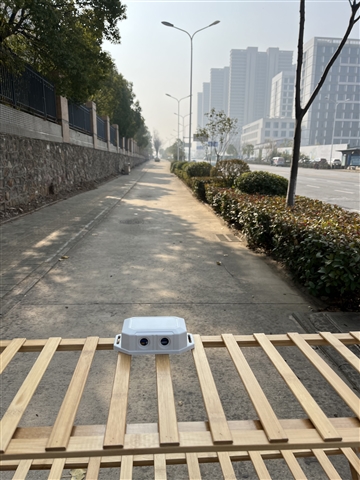
Coded PHY distance testing

We're developing Bluetooth tags that we would like to operate at both 1Mbps and coded (long range).  With our initial distance testing on our beacons, we're not seeing much of a difference between the two PHY's.(two kinds of beacon products),but there is a clear difference in the broadcast distance between the two encoding methods of the Bluetooth module C.These three products are burning the same firmware

Coding method beacon A beacon B Bluetooth Module C
Coded 200m 220m 300m
1M PHY 200m 220m 200m

1. What is the reason why there is no difference in the broadcasting distance between the two encoding methods of these two beacons?

2. In order to improve the broadcast distance of coded mode, how should we improve?

Parents
  • Hey mengnan sun,

    1. What is the reason why there is no difference in the broadcasting distance between the two encoding methods of these two beacons?

    I do not know, there are many variables affecting radio performance. We need to know more information about your devices and range measurement methodology: 

    1. What's the device's transmitter power level? 0dBm?

    2. How do you measure range? f.ex Maximum distance between transmitter and receiver in an open-air an direct-line-of-sight enviroment. 

    3. Has the transmitter and receivers had their antennas tuned?
    2. In order to improve the broadcast distance of coded mode, how should we improve?

    Depending on your answer above I might recommend that we do a formal schematics and layout review of your design. Small errors in the design can have major impacts on the RF performance. 

    As for why Coded PHY does not give you better range, I'm afraid I can't answer that without ruling out issues in design or test methodology. 

    In general, Coded PHY will improve the receiver sensitivity, but any Coded PHY packet is more susceptable to intermittent RF noise due to its longer on-air time compared to standard 1mbps PHY. 
    The same is true for 1mbps PHY compared to 2mbps PHY.

    BR,

Reply
  • Hey mengnan sun,

    1. What is the reason why there is no difference in the broadcasting distance between the two encoding methods of these two beacons?

    I do not know, there are many variables affecting radio performance. We need to know more information about your devices and range measurement methodology: 

    1. What's the device's transmitter power level? 0dBm?

    2. How do you measure range? f.ex Maximum distance between transmitter and receiver in an open-air an direct-line-of-sight enviroment. 

    3. Has the transmitter and receivers had their antennas tuned?
    2. In order to improve the broadcast distance of coded mode, how should we improve?

    Depending on your answer above I might recommend that we do a formal schematics and layout review of your design. Small errors in the design can have major impacts on the RF performance. 

    As for why Coded PHY does not give you better range, I'm afraid I can't answer that without ruling out issues in design or test methodology. 

    In general, Coded PHY will improve the receiver sensitivity, but any Coded PHY packet is more susceptable to intermittent RF noise due to its longer on-air time compared to standard 1mbps PHY. 
    The same is true for 1mbps PHY compared to 2mbps PHY.

    BR,

Children
Related