nRF21540 doubts

Hi,


    Please help reply the following questions

1、We use nRF52840+nRF21540, nRF52840 we use 1.8V IO level, can nRF21540 also use 1.8V IO level?

2. If the nRF21540 is powered by 1.8V, will it affect its RF indicators such as transmission power and receiving sensitivity?

3. With the maximum power of nRF52840+nRF21540, how far can the point-to-point transmission distance be in the open area?

4. The maximum current consumption described in the specification is 110mA. Is this based on the current of 3V power supply?
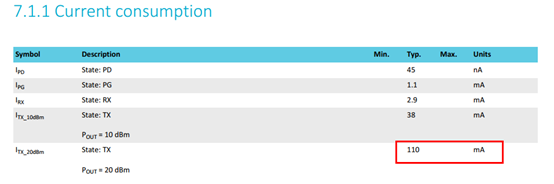
5. The maximum current of 110mA described in the specification refers to the average current or peak current at the time of transmission? For example, if we continue to broadcast and transmit data at a rate of 2.4Kbps, will the current at this transmission stage continue to be 110mA?

6. All control signals of nRF21540 are received from nRF52840. If the RESET signal of nRF52840 is pulled down, will nRF21540 automatically enter the power down mode?

7. Will the control of TX Power be automatically controlled by nRF52840 or need the user to manually adjust it in the code?

8. Is the switching between antenna TX and RX automatically controlled by nRF52840?

9. If dual antennas are used, is antenna switching automatic?

10. NRF21540 What scenarios are recommended to use dual antennas and what scenarios are recommended to use single antennas

Parents
  • Hi,

    Most of your questions have already been answered in the product specification. I advise you have a look at it. 

    1、We use nRF52840+nRF21540, nRF52840 we use 1.8V IO level, can nRF21540 also use 1.8V IO level?

    Yes, the nRF21540 can operate in the range from [1V7, 3V6]

    2. If the nRF21540 is powered by 1.8V, will it affect its RF indicators such as transmission power and receiving sensitivity?

    Yes, see figure 7, 8 and 11 here.

    3. With the maximum power of nRF52840+nRF21540, how far can the point-to-point transmission distance be in the open area?

    It will depend on external factors so it's impossible to say. Here is a blog post comparing the nRF21540 and the nRF52840 DK. Should give you an impression of the range. 

    4. The maximum current consumption described in the specification is 110mA. Is this based on the current of 3V power supply?

    Yes.

    5. The maximum current of 110mA described in the specification refers to the average current or peak current at the time of transmission? For example, if we continue to broadcast and transmit data at a rate of 2.4Kbps, will the current at this transmission stage continue to be 110mA?

    It's the peak current.

    6. All control signals of nRF21540 are received from nRF52840. If the RESET signal of nRF52840 is pulled down, will nRF21540 automatically enter the power down mode?

    No, when the nRF52840 reset pin is pulled low, then all of the GPIOs are undefined. 

    7. Will the control of TX Power be automatically controlled by nRF52840 or need the user to manually adjust it in the code?

    You have the option of both, either you can use a preset value as written in the MODE registers, or you can use the serial interface to set the TX power from the nRF52840. 

    8. Is the switching between antenna TX and RX automatically controlled by nRF52840?

    If you're using our MPSL driver then it should be handled by that yes.

    9. If dual antennas are used, is antenna switching automatic?

    It depends on what you're using, are you using MPSL? The ANT pin selects the antenna interface.

    10. NRF21540 What scenarios are recommended to use dual antennas and what scenarios are recommended to use single antennas

    In most applications 1 antenna is probably enough, but sometimes you need two different antennas with different characteristics for your application. 

    regards

    Jared 

Reply
  • Hi,

    Most of your questions have already been answered in the product specification. I advise you have a look at it. 

    1、We use nRF52840+nRF21540, nRF52840 we use 1.8V IO level, can nRF21540 also use 1.8V IO level?

    Yes, the nRF21540 can operate in the range from [1V7, 3V6]

    2. If the nRF21540 is powered by 1.8V, will it affect its RF indicators such as transmission power and receiving sensitivity?

    Yes, see figure 7, 8 and 11 here.

    3. With the maximum power of nRF52840+nRF21540, how far can the point-to-point transmission distance be in the open area?

    It will depend on external factors so it's impossible to say. Here is a blog post comparing the nRF21540 and the nRF52840 DK. Should give you an impression of the range. 

    4. The maximum current consumption described in the specification is 110mA. Is this based on the current of 3V power supply?

    Yes.

    5. The maximum current of 110mA described in the specification refers to the average current or peak current at the time of transmission? For example, if we continue to broadcast and transmit data at a rate of 2.4Kbps, will the current at this transmission stage continue to be 110mA?

    It's the peak current.

    6. All control signals of nRF21540 are received from nRF52840. If the RESET signal of nRF52840 is pulled down, will nRF21540 automatically enter the power down mode?

    No, when the nRF52840 reset pin is pulled low, then all of the GPIOs are undefined. 

    7. Will the control of TX Power be automatically controlled by nRF52840 or need the user to manually adjust it in the code?

    You have the option of both, either you can use a preset value as written in the MODE registers, or you can use the serial interface to set the TX power from the nRF52840. 

    8. Is the switching between antenna TX and RX automatically controlled by nRF52840?

    If you're using our MPSL driver then it should be handled by that yes.

    9. If dual antennas are used, is antenna switching automatic?

    It depends on what you're using, are you using MPSL? The ANT pin selects the antenna interface.

    10. NRF21540 What scenarios are recommended to use dual antennas and what scenarios are recommended to use single antennas

    In most applications 1 antenna is probably enough, but sometimes you need two different antennas with different characteristics for your application. 

    regards

    Jared 

Children
No Data
Related