This post is older than 2 years and might not be relevant anymore
More Info: Consider searching for newer posts

Help with nRF9160 connecting Azure

Hello,

 I need help with my application.

I am developing an application running on the EV board nrf9160dk_nrf9160 .I read the following article:

http://194.19.86.155/nRF_Connect_SDK/doc/latest/nrf/samples/nrf9160/mqtt_simple/README.html

how to develop this application and I based my application on the sample application that is provided in the SDK.

In my software I get the following event (from the handler): 

AZURE_IOT_HUB_EVT_CONNECTING

That says that it tries to connect to the Azure network. But I never get connected.
The client_connect() function returns error -22.

Can someone help me what CONFIG parameters should I add to see the network subsystem printouts to enable me what is going wrong.
I have enabled the following logs in my config: CONFIG_NET_LOG, MQTT_LOG_LEVEL_DBG, AZURE_IOT_HUB_LOG_LEVEL_DBG.
Are there other lower level LOG options that can help me to identify what error -2 says and what is wrong?

Thanks
Danny

Parents
  • Thanks

    I would like to add some information.

    My application is based on the sample v1.4.99-dev1\nrf\samples\nrf9160\azure_iot_hub

    I have added added the API modem_key_mgmt_write(), to place my self-signed certificate and private key in the modem.

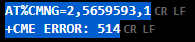
    When I use AT%CMNG=2,5659593,0 to read the certificate, it returns error. I am not sure if this is the reason that my connection fails.

    Here is my prj.conf:

    #-------------------------------------------
    # General config
    #-------------------------------------------
    CONFIG_LOG=y
    CONFIG_NEWLIB_LIBC=y
    #CONFIG_NO_OPTIMIZATIONS=y
    #CONFIG_ASSERT=y
    #CONFIG_REBOOT=y
    CONFIG_DEBUG=y
    CONFIG_PRINTK=y

    #-------------------------------------------
    # Log level
    # For more verbose and detailed log output,
    # set the log level to DBG or INF
    #-------------------------------------------
    CONFIG_AZURE_IOT_HUB_LOG_LEVEL_DBG=y
    CONFIG_MQTT_LOG_LEVEL_DBG=y
    CONFIG_NET_LOG=y
    CONFIG_LTE_LINK_CONTROL_LOG_LEVEL_DBG=y
    CONFIG_NET_SOCKETS_LOG_LEVEL_DBG=y
    CONFIG_NET_SOCKETS_SOCKOPT_TLS=y
    CONFIG_LOG_MAX_LEVEL=4
    CONFIG_NET_CORE_LOG_LEVEL_DBG=y
    #CONFIG_NET_OFFLOAD_LOG_LEVEL_DBG=y
    #CONFIG_MODEM_LOG_LEVEL_DBG=y

    #-------------------------------------------
    # Network Common (Offload as well as MCU)
    #-------------------------------------------
    CONFIG_NETWORKING=y

    #-------------------------------------------
    # Network OFFLOAD (inside the modem)
    #-------------------------------------------
    CONFIG_NET_NATIVE=n

    #-------------------------------------------
    # LTE link control
    #-------------------------------------------
    CONFIG_LTE_LINK_CONTROL=y
    CONFIG_LTE_NETWORK_MODE_LTE_M=y
    CONFIG_LTE_AUTO_INIT_AND_CONNECT=n

    #-------------------------------------------
    # Modem and AT commands
    #-------------------------------------------
    CONFIG_AT_CMD_RESPONSE_MAX_LEN=2048
    CONFIG_MODEM_KEY_MGMT=y

    #-------------------------------------------
    # BSD library
    #-------------------------------------------
    CONFIG_BSD_LIBRARY=y

    #-------------------------------------------
    # DK
    #-------------------------------------------
    CONFIG_DK_LIBRARY=n
    CONFIG_DK_LIBRARY_INVERT_LEDS=n

    #-------------------------------------------
    # AT commands interface
    #-------------------------------------------
    CONFIG_UART_INTERRUPT_DRIVEN=y
    CONFIG_AT_HOST_LIBRARY=y
    CONFIG_AT_CMD_THREAD_STACK_SIZE=2048

    #-------------------------------------------
    # cJSON
    #-------------------------------------------
    CONFIG_CJSON_LIB=y

    #-------------------------------------------
    # Azure Cloud
    #-------------------------------------------
    CONFIG_AZURE_IOT_HUB=y
    CONFIG_AZURE_IOT_HUB_DEVICE_ID_APP=y
    #CONFIG_AZURE_IOT_HUB_DEVICE_ID="3526561"


    #-------------------------------------------------
    # Azure DPS option
    # Host name must be configured if DPS is not used
    #-------------------------------------------------
    CONFIG_AZURE_IOT_HUB_HOSTNAME="xxxx.azure-devices.net"

    #-------------------------------------------------
    # Change the security tag to the tag where Azure
    # IoT Hub certificates are provisioned
    #-------------------------------------------------
    CONFIG_AZURE_IOT_HUB_SEC_TAG=565

    #-------------------------------------------------
    # Uncomment and configure the options below to use
    # DPS for device provisioning
    #-------------------------------------------------
    CONFIG_AZURE_IOT_HUB_DPS=y
    CONFIG_AZURE_IOT_HUB_DPS_ID_SCOPE="yyyy"

    #----------------------------------------------------------
    # Settings, needed for Azure Device Provisioning Service
    #----------------------------------------------------------
    CONFIG_FLASH=y
    CONFIG_FLASH_MAP=y
    CONFIG_FCB=y
    CONFIG_SETTINGS=y
    CONFIG_SETTINGS_FCB=y
    CONFIG_MPU_ALLOW_FLASH_WRITE=y

    #-------------------------------------------
    # Heap and stacks
    # Extended memory heap size needed for
    # encoding nRF Cloud messages to JSON
    #-------------------------------------------
    CONFIG_HEAP_MEM_POOL_SIZE=4096

  • Hi Danny,

    Danny Zadok said:
    When I use AT%CMNG=2,5659593,0 to read the certificate, it returns err

    Did you turn off the modem with CFUN=4 first? Which error does it return?

    Do you know whether the certificate and private key was added correctly using modem_key_mgmt_write? Also, when using the Azure IoT Hub library, you need two certificates: the server certificate Baltimore CyberTrust Root certificate and the device certificate, which is used by Azure IoT Hub to authenticate the device. How to generate this is described here. You can also provision the certificates using the LTE Link Monitor app in nRF Connect for Desktop.

    Could you collect a modem trace so we can take a look at the communication between the device and Azure IoT Hub?

    Please be aware that we have reduced staff due to holiday season, so response time might be slower than normal.

    Best regards,

    Marte

  • Hi Marte,

     I am following those links that you sent. But the documents are not accurate.

    Let me give you an example:

    in this link: https://infocenter.nordicsemi.com/index.jsp?topic=%2Fref_at_commands%2FREF%2Fat_commands%2Fmob_termination_ctrl_status%2Fcmng_set.html

    The Public key enumeration/ID is 5

    But here:

    https://developer.nordicsemi.com/nRF_Connect_SDK/doc/latest/nrf/include/modem/modem_key_mgmt.html

    The PUBLIC is 1.

    Which one is correct?

    The "BaltimoreCyber*.PEM" should be written as MODEM_KEY_MGMT_CRED_TYPE_CA_CHAIN?

    Under what ID, the self-signed certificate of the client should be written? under MODEM_KEY_MGMT_CRED_TYPE_PUBLIC_CERT? Or just its public key?

    In other ticket I wrote that I use the write() function to write the keys successfully, but when I compare them (with the cmp() function), it says that the keys do not match.

    Danny

  • Here is more information.

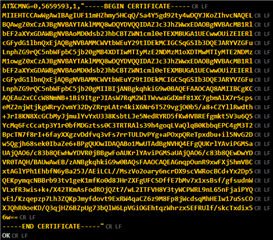
    I am trying to load the certificates to the modem. I tried both ways: LTE LINK and API.

    Using the LTE Link Certification manager:

    As you see, it returns OK. 

    BUT, when I try to read it back, it returns error:

  • Hi,

    The reason you get CME error 514 (No access. Applies to read, write, and delete.) is because you're trying to read the client certificate. If you look at the documentation for the %CMNG set command you'll see there's a note saying that reading types 1, 2, and 3 are not supported. This is for security reasons.

    Are you still having problems connecting to Azure, and if so, what does the error say?

    Best regards,

    Marte

Reply Children
No Data
Related